
13 May
Why EV Charger Installation Is the Right Move for Palos Hills Homeowners Right Now
Electric vehicles are no longer a novelty on the streets around Palos Hills. Drive along 95th Street or head south on Roberts Road toward the Palos Hills border with Bridgeview, and you’ll spot more EVs parked in driveways than ever before. The problem most homeowners run into isn’t the car itself — it’s the charging setup at home. A standard 120V outlet charges a typical EV at about 3 to 5 miles of range per hour. That means overnight charging barely replenishes a full commute to downtown Chicago and back. A dedicated Level 2 EV charger changes that equation completely, delivering 20 to 30 miles of range per hour from a 240V circuit.
Installing that 240V circuit is where a licensed electrical contractor becomes essential. This isn’t a plug-and-play project. It involves running a dedicated circuit from your electrical panel, selecting the right wire gauge for the amperage load, mounting the EVSE unit in a weatherproof location, and pulling the appropriate permits through Cook County. Skip any one of those steps and you’re looking at a fire hazard, a voided homeowner’s insurance policy, or a failed inspection when you eventually sell the house.
Residents near Moraine Valley Community College and the neighborhoods tucked west of Wolf Road frequently ask whether their existing panel can handle the added load. Many homes in this area were built in the 1970s and 1980s with 100-amp service — enough for the original appliances but tight once you add a Level 2 charger drawing 30 to 50 amps continuously. A qualified electrician will assess your panel capacity before any work starts. If an upgrade is needed, that’s a separate conversation, but it’s one worth having early. You can also explore EV charger installation options specific to Palos Hills to understand what the process looks like locally.
Choosing the Right Charger and Amperage for Your Home
Not every Level 2 charger is the same. The two most common residential configurations are 32-amp and 48-amp units. A 32-amp charger runs on a 40-amp dedicated circuit and covers the needs of most single-EV households. If you have two EVs or a long-range vehicle with a large battery pack, a 48-amp charger on a 60-amp circuit gives you significantly faster overnight fills. The electrician’s job is to match the charger specs to your panel capacity and your actual driving habits — not just sell you the biggest unit on the shelf.
Brand selection matters less than proper installation, but a few names worth knowing include ChargePoint, JuiceBox, and Enel X JuiceBox. All are compatible with most major EV manufacturers and qualify for the federal Alternative Fuel Vehicle Refueling Property Credit under IRS Section 30C, which can offset up to 30% of the installed cost. The U.S. Department of Energy’s EV home charging guide walks through the credit eligibility requirements in detail — worth reading before you schedule the installation.
What Makes a Contractor “Licensed” and Why It Matters for EV Work
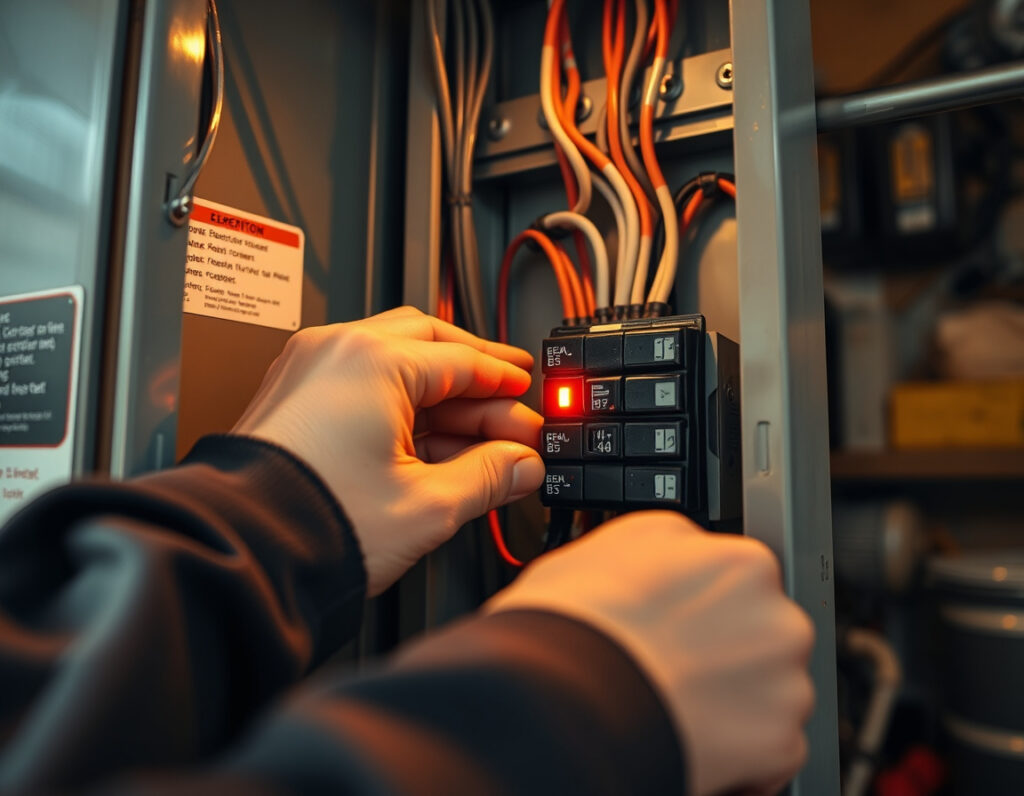
Illinois requires electrical contractors to hold a valid state license through the Illinois Department of Financial and Professional Regulation. For EV charger work specifically, the permit process in Cook County means the installation gets inspected by the local authority having jurisdiction. That inspection protects you. If an unlicensed handyman wires a 240V circuit incorrectly, the failure mode isn’t a tripped breaker — it can be an arc fault that starts inside a wall cavity. By the time you smell smoke, the damage is already done.
A licensed contractor also carries the general liability and workers’ compensation insurance required by Illinois law. That matters when someone is drilling through your garage wall and fishing wire through finished living space. Homeowners near the Cal-Sag Channel corridor and along 107th Street have learned this the hard way after hiring unlicensed workers through informal referrals. The savings upfront rarely survive the cost of correcting the work later.
For those who want to compare the scope of work across similar suburbs, the EV charger installation process in Bridgeview follows the same Cook County framework and gives a clear picture of what to expect on inspection day. If you’re also considering a broader electrical assessment before the charger goes in, an electrical inspection in Palos Hills is a smart first step — it flags any panel or wiring concerns before the new circuit is added.
Permit and Inspection Requirements in Cook County
Palos Hills falls under Cook County’s unincorporated jurisdiction rules for permitting in some areas, though the city itself handles permits through its own building department. Either way, residential electrical permits are required for any new 240V circuit installation. The permit application typically requires a description of the work, the amperage of the new circuit, and the location of the panel. Inspections are scheduled after rough-in and again after the final connection. Turnaround times in this area tend to run five to ten business days for permit approval, so building that into your project timeline matters.
Contractors who skip the permit step are saving themselves paperwork at your expense. If you ever file a homeowner’s insurance claim related to an electrical fire, and the insurer discovers unpermitted work, the claim can be denied outright. The Illinois building permit process overview published by the state lays out what’s required for residential projects and is a useful reference if you want to verify what your contractor should be filing on your behalf.
Service Area Reach and Local Context Around the 95th Street Corridor
The stretch of 95th Street running through Palos Hills connects directly to Oak Lawn to the east and Bridgeview to the north, putting this area at the center of a dense residential zone that’s seeing a notable uptick in EV ownership. Subdivisions near Wolf Road and 104th Avenue tend to have attached garages — ideal for Level 2 charger mounting — but older construction means panels often need a closer look before adding load. Homeowners in the Palos Hills area who are also looking at home improvements for other family members in nearby communities can check the EV charger installation service in Oak Lawn for reference on adjacent-area availability.
Reed Electrical Services, LLC. serves the Palos Hills area and surrounding southwest suburbs, with experience on the specific panel types and construction styles common to homes built between 1965 and 1995. That local knowledge shortens the job. An electrician who already knows which wire gauges were standard in this era, and where older Federal Pacific or Zinsco panels still show up in Cook County homes, can scope the project accurately on the first visit rather than discovering surprises mid-installation.
If your household is also thinking about adding a ceiling fan or upgrading lighting during the same visit to reduce back-and-forth scheduling, that’s a reasonable request. Bundling smaller electrical work with the charger installation often makes sense from a cost-per-trip standpoint. You can see what’s involved with ceiling fan installation in Palos Hills if that’s on the list.
Frequently Asked Questions
How long does a Level 2 EV charger installation take in a typical Palos Hills home?
Most installations take between two and four hours once the permit is in hand. If the panel needs a circuit breaker added and the garage is adjacent to the panel location, the job is on the shorter end. Longer runs of conduit through finished spaces or older panels that require careful breaker identification can push the time closer to half a day. The permit inspection is a separate visit scheduled after the installation is complete.
Does my electrical panel need to be upgraded before installing an EV charger?
It depends on your current panel capacity and how many high-draw appliances are already on the system. Many homes in the Palos Hills area have 100-amp or 150-amp service. A 32-amp Level 2 charger requires a 40-amp dedicated breaker, which is workable in most 100-amp panels if the existing load is not already near capacity. A load calculation during the initial visit determines whether the panel has room or whether an upgrade is the safer path. Replacing an electrical panel adds cost and time but is sometimes the right call for long-term safety.
Can I install an outdoor EV charger if I don’t have an attached garage?
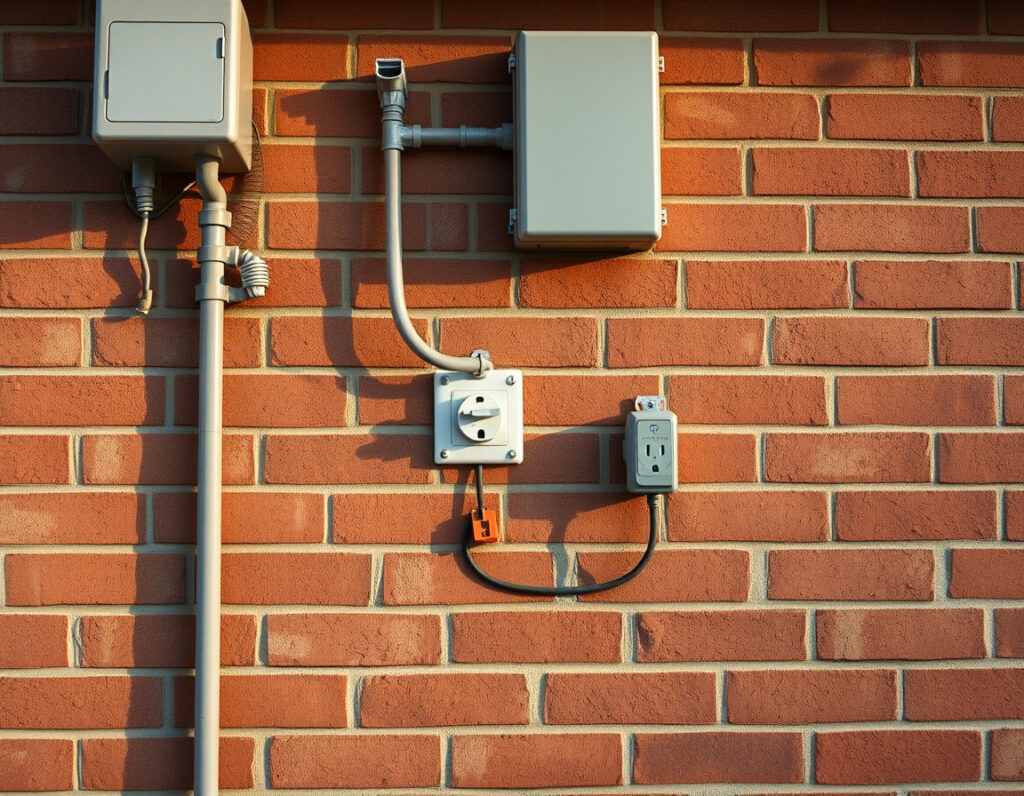
Yes. NEMA 4-rated EVSE units are designed for outdoor exposure and mount directly to an exterior wall or a dedicated post. The wiring still needs to be run in weatherproof conduit to a GFCI-protected 240V outlet or hardwired connection. Homeowners with detached garages or driveway parking pads can absolutely have a Level 2 charger installed — it just requires a longer wire run and appropriate outdoor-rated materials. A licensed electrician will route the conduit correctly to meet code and keep the installation looking clean.
Ready to stop relying on slow overnight trickle charging? Reed Electrical Services, LLC. handles the full scope of EV charger installation for homeowners in Palos Hills and the surrounding southwest suburbs — from the initial panel assessment through permit filing and final inspection. Call to schedule a site visit and get a straight answer on what your specific home and panel actually need.