Basement Finishing Electrical Work in Palos Hills, IL: Circuits, Permits & Code Requirements

What Basement Finishing Actually Requires From an Electrician

Finishing a basement in the southwest suburbs of Chicago is one of the most popular home projects homeowners tackle. Ranch-style and split-level homes throughout Palos Hills sit on full or partial unfinished basements that owners want to turn into livable space, whether that’s a family room, a home office, a gym, or a guest bedroom. The electrical side of that project is where a lot of people underestimate the work involved.

A finished basement isn’t just about running a few outlet boxes and calling it done. Basement electrical work touches on circuit load calculations, proper outlet placement by code, dedicated circuits for appliances or entertainment systems, and often a conversation about whether your existing panel can carry the additional load. In older Palos Hills homes, that last question matters a lot.

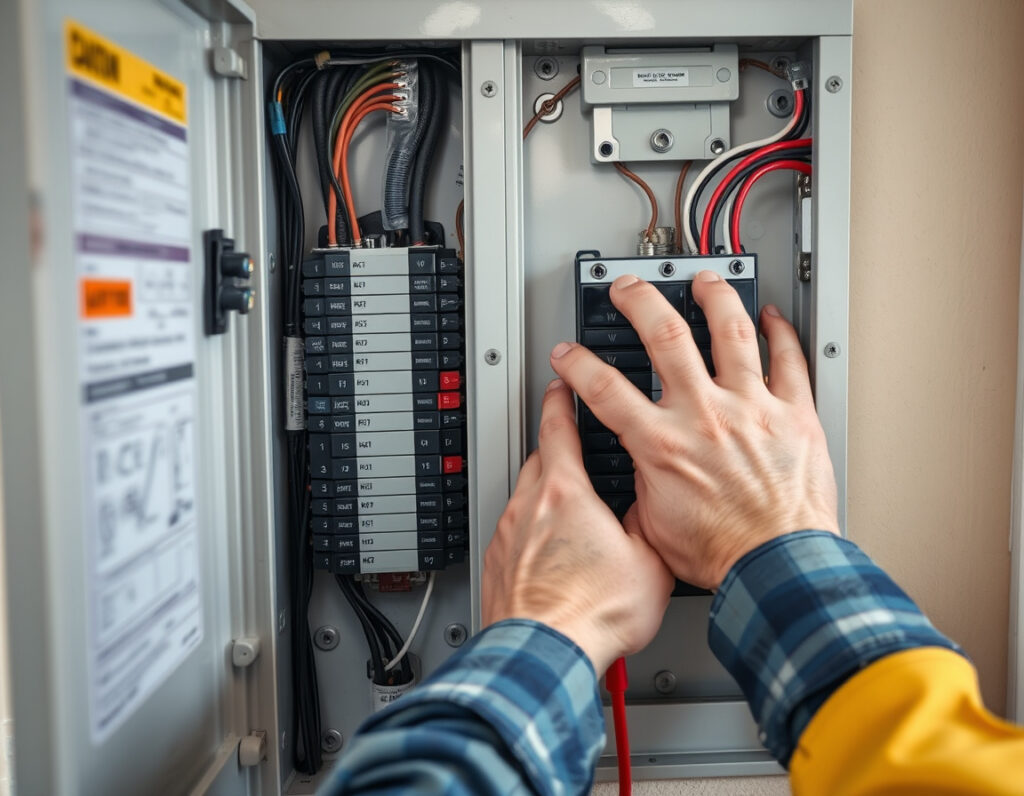
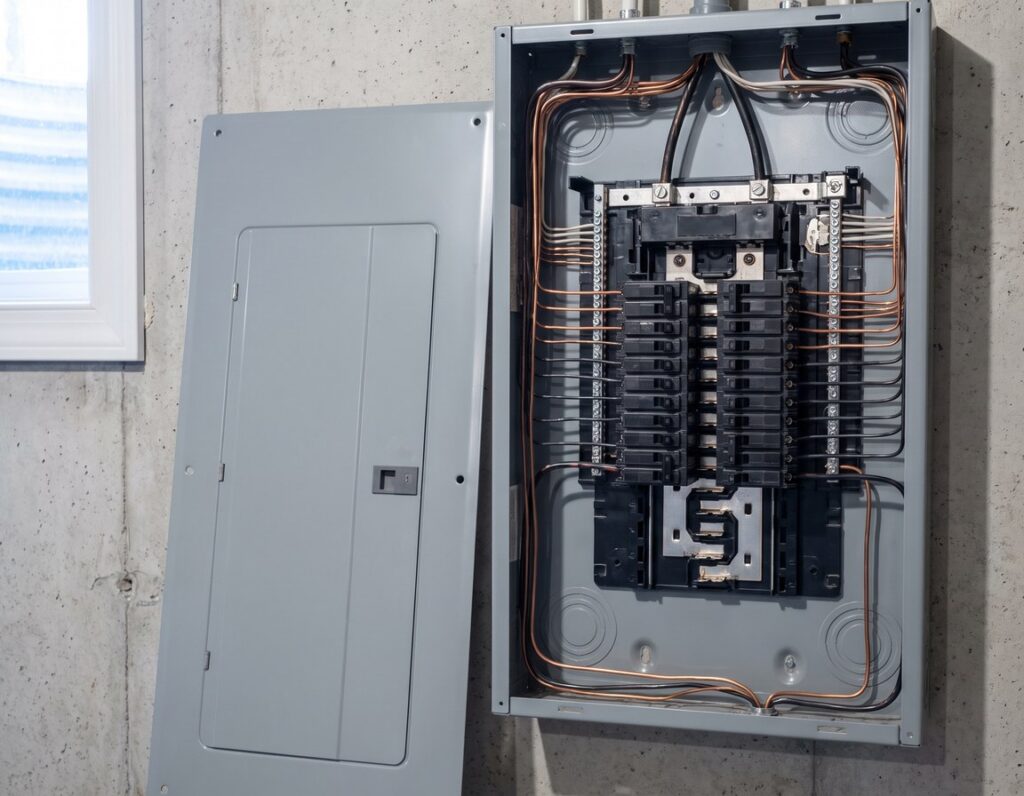
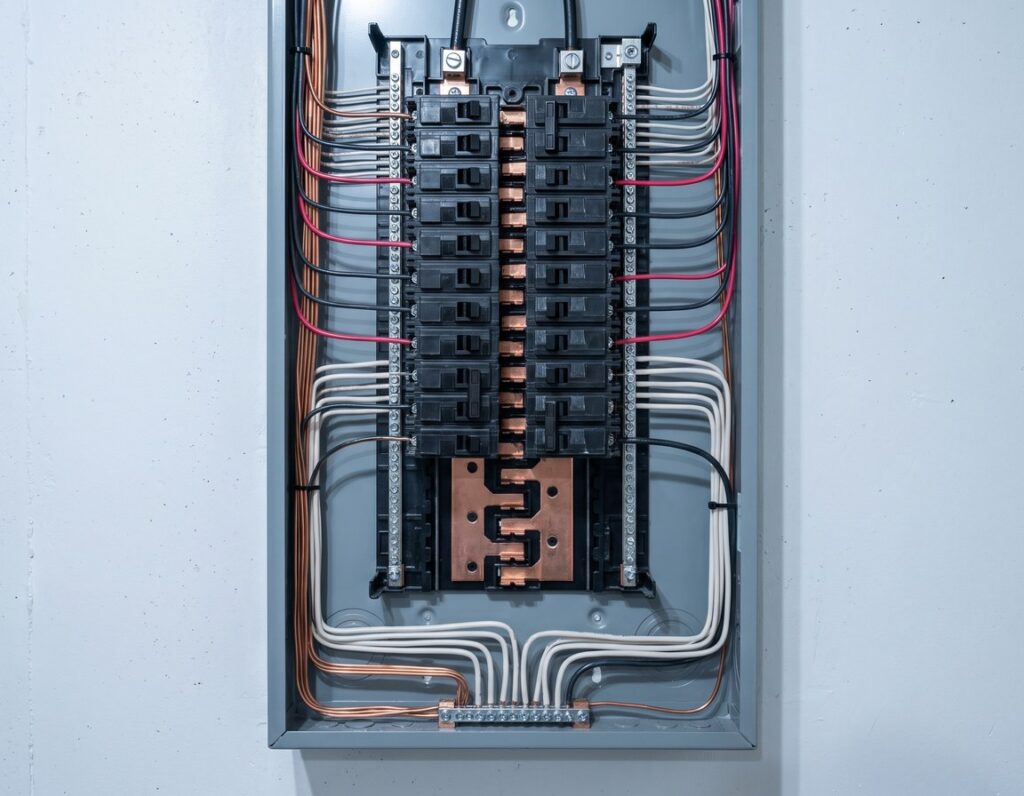
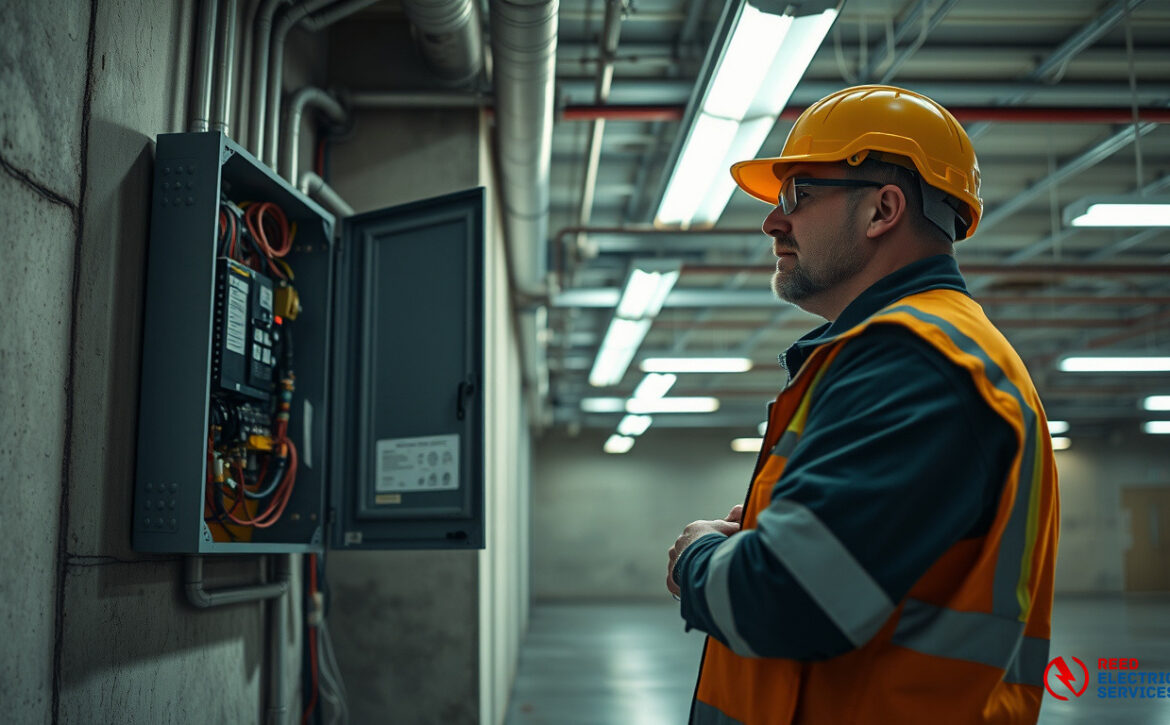
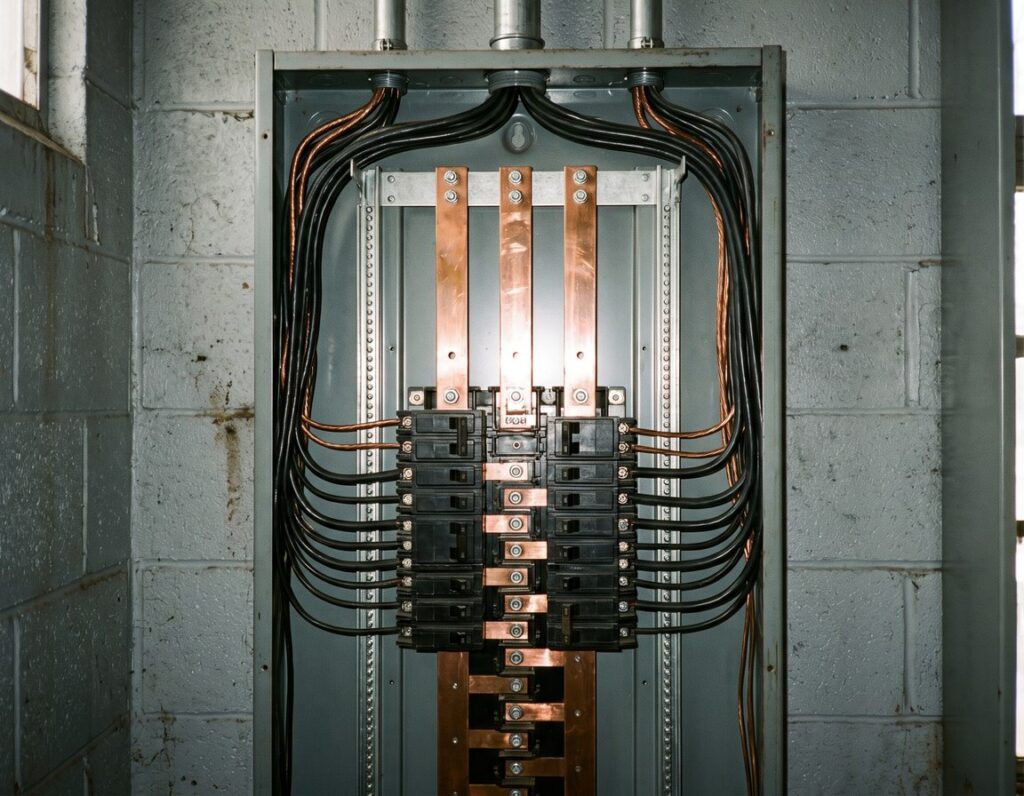
The electrical panel upgrade question comes up in nearly every basement finishing project. A home built in the 1960s or 1970s with a 100-amp panel wasn’t designed for a basement rec room with recessed lighting, a mini-split, a home theater, and multiple USB charging stations. If you push that panel beyond its capacity, you’re not just tripping breakers; you’re creating a fire risk.

Outlet Placement Rules You Can’t Skip

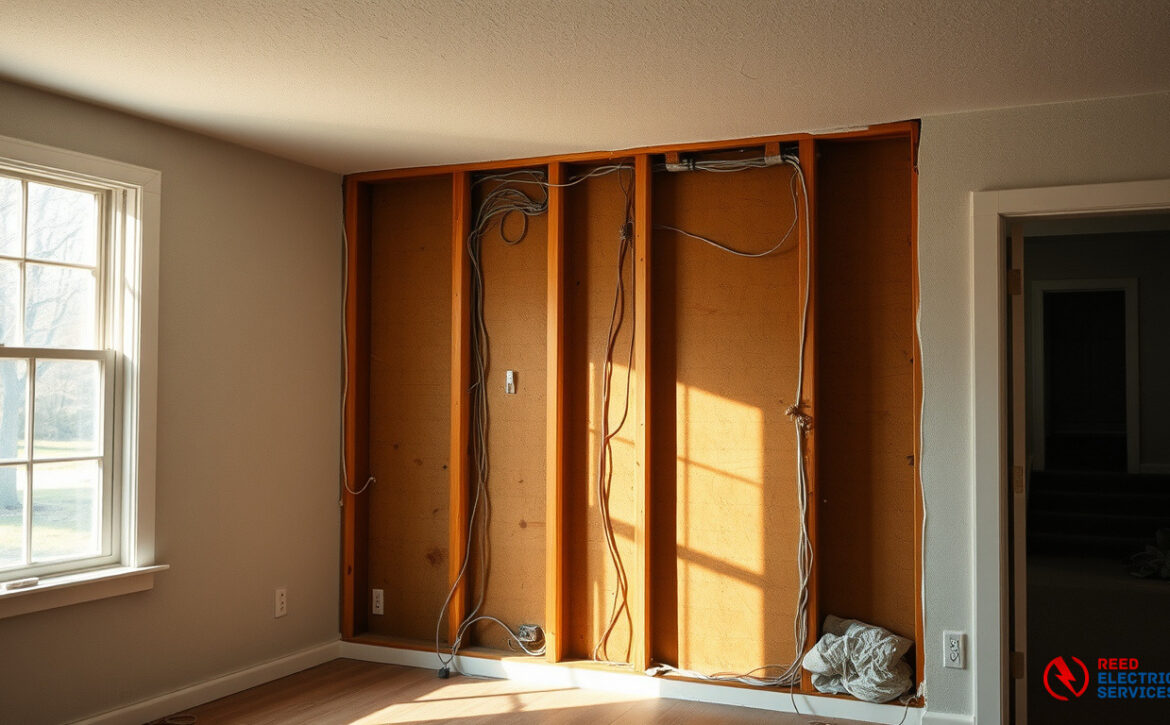
The National Electrical Code sets minimum outlet spacing rules for finished living spaces, and basements are no exception once they’re being used as habitable rooms. Along any finished wall, no point should be more than 6 feet from a receptacle. That might sound simple, but in a basement with a wet bar, a bathroom rough-in, and a utility corner, the layout gets complicated fast. A licensed electrician maps out the entire space before pulling wire, not after the drywall goes up.

It’s also worth knowing that GFCI protection is required in basements, especially near any sink or water source. If you’re planning a wet bar or a half-bath down there, every outlet within six feet of water needs that protection built in. This isn’t optional. It’s code.

Lighting Circuits for a Finished Lower Level

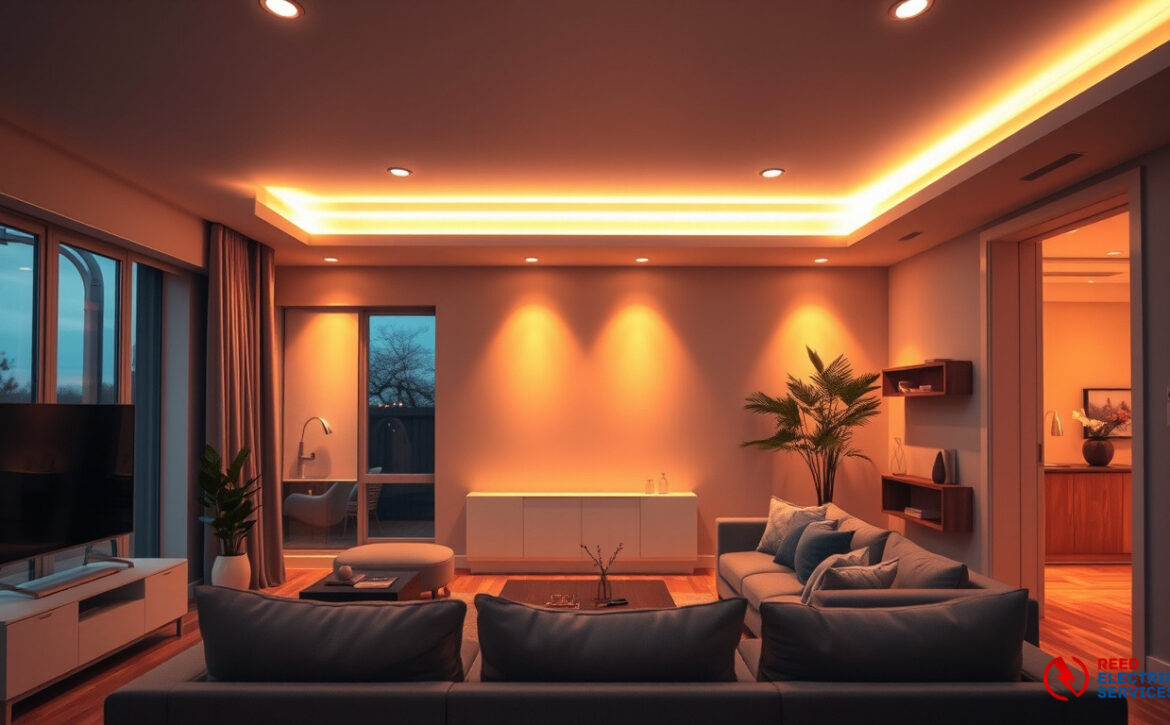
Recessed LED lighting has become the go-to choice for basement ceilings, and for good reason. It doesn’t eat headroom, it distributes light evenly, and modern LED fixtures run cool enough that insulation clearance issues are minimal. That said, the circuit feeding those fixtures still needs to be sized correctly. Running too many fixtures on a single 15-amp circuit means the lights dim every time someone runs the microwave upstairs. A properly planned lighting circuit layout separates general illumination from high-draw appliances on their own dedicated runs.

Homeowners near the Palos Hills boundary along 95th Street often ask about recessed lighting in drop-ceiling versus drywall ceiling applications. Both are possible, but the fixture type and wiring method differ. That’s a detail worth discussing with your electrician before you order materials.

Permits, Inspections, and Why They Protect You

What Basement Finishing Actually Requires From an Electrician — Electrical Services, Palos Hills

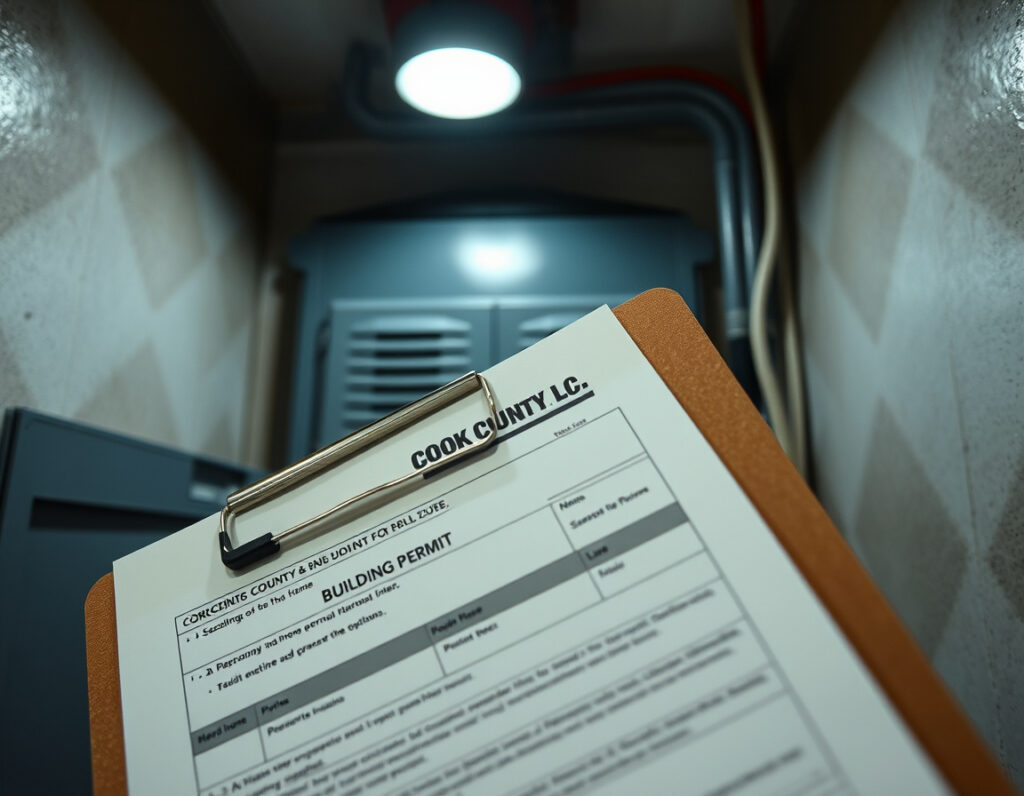
A lot of homeowners ask whether they really need a permit for basement electrical work. The honest answer: yes, if you’re finishing the space. Palos Hills falls under the jurisdiction of Cook County and follows the Illinois adopted version of the NEC. Any new wiring in a finished basement requires a permit and an inspection before the walls close up.

Skipping the permit might feel like it saves time and money in the short run. But when you sell the house, a home inspector or buyer’s attorney who finds a finished basement with no permit history will flag it. That can delay or kill a closing, or require you to tear open walls to prove the work was done correctly. The Illinois Department of Financial and Professional Regulation requires licensed electrical contractors to pull permits on work that qualifies, which protects both the homeowner and the occupants.

When you hire Reed Electrical Services, LLC., the permit process is handled as part of the job. You don’t have to figure out which form goes to which office. The work gets inspected, signed off, and documented so your project record is clean.

What the Electrical Inspection Actually Looks At

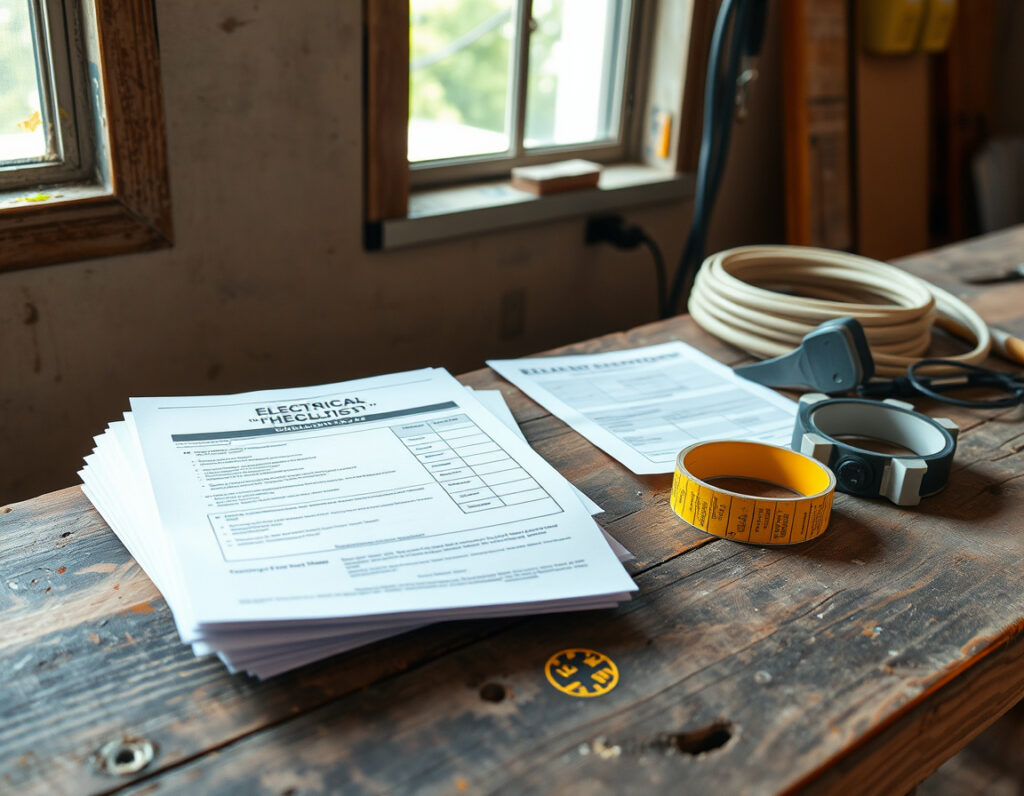
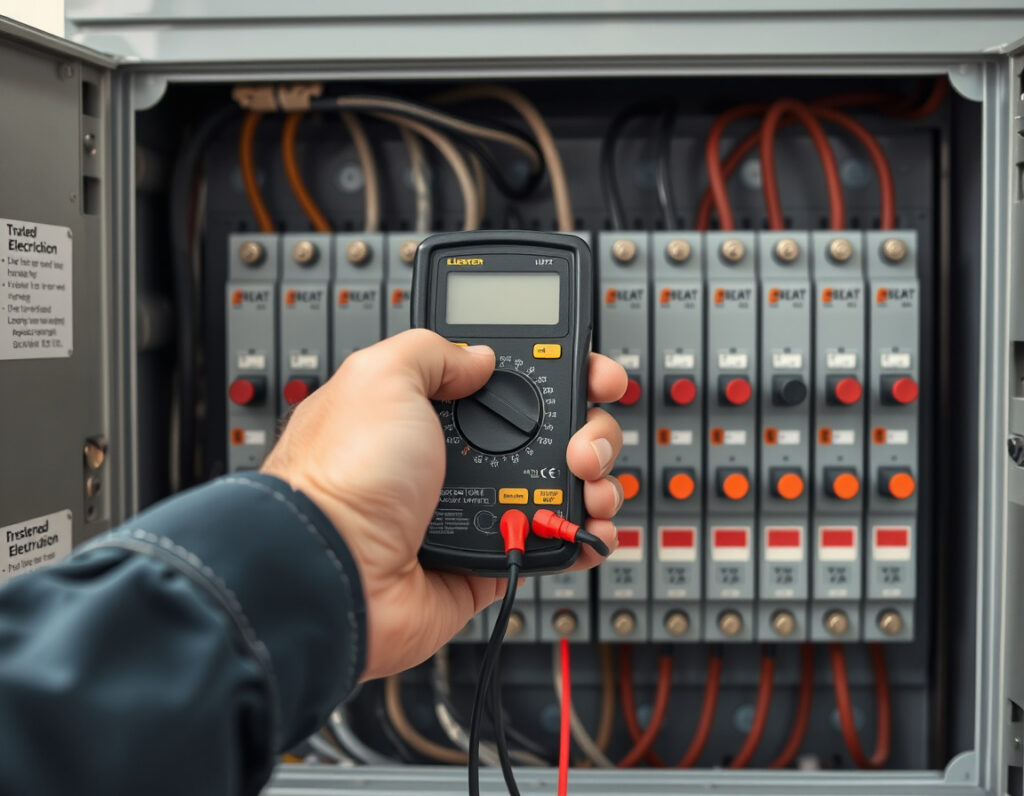
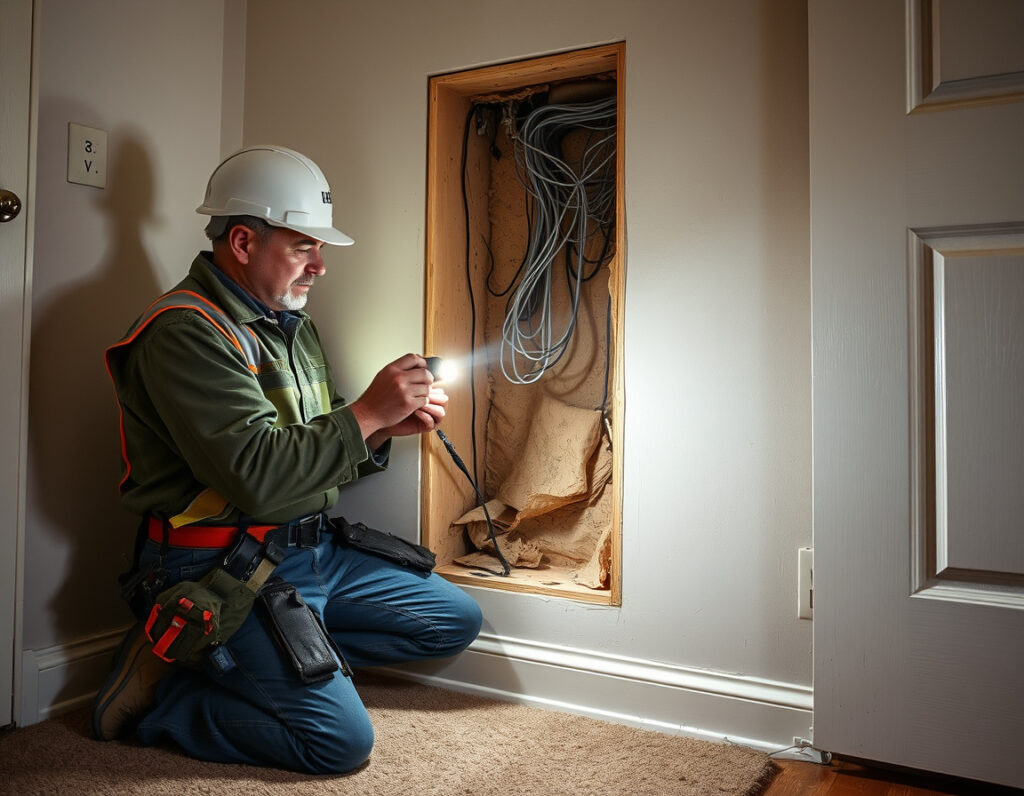
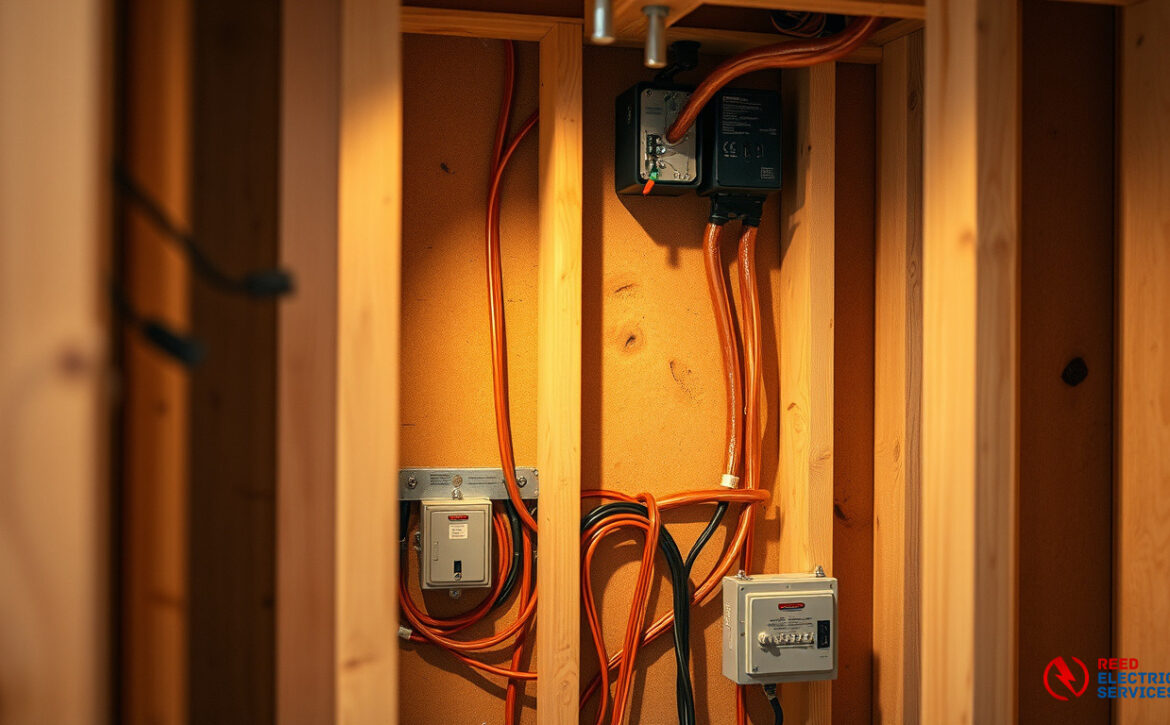
Inspectors in Cook County’s southwest suburbs check a specific list of items during a rough-in inspection. They’re looking at wire gauge and breaker sizing, proper stapling and support of cables, junction box fill calculations, smoke detector placement requirements for new habitable space, and whether the panel has the capacity and labeling to support the new circuits. The inspection happens before insulation or drywall goes in, so the inspector can see everything.

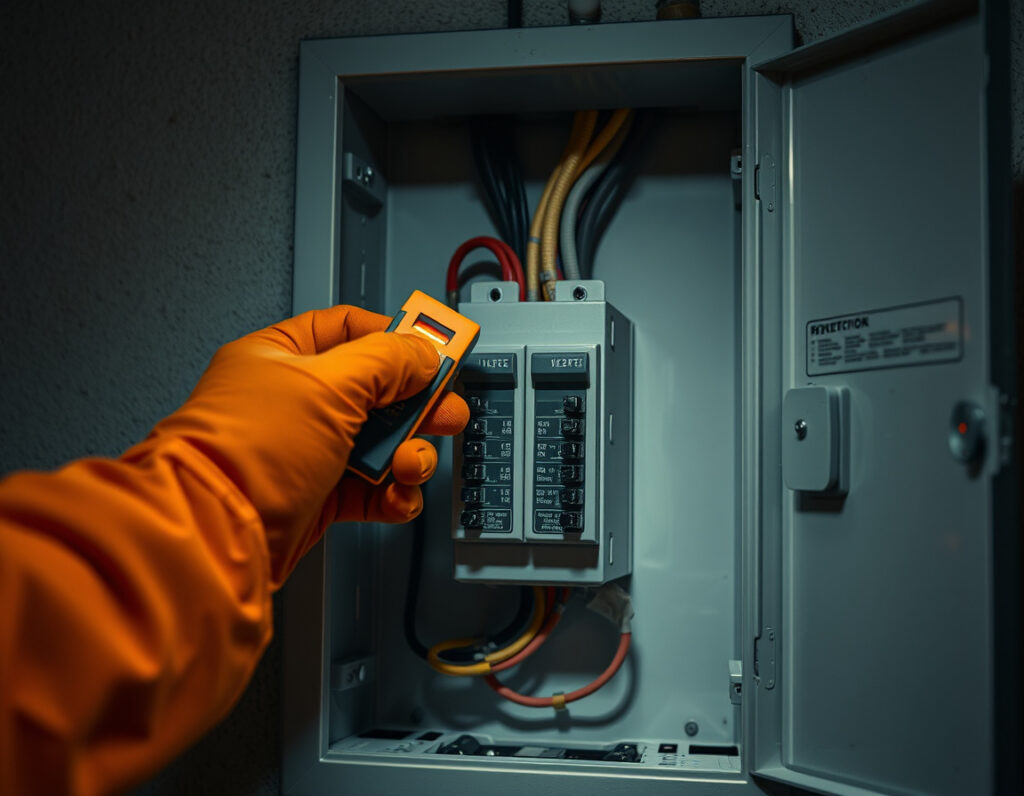
Once that rough-in passes, work continues. After drywall, a final inspection confirms device installation, cover plates, GFCI and AFCI protection where required, and that the panel directory accurately labels every breaker. Passing both inspections is what gives you a clean permit record.

For homeowners near Wolf Road or along 111th Street in the area, inspection scheduling through the local building department typically runs a few business days out. Planning the project timeline around that window is something an experienced electrical contractor does automatically.

Subpanels, Dedicated Circuits, and Load Planning

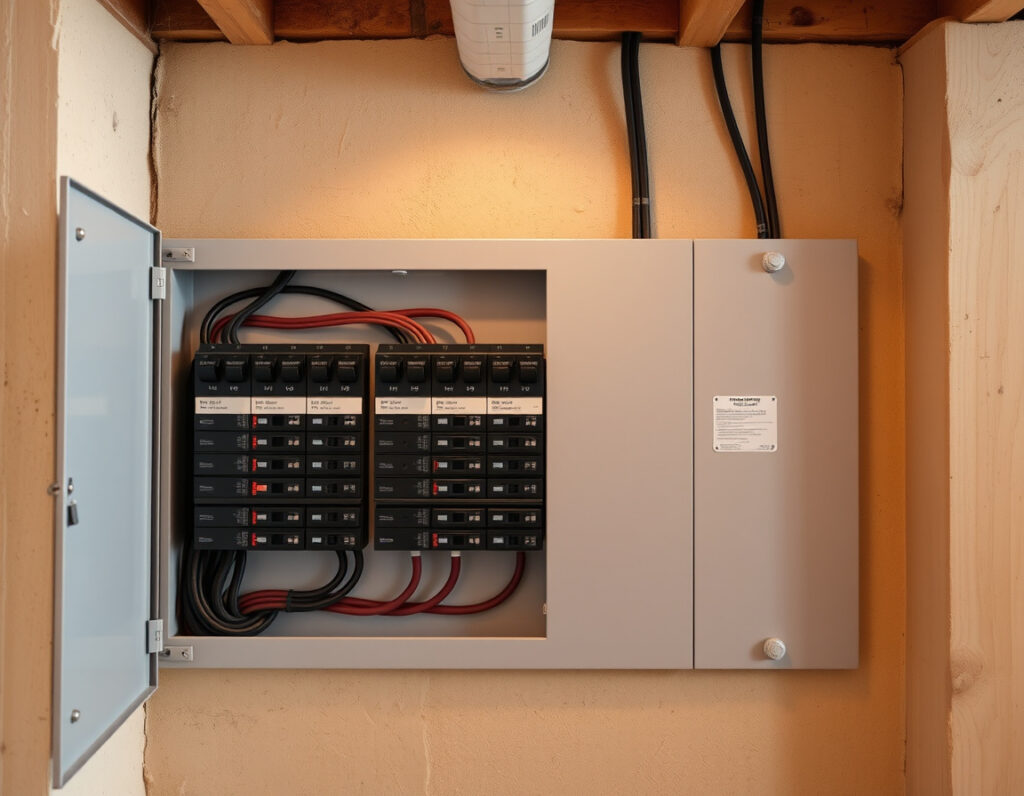
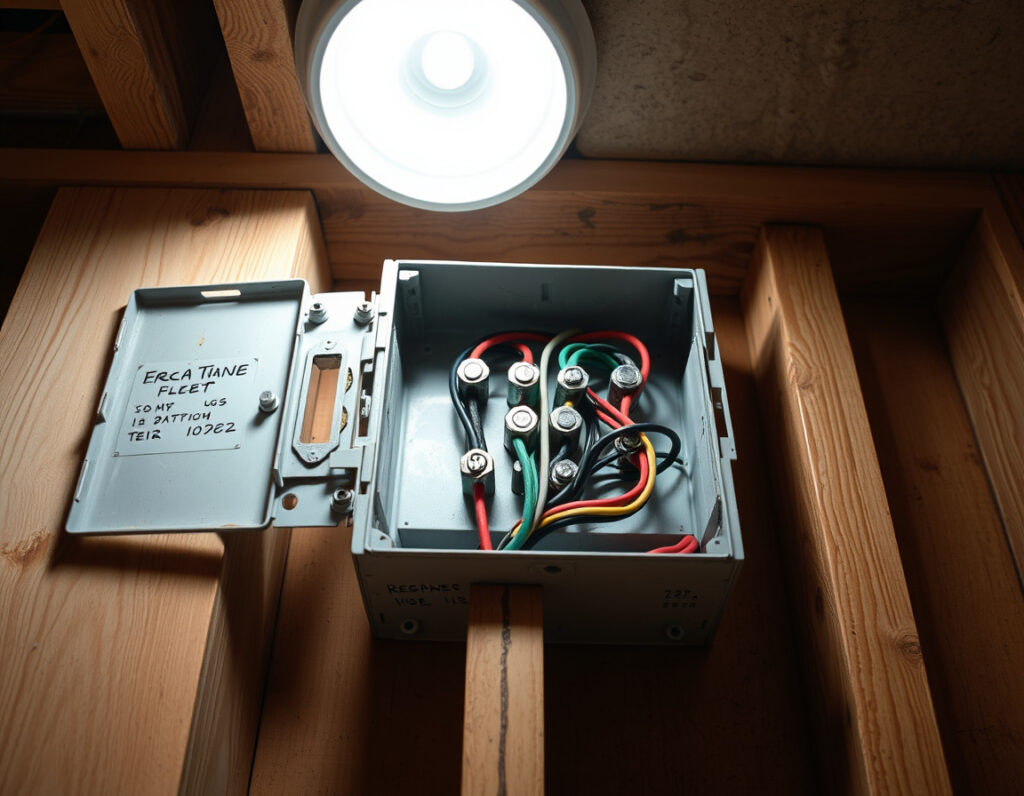
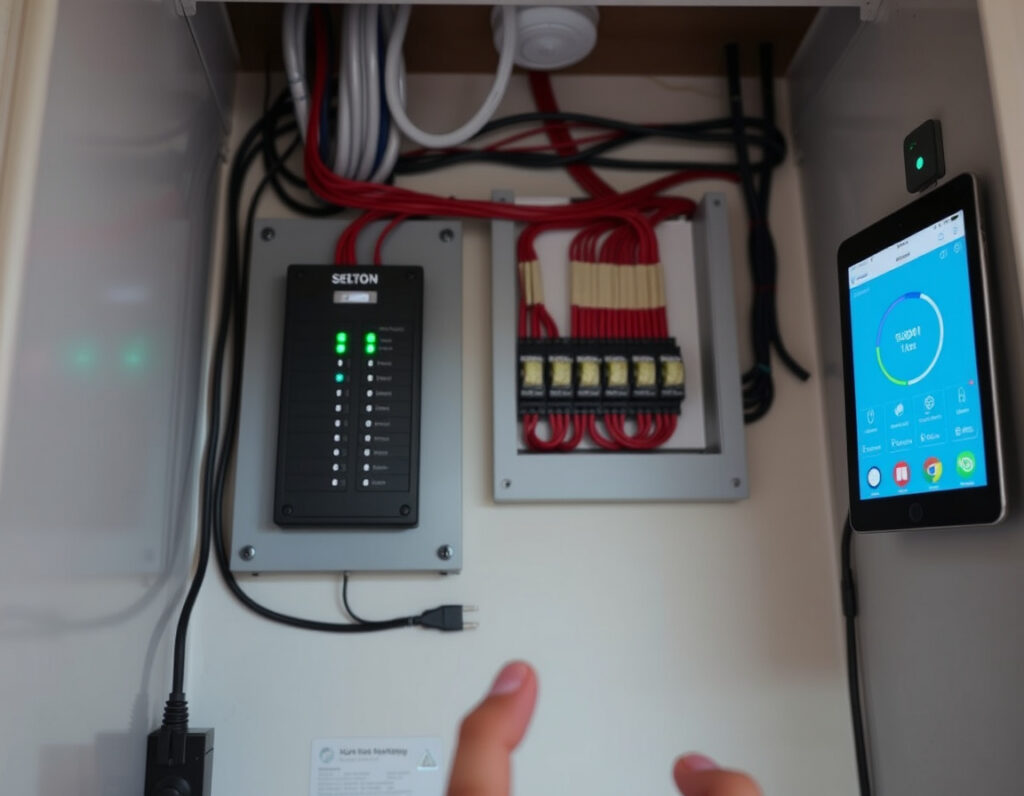
When a basement finishing project is large enough, adding a subpanel down there makes the work cleaner and easier to manage. Instead of running individual circuits all the way back to the main panel upstairs, a subpanel fed by a single large feeder cable gives you a local distribution point. This is especially practical in homes near Palos Hills where the main panel sits at the opposite end of the house from the basement staircase.

Dedicated circuits are another conversation that comes up early in planning. A home theater receiver, a mini-fridge, a chest freezer, and any kind of workshop equipment all benefit from their own circuits. Shared circuits mean shared limitations. A 20-amp dedicated circuit for a chest freezer in the utility area is cheap insurance against nuisance tripping and potential food loss during a summer storm.

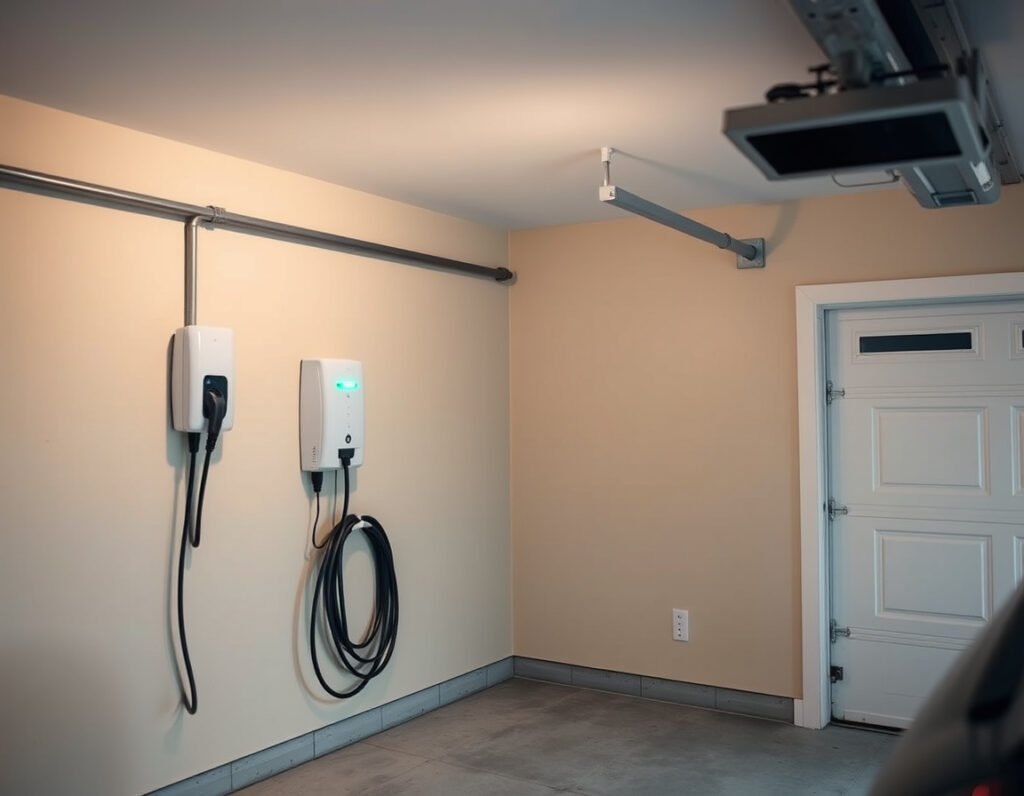
If you’re adding EV charging capability to a garage that’s accessible from the basement level, that’s a separate but related project. EV charger installation typically requires its own 50-amp dedicated circuit and its own considerations around conduit routing and weatherproofing. Bundling it with a basement finishing project can reduce overall labor costs since the electrician is already working in the panel.

Smoke and Carbon Monoxide Detectors in New Basement Space

Illinois law and the NEC both require smoke detectors in every habitable room of a finished basement. If the basement includes a bedroom or sleeping area, a hardwired smoke detector with battery backup is required, interconnected with the detectors on the floors above. Carbon monoxide detectors are also required within 15 feet of any sleeping area in Illinois. These aren’t suggestions buried in a code book; they’re inspected items that must be present before a final approval is issued.

Many homeowners aren’t aware that battery-only smoke detectors don’t satisfy code requirements for new construction or new habitable space. The hardwired requirement exists because battery units get forgotten, ignored, or removed when they start chirping. Hardwired interconnected detectors are a line item in the electrical scope, and Reed Electrical Services, LLC. includes them in the planning conversation from the start, not as an afterthought after the rough-in is already done.

Residents finishing basements near Midlothian Turnpike or off Southwest Highway frequently ask about wiring upgrades as part of the overall project. Older homes in this corridor sometimes have aluminum branch circuit wiring that needs to be evaluated before new circuits tie into it. That’s a detail an experienced electrician catches during the initial walkthrough.

Permits, Inspections, and Why They Protect You — Electrical Services, Palos Hills

Frequently Asked Questions

Do I need a permit to add electrical outlets in my Palos Hills basement?

Yes. Any new wiring added to a basement that is being finished or used as habitable space requires a permit in Cook County. The permit process involves a rough-in inspection before walls close and a final inspection after devices are installed. Working without a permit creates problems when you sell the home and may require costly remediation to bring the work into compliance.

How many circuits does a finished basement typically need?

A standard finished basement with a family room, a bathroom, and a utility area typically needs between four and eight circuits depending on how the space is used. General lighting, general receptacles, a bathroom circuit, and dedicated circuits for large appliances each count separately. A home theater setup or a wet bar with a refrigerator adds more. Your electrician should walk the space and calculate load before quoting a circuit count.

Can my existing panel handle the extra load from a finished basement?

It depends on the panel’s age, capacity, and current load. Homes with 100-amp panels that are already well-loaded often cannot support a full basement finish without a panel upgrade to 150 or 200 amps. A licensed electrician can calculate your existing load against the available capacity and tell you definitively whether an upgrade is needed before the project starts. This is a better approach than discovering the limitation mid-project.

Basement finishing projects in Palos Hills move faster and close out cleaner when the electrical scope is planned correctly from day one. Reed Electrical Services, LLC. works with homeowners throughout the southwest suburbs to handle everything from initial load calculations and permit applications through rough-in inspections and final device installation. If you’re ready to turn that unfinished lower level into actual living space, reach out to get a straight assessment of what the electrical work will involve and what it will cost. No vague estimates, no surprises after the drywall goes up.

For additional reference on electrical safety standards and residential wiring requirements, the NFPA 70 National Electrical Code published by the National Fire Protection Association is the governing document used by inspectors throughout Illinois.

Read More

Electrical Inspection Services for Palos Hills, IL Home Buyers and Sellers

What Palos Hills Homeowners Need to Know Before Booking an Electrical Inspection

Buying or selling a home near Wolf Road or along 95th Street in Palos Hills moves fast. One item that slows deals down — or kills them entirely — is an electrical system that hasn’t been looked at in years. A licensed electrical inspection isn’t just a formality. It’s a detailed review of every major component in your home’s electrical system, and what the inspector finds can directly affect your sale price, your closing date, and your homeowner’s insurance rate.

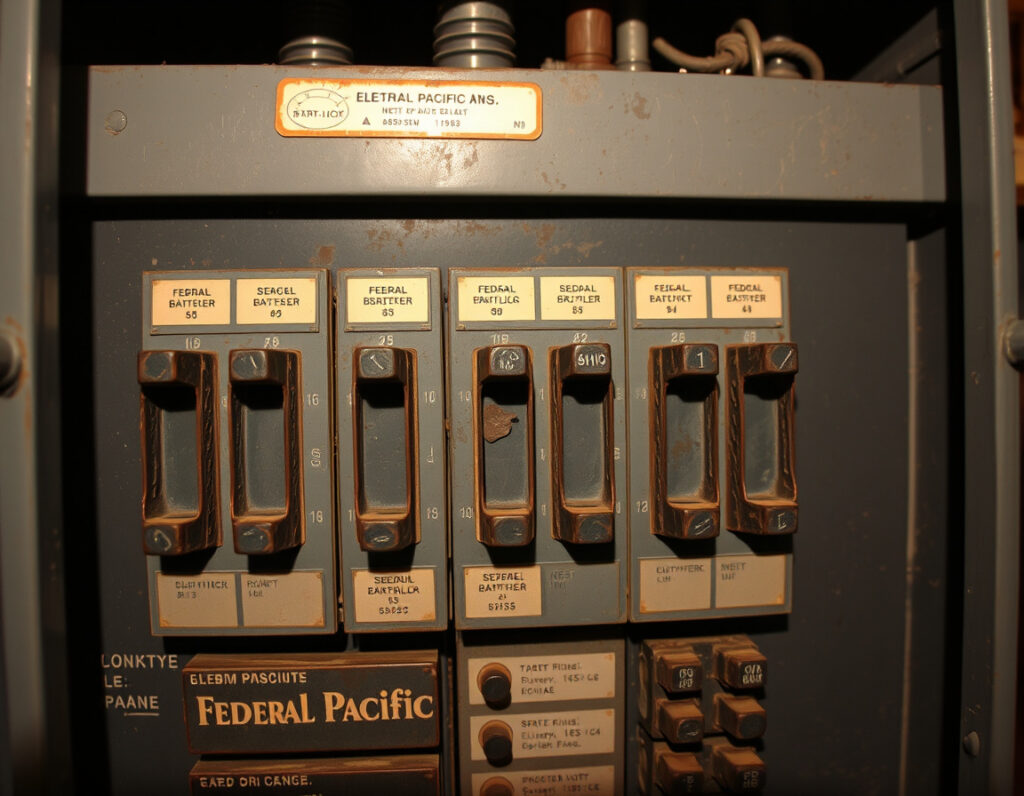
Homes in this part of the southwest Chicago suburbs were built in waves, many of them in the 1960s through 1980s. That means a significant number of properties near Palos Hills, including those tucked behind the Moraine Valley Community College campus along 104th Avenue, still carry original wiring, outdated panels, or federal Pacific breakers that haven’t been touched in decades. An inspection puts a hard number on exactly what needs attention before a deal closes.

What a Licensed Electrician Checks During an Inspection

A thorough electrical inspection covers the main service panel, all branch circuits, wiring condition, grounding, bonding, GFCI and AFCI protection, smoke and carbon monoxide detector placement, and the condition of outlets and switches throughout the home. The inspector is looking for code violations, deteriorated materials, signs of DIY work done without permits, and any conditions that create a shock or fire risk.

One area that comes up frequently in older homes near Kean Avenue and the neighborhoods bordering Bridgeview is aluminum branch circuit wiring. Aluminum wiring was common in residential construction between roughly 1965 and 1973. It’s not automatically dangerous, but it requires specific connectors and devices rated for aluminum. An inspection will flag whether that’s been done correctly or whether the connections are creating a heat buildup risk inside the walls.

If you’re already thinking about what electrical inspections cover in nearby communities, the scope is similar, but local permit offices can have slightly different requirements for documentation and reinspection.

Common Failures That Turn Up in Pre-Sale Inspections

The most common issues found during pre-listing inspections in this area fall into a predictable set of categories. Double-tapped breakers, where two wires share a single breaker terminal, show up constantly in panels that were expanded over time without professional work. Missing knockouts, improper bonding on water pipes, and missing GFCI protection in kitchens, bathrooms, and garages are also flagged regularly.

Perhaps the most expensive surprise a buyer’s inspector can find is a panel that needs full replacement. Replacing an electrical panel runs $1,500 to $4,000 depending on amperage and access. Sellers who get ahead of that finding with a pre-listing inspection can choose to repair it, price accordingly, or at minimum avoid a last-minute renegotiation. That kind of preparation matters in a competitive market along the I-294 corridor.

Permit Requirements and Code Compliance for Electrical Work in Palos Hills

What Palos Hills Homeowners Need to Know Before Booking an Electrical Inspection — Electrical Services, Palos Hills

A question that comes up often: does that electrical work actually need a permit? The honest answer is yes, for more things than most homeowners expect. In Palos Hills, pulling a permit for electrical work isn’t optional for anything beyond basic fixture swaps. Panel upgrades, new circuits, house wiring changes, and even some outlet additions all require a permit and a follow-up inspection by the Village’s building department.

The Village of Palos Hills enforces the National Electrical Code as adopted by Illinois, with local amendments. When a homeowner skips the permit process, the work technically doesn’t exist from the municipality’s perspective. That becomes a real problem when the home sells, when an insurance claim is filed after a fire, or when a buyer’s lender orders an appraisal that includes a code compliance check.

Why Unpermitted Electrical Work Creates Problems Down the Road

Unpermitted work is one of the most common complications in residential real estate transactions in the southwest suburbs. A seller may not even know the work was unpermitted if it was done before they owned the home. When it surfaces during a buyer’s inspection, the options are either a price reduction, an escrow holdback, or bringing in a licensed electrician to correct and permit the work before closing.

The National Fire Protection Association’s NFPA 70, the foundation of the National Electrical Code, is updated every three years. Each cycle adds new requirements around arc-fault protection, tamper-resistant outlets, and energy efficiency. Work done to an older code isn’t automatically in violation, but any new work on the same circuits needs to meet current standards. A good electrical contractor will explain exactly what code cycle applies to your project and what that means for your inspection outcome.

For homeowners who’ve also been considering upgrades like energy-efficient lighting upgrades or new ceiling fans, those projects can often be bundled with permitted electrical work to save on inspection fees and reduce the number of times you need to schedule an appointment with the building department.

How to Prepare Your Home Before the Inspector Arrives

A few simple steps make inspections go faster and reduce the chance of a conditional pass. Clear access to the main electrical panel. Make sure every circuit is labeled, even if roughly. Check that all outlets in bathrooms, the kitchen, and the garage have working GFCI protection. Replace any damaged cover plates. These small items don’t change the fundamental condition of your wiring, but they signal to the inspector that the home has been maintained, and they prevent minor violations from inflating the report.

Seasonal Electrical Demand and Why Older Homes Near Palos Hills Struggle

Summer cooling loads and winter heating systems both put serious stress on electrical infrastructure. Homes in the neighborhoods near LaGrange Road and the Palos Hills border with Hickory Hills were sized for the appliance loads of their era. A 100-amp service panel was standard in the 1970s. Today, with central air conditioning, electric dryers, EV chargers, and modern kitchen appliances all running simultaneously, that same panel is often at or beyond its rated capacity.

The symptoms show up as tripping breakers, flickering lights when large appliances cycle on, and warm or discolored outlet covers. These aren’t just nuisances. They’re signs that residential electrical services are needed before the system causes a more serious problem. A panel upgrade from 100 to 200 amps, combined with any necessary wiring corrections, gives older homes the headroom to handle modern loads safely.

Reed Electrical Services, LLC. works with homeowners across Palos Hills and the surrounding communities to assess existing capacity and recommend upgrades that match actual usage, not just what the minimum code requires. That kind of honest load analysis saves homeowners from spending money on upgrades they don’t need while making sure the ones they do need get done correctly. You can see the same approach applied in the panel upgrade work done for Orland Park homeowners with similar infrastructure ages.

Permit Requirements and Code Compliance for Electrical Work in Palos Hills — Electrical Services, Palos Hills

Frequently Asked Questions About Electrical Inspections in Palos Hills

How long does a residential electrical inspection typically take?

For a standard single-family home, most inspections run between one and two hours. Larger homes, homes with detached garages, or properties with older wiring that requires more investigation can take closer to three hours. The inspector needs access to the panel, attic, crawlspace, and every room with outlets or fixtures, so clearing those areas ahead of time keeps the process moving.

Do I need an electrical inspection if I’m not selling my home?

Yes, inspections make sense outside of real estate transactions too. If your home is over 25 years old and hasn’t had an inspection, if you’ve experienced repeated breaker trips or flickering lights, or if you’re planning a major renovation, an inspection gives you a clear picture of what the system can handle and what needs attention before you add any new loads. It’s a diagnostic tool, not just a real estate requirement.

What happens if my home fails an electrical inspection?

A failed inspection doesn’t mean work stops. It means the inspector has documented specific deficiencies that need to be corrected before a certificate of compliance or occupancy can be issued. A licensed electrician addresses those items and schedules a reinspection. In most cases, corrections are straightforward and the reinspection passes without issue. The more important question is whether you find those problems through a proactive inspection or through a buyer’s inspector during a sale.

If your home near Palos Hills hasn’t had a professional look at the electrical system in the last decade, now is a good time to schedule one. Reed Electrical Services, LLC. handles pre-sale inspections, compliance reviews, and full-service electrical repairs for homeowners and buyers across the area. Call or reach out online to get an appointment set up before your next real estate transaction or renovation project gets started. For homeowners in nearby communities who want to understand what to expect, the electrical inspection services available in Oak Lawn follow the same thorough process.

Read More

Emergency Electrician in Palos Hills, IL — Fast Response When It Matters

What Counts as an Electrical Emergency — and What to Do First

Most electrical problems give you warning signs. A tripping breaker here, a flickering light there. But some situations skip the warning stage entirely. If you’re dealing with a burning smell near your breaker box, outlets that are sparking or warm to the touch, a total loss of power after a storm on 111th Street, or wiring that got wet during a basement flood, you’re in emergency territory. Waiting until Monday morning is not an option.

Homeowners near Palos Hills face a specific set of risks tied to the region’s older housing stock and the intense Midwest weather patterns that roll through Cook County every spring and fall. A tree limb hitting a service line along Wolf Road can drop power in seconds. Floodwater from a heavy rain event near the Palos Forest Preserve can saturate an electrical panel or sub-panel in a finished basement before a homeowner even realizes the water came in. These are the scenarios where having an emergency electrician on call makes a real difference.

Before any electrician arrives, a few basics matter. If you smell burning or see smoke near a panel, switch off the main breaker if it is safe to reach. Do not use water on an electrical fire. Get everyone out and call 911 first if there is active flame. Once the immediate danger is handled, the next call should be to a licensed electrician near me who can actually diagnose the root cause rather than just reset a breaker and leave.

Storm Damage and Power Loss Along the Southwest Suburbs

The stretch of Palos Hills sitting between 95th Street and 111th Street sees a lot of storm-related electrical calls. High winds can knock a weatherhead loose from the side of a house, which means the service entrance wires that connect your home to the utility grid get compromised. That is not a repair the utility company handles on your side of the meter. It requires a licensed electrical contractor to replace the weatherhead, secure the conduit, and coordinate the reconnection with ComEd before power is restored. Reed Electrical Services, LLC. handles this type of emergency regularly in the southwest suburbs and knows the coordination steps involved.

Surge damage is another common post-storm issue. A nearby lightning strike or a utility switching event can send a voltage spike through your home’s wiring, damaging appliances, smart home devices, and even the panel itself. If your circuit breakers won’t reset after a storm, the issue may be deeper than a tripped breaker. This is exactly where a thorough electrical inspection in Palos Hills becomes critical to identifying hidden damage before it causes a fire.

Why Response Time Matters More Than You Think in an Electrical Emergency

There is a window between “something seems wrong” and “this is now a serious hazard” that closes fast. A loose wire arcing behind a wall generates heat. That heat builds over hours. By the time a homeowner smells something, the drywall cavity may already have charred framing inside. According to the National Fire Protection Association, electrical fires account for roughly 46,700 home fires annually in the United States, causing over $1.5 billion in property damage. Most of those fires involve failures that showed early signs someone didn’t act on quickly enough.

That is why fast response from residential electrical services professionals is not just a convenience point. It is a safety variable. An electrician who can be on site within the hour, rather than scheduling for next week, catches problems while they are still repairable rather than catastrophic.

For residents near Moraine Valley Community College or along 104th Avenue, proximity matters. A local electrical contractor near me who already knows the neighborhood’s housing age and panel types is going to diagnose faster than a technician driving in from 30 miles out who has never worked on the split-level ranches that dominate this part of the southwest suburbs.

Older Panels and the Emergency Risk They Create

A significant portion of homes near Palos Hills were built between the late 1950s and the 1980s. Many of those homes still have original electrical panels that were never designed to handle the load of a modern household. Replacing an electrical panel is not always a planned project. Sometimes a panel fails suddenly, leaving a family without power or, worse, creating a fire risk from a panel that can no longer safely interrupt a fault.

If your breakers are warm to the touch, if the panel smells like burning plastic, or if breakers are tripping repeatedly on circuits that shouldn’t be overloaded, those are emergency signals. A panel that fails in the middle of a February cold snap near 95th Street and Wolf Road is not just an inconvenience. It means no heat, no lights, and a growing risk of a more serious fault. Getting a qualified electric repair service involved quickly can mean the difference between a same-day panel swap and a full emergency board-up situation.

If your home is in this age range, pairing an emergency service call with a look at your electrical panel upgrade options nearby gives you a longer-term plan so you are not in this position again. Knowing what your panel can and can’t handle before the next storm season is always the smarter move.

EV Chargers, High-Draw Appliances, and Tripped Circuits

A newer category of emergency calls in the area involves high-draw circuits. EV chargers, air conditioning units, hot tubs, and high-end kitchen appliances all pull significant current. If those circuits were not properly sized or installed by a qualified residential commercial electrician, the result is repeated tripping, overheating wiring, or in bad cases, a small fire at the outlet or junction box.

Residents in the area who recently added an EV charger or had a new appliance installed by someone other than a licensed electrician sometimes find themselves with a circuit that trips every time the car starts charging at full rate. This is not a minor annoyance. An undersized wire on a 40-amp or 50-amp circuit is a genuine fire hazard. If you’re experiencing this, it qualifies as an urgent electrical issue. A proper EV charger installation in Palos Hills done to code means the circuit is sized correctly from the start, eliminating that risk entirely.

The same logic applies to any high-draw outlet that runs hot. Outlets and switches that are discolored, warm, or buzzing under load need attention right away. The switch and outlet installation service covers both new installs and emergency replacements when an existing outlet has started behaving dangerously.

The U.S. Consumer Product Safety Commission’s electrical safety resources outline clearly when an outlet or wiring issue crosses from “normal wear” into a hazardous condition. If there is discoloration, a burning smell, or warmth at an outlet or cover plate, that threshold has already been crossed.

Frequently Asked Questions

How quickly can an emergency electrician reach my home in the Palos Hills area?

Response times vary by provider, but a local electrical contractor serving the southwest suburbs should be able to reach most addresses in Palos Hills within 30 to 60 minutes for true emergencies. If you’re located near major corridors like 111th Street or Wolf Road, you’re in a well-served zone. When you call, describe the symptoms clearly so the electrician can bring the right parts and tools, which cuts down diagnostic time significantly once they arrive.

What should I do if my panel trips and won’t reset after a storm?

First, make sure the tripped breaker is fully pushed to the OFF position before trying to reset it to ON. If it trips again immediately, or if it feels warm, smells like burning plastic, or makes a buzzing sound, stop resetting it and call a licensed electrician. A breaker that won’t hold is usually protecting you from a fault downstream in the wiring or in a connected appliance. Forcing it back on repeatedly can start a fire inside the wall. Leave it off and get a professional out to diagnose the circuit before using it again.

Does homeowner’s insurance cover emergency electrical repairs?

It depends on the cause and your specific policy. Damage caused by a covered peril, such as a lightning strike or a storm-related power surge, is often covered under standard homeowner’s policies, though the deductible may apply. Repairs needed because of old wiring or a failing panel due to age and neglect are typically not covered. Getting a written diagnostic report from a licensed electrician after an emergency call creates the documentation your insurance adjuster needs to process a valid claim, so always ask for that paperwork.

When electrical problems happen fast, you need a crew that can respond the same way. Reed Electrical Services, LLC. serves the Palos Hills area and the surrounding southwest suburbs with prompt, professional emergency electrical response. Whether it’s a panel fault after a storm, a circuit that won’t stop tripping, or a wiring issue that’s producing heat or smell, the team is equipped to diagnose and fix the problem correctly the first time. Don’t sit on an electrical warning sign. Call Reed Electrical Services, LLC. and get it handled before a manageable repair turns into a serious hazard.

Read More

Why Your Electric Bill Keeps Rising: What a Palos Hills Electrician Can Diagnose

Why Palos Hills Homeowners Are Paying Too Much on Their Electric Bills

A spike in your monthly electric bill is one of those problems that’s easy to notice and hard to explain. You haven’t added new appliances, the weather hasn’t changed dramatically, but the number keeps climbing. For residents near Wolf Road and 111th Street or along the busy stretch of Southwest Highway, this is a more common call than most people expect. And more often than not, there’s a wiring or electrical system issue quietly driving that extra cost.

Older homes in this part of southwest Cook County were built during an era when household electrical demand was a fraction of what it is today. A single circuit handled a living room. A kitchen ran on two. Today, those same circuits are pushing refrigerators, microwaves, smart displays, dishwashers, and EV chargers. When the system can’t keep up, it works harder, draws more power inefficiently, and your bill reflects that strain.

Common culprits behind unexplained bill increases include faulty wiring connections that create resistance and heat loss, outdated electrical panels that can’t distribute load cleanly, and aging outlets with worn contacts that waste energy every time a device is plugged in. None of these are visible without a licensed professional taking a closer look inside the walls and panel box.

The Role of Your Electrical Panel in Energy Efficiency

Most homeowners think of the panel as just a breaker box, but it’s actually the distribution hub for everything running in your home. A panel that’s undersized, aging, or simply not matched to your current load will run less efficiently. Replacing an electrical panel isn’t cheap, but the math often works out when you factor in the wasted energy over months or years. The electrical panel upgrade process involves assessing your current amperage, the number of circuits, and whether the equipment meets current Illinois code standards.

Homes near Moraine Valley Community College or tucked into the neighborhoods off 95th Street are frequently in the 100-amp service range, which made sense in the 1970s. Today, many households genuinely need 200 amps to run without strain. A commercial and residential electrician can conduct a proper load calculation and tell you whether your panel is the bottleneck.

Wiring Problems That Quietly Drain Power

Loose wire nuts, degraded insulation, and connections that have oxidized over decades all create resistance in a circuit. Resistance equals heat, and heat equals wasted electricity. In a practical sense, a single bad connection in a lighting circuit might be adding dollars to your bill every month, invisibly. House wiring electrical issues like these are almost impossible to self-diagnose without pulling covers and using a clamp meter.

If your home was built before 1985, there’s a real chance some of the wiring was done with aluminum conductors, which expand and contract at a different rate than copper. That movement loosens connections over time. The wiring upgrade work needed to address aluminum wiring goes beyond cosmetic fixes and typically requires a licensed electrician to properly remediate connections at every device and outlet.

What a Proper Electrical Diagnosis Actually Looks Like

Why Palos Hills Homeowners Are Paying Too Much on Their Electric Bills — Electrical Services, Palos Hills

Calling a general handyman for an electrical bill problem is like calling a plumber about a roof leak. The diagnostic process for electrical issues requires equipment, training, and a license. A qualified electrical contractor will start with your utility data, not just your bill total, but your usage history measured in kilowatt-hours. Usage trends tell a much more specific story than a dollar amount, which fluctuates with rate changes.

From there, the inspection moves to the panel, then through circuits room by room. A thermal imaging scan can reveal hot spots behind walls that indicate resistance or arcing without any demolition. The electrical inspection process for this kind of diagnostic work is methodical and takes time, but it’s the only reliable way to separate a billing rate issue from a genuine electrical problem inside your home.

The Palos Hills area sits within a part of Cook County that has a mix of housing stock ranging from post-war ranch homes to newer construction near 107th Avenue. Each era of construction brings its own set of electrical characteristics, and a diagnosis approach that works for a 1960s ranch won’t apply to a 1995 two-story. That’s why experience with both commercial and residential electrician work across different construction types matters when diagnosing something as nuanced as a chronic high-bill problem.

Appliances vs. Infrastructure: Knowing the Difference

Sometimes the bill spike really is just an appliance. An old electric water heater running 24/7, a chest freezer with a failing compressor, or a space heater someone forgot to unplug in a back bedroom. A good electrician won’t ignore these possibilities. Part of a solid diagnosis is ruling them out with a circuit-by-circuit amperage check so you know exactly where power is going.

But when those checks come back clean and usage is still high, the focus shifts to infrastructure. That means inspecting switch and outlet installation quality at every device, checking for double-tapped breakers in the panel, and verifying that GFCI and AFCI protection is where it should be under current Illinois code. Homeowners near the intersection of 111th and Harlem Avenue often discover their older homes were never updated to include arc-fault protection, which is now required for most living spaces.

If lighting is part of the issue, older incandescent or halogen fixtures draw significantly more power than their LED replacements. A proper lighting upgrade can cut lighting-related energy use by 60 to 70 percent in older homes. That’s a measurable number, not an estimate.

Local Code, Permits, and Why They Matter for Your Bill and Your Safety

Palos Hills follows the Illinois Electrical Act and local ordinances that govern how electrical services work must be performed and permitted. This isn’t just bureaucratic overhead. Permitted work gets inspected by the municipality, which means a second set of eyes verifying that what was done is actually correct. Unpermitted electrical work, even if it looks fine, can affect your homeowner’s insurance coverage and complicate a home sale down the road.

The City of Palos Hills has specific permit requirements for panel replacements, service upgrades, and new circuit installations. Working with a licensed electrician near me who pulls permits as a standard part of the job protects you from liability and ensures the work meets the version of the code that was current at the time of the project.

The National Electrical Code, which Illinois adopts on a cycle, is published and updated by the National Fire Protection Association and forms the basis for most of the safety requirements a licensed contractor must follow. When an electrician tells you something needs to be upgraded to code, this is the document they’re referencing. It’s worth understanding what that means rather than treating it as a sales pitch.

What Reed Electrical Services Brings to This Specific Work

Reed Electrical Services, LLC. handles both residential and light commercial work across the southwest suburbs, which means the team has seen the full range of electrical conditions that show up in this part of Cook County. From ranch homes near Palos Hills Road that haven’t had their panels touched since the Carter administration, to newer commercial strip spaces off 95th that need load balancing after a tenant change, the diagnostic experience covers a wide spectrum.

If you’ve been staring at a high electric bill for more than two months and swapped out appliances without seeing improvement, the problem is almost certainly in the wiring or panel. A proper diagnosis from a residential electrical services professional is the fastest path to an answer. Reed Electrical Services, LLC. can schedule an inspection, walk through the findings with you in plain language, and give you options that fit the actual scope of the problem rather than a one-size fix. Check the switch and outlet installation services page if you’re also noticing warm outlets or sparking when plugging in devices, as those symptoms often accompany the same underlying issues.

What a Proper Electrical Diagnosis Actually Looks Like — Electrical Services, Palos Hills

Frequently Asked Questions

Can a wiring problem actually cause my electric bill to go up noticeably?

Yes, and it happens more often than most people expect. Loose or corroded connections create electrical resistance, which wastes energy as heat rather than doing useful work. Over a full billing cycle, this extra resistance can add a meaningful amount to your usage. Faulty wiring doesn’t always trip a breaker or cause visible symptoms, so high bills are sometimes the only early warning sign.

How do I know if my electrical panel is the source of the problem versus the wiring in the walls?

A licensed electrician will typically start with the panel, checking for double-tapped breakers, signs of heat damage, and whether the service amperage matches the actual load on the home. If the panel looks sound, the inspection moves circuit by circuit through the home. Thermal imaging is particularly useful for identifying hot spots inside walls without opening them up. You generally can’t make this determination yourself without professional diagnostic tools.

Do I need a permit to have my electrical panel replaced in Palos Hills?

Yes. Panel replacements and service upgrades require a permit through the City of Palos Hills, and the completed work must pass a municipal inspection. Any licensed electrical contractor operating properly in this area will pull that permit as part of the job. If a contractor offers to skip the permit to save you money, that’s a significant red flag, both for the quality of the work and for your homeowner’s insurance coverage.

Read More

EV Charger Installation in Palos Hills, IL: What Licensed Electrical Contractors Want You to Know

Why EV Charger Installation Is the Right Move for Palos Hills Homeowners Right Now

Electric vehicles are no longer a novelty on the streets around Palos Hills. Drive along 95th Street or head south on Roberts Road toward the Palos Hills border with Bridgeview, and you’ll spot more EVs parked in driveways than ever before. The problem most homeowners run into isn’t the car itself — it’s the charging setup at home. A standard 120V outlet charges a typical EV at about 3 to 5 miles of range per hour. That means overnight charging barely replenishes a full commute to downtown Chicago and back. A dedicated Level 2 EV charger changes that equation completely, delivering 20 to 30 miles of range per hour from a 240V circuit.

Installing that 240V circuit is where a licensed electrical contractor becomes essential. This isn’t a plug-and-play project. It involves running a dedicated circuit from your electrical panel, selecting the right wire gauge for the amperage load, mounting the EVSE unit in a weatherproof location, and pulling the appropriate permits through Cook County. Skip any one of those steps and you’re looking at a fire hazard, a voided homeowner’s insurance policy, or a failed inspection when you eventually sell the house.

Residents near Moraine Valley Community College and the neighborhoods tucked west of Wolf Road frequently ask whether their existing panel can handle the added load. Many homes in this area were built in the 1970s and 1980s with 100-amp service — enough for the original appliances but tight once you add a Level 2 charger drawing 30 to 50 amps continuously. A qualified electrician will assess your panel capacity before any work starts. If an upgrade is needed, that’s a separate conversation, but it’s one worth having early. You can also explore EV charger installation options specific to Palos Hills to understand what the process looks like locally.

Choosing the Right Charger and Amperage for Your Home

Not every Level 2 charger is the same. The two most common residential configurations are 32-amp and 48-amp units. A 32-amp charger runs on a 40-amp dedicated circuit and covers the needs of most single-EV households. If you have two EVs or a long-range vehicle with a large battery pack, a 48-amp charger on a 60-amp circuit gives you significantly faster overnight fills. The electrician’s job is to match the charger specs to your panel capacity and your actual driving habits — not just sell you the biggest unit on the shelf.

Brand selection matters less than proper installation, but a few names worth knowing include ChargePoint, JuiceBox, and Enel X JuiceBox. All are compatible with most major EV manufacturers and qualify for the federal Alternative Fuel Vehicle Refueling Property Credit under IRS Section 30C, which can offset up to 30% of the installed cost. The U.S. Department of Energy’s EV home charging guide walks through the credit eligibility requirements in detail — worth reading before you schedule the installation.

What Makes a Contractor “Licensed” and Why It Matters for EV Work

Why EV Charger Installation Is the Right Move for Palos Hills Homeowners Right Now — Electrical Services, Palos Hills

Illinois requires electrical contractors to hold a valid state license through the Illinois Department of Financial and Professional Regulation. For EV charger work specifically, the permit process in Cook County means the installation gets inspected by the local authority having jurisdiction. That inspection protects you. If an unlicensed handyman wires a 240V circuit incorrectly, the failure mode isn’t a tripped breaker — it can be an arc fault that starts inside a wall cavity. By the time you smell smoke, the damage is already done.

A licensed contractor also carries the general liability and workers’ compensation insurance required by Illinois law. That matters when someone is drilling through your garage wall and fishing wire through finished living space. Homeowners near the Cal-Sag Channel corridor and along 107th Street have learned this the hard way after hiring unlicensed workers through informal referrals. The savings upfront rarely survive the cost of correcting the work later.

For those who want to compare the scope of work across similar suburbs, the EV charger installation process in Bridgeview follows the same Cook County framework and gives a clear picture of what to expect on inspection day. If you’re also considering a broader electrical assessment before the charger goes in, an electrical inspection in Palos Hills is a smart first step — it flags any panel or wiring concerns before the new circuit is added.

Permit and Inspection Requirements in Cook County

Palos Hills falls under Cook County’s unincorporated jurisdiction rules for permitting in some areas, though the city itself handles permits through its own building department. Either way, residential electrical permits are required for any new 240V circuit installation. The permit application typically requires a description of the work, the amperage of the new circuit, and the location of the panel. Inspections are scheduled after rough-in and again after the final connection. Turnaround times in this area tend to run five to ten business days for permit approval, so building that into your project timeline matters.

Contractors who skip the permit step are saving themselves paperwork at your expense. If you ever file a homeowner’s insurance claim related to an electrical fire, and the insurer discovers unpermitted work, the claim can be denied outright. The Illinois building permit process overview published by the state lays out what’s required for residential projects and is a useful reference if you want to verify what your contractor should be filing on your behalf.

Service Area Reach and Local Context Around the 95th Street Corridor

The stretch of 95th Street running through Palos Hills connects directly to Oak Lawn to the east and Bridgeview to the north, putting this area at the center of a dense residential zone that’s seeing a notable uptick in EV ownership. Subdivisions near Wolf Road and 104th Avenue tend to have attached garages — ideal for Level 2 charger mounting — but older construction means panels often need a closer look before adding load. Homeowners in the Palos Hills area who are also looking at home improvements for other family members in nearby communities can check the EV charger installation service in Oak Lawn for reference on adjacent-area availability.

Reed Electrical Services, LLC. serves the Palos Hills area and surrounding southwest suburbs, with experience on the specific panel types and construction styles common to homes built between 1965 and 1995. That local knowledge shortens the job. An electrician who already knows which wire gauges were standard in this era, and where older Federal Pacific or Zinsco panels still show up in Cook County homes, can scope the project accurately on the first visit rather than discovering surprises mid-installation.

If your household is also thinking about adding a ceiling fan or upgrading lighting during the same visit to reduce back-and-forth scheduling, that’s a reasonable request. Bundling smaller electrical work with the charger installation often makes sense from a cost-per-trip standpoint. You can see what’s involved with ceiling fan installation in Palos Hills if that’s on the list.

What Makes a Contractor "Licensed" and Why It Matters for EV Work — Electrical Services, Palos Hills

Frequently Asked Questions

How long does a Level 2 EV charger installation take in a typical Palos Hills home?

Most installations take between two and four hours once the permit is in hand. If the panel needs a circuit breaker added and the garage is adjacent to the panel location, the job is on the shorter end. Longer runs of conduit through finished spaces or older panels that require careful breaker identification can push the time closer to half a day. The permit inspection is a separate visit scheduled after the installation is complete.

Does my electrical panel need to be upgraded before installing an EV charger?

It depends on your current panel capacity and how many high-draw appliances are already on the system. Many homes in the Palos Hills area have 100-amp or 150-amp service. A 32-amp Level 2 charger requires a 40-amp dedicated breaker, which is workable in most 100-amp panels if the existing load is not already near capacity. A load calculation during the initial visit determines whether the panel has room or whether an upgrade is the safer path. Replacing an electrical panel adds cost and time but is sometimes the right call for long-term safety.

Can I install an outdoor EV charger if I don’t have an attached garage?

Yes. NEMA 4-rated EVSE units are designed for outdoor exposure and mount directly to an exterior wall or a dedicated post. The wiring still needs to be run in weatherproof conduit to a GFCI-protected 240V outlet or hardwired connection. Homeowners with detached garages or driveway parking pads can absolutely have a Level 2 charger installed — it just requires a longer wire run and appropriate outdoor-rated materials. A licensed electrician will route the conduit correctly to meet code and keep the installation looking clean.

Ready to stop relying on slow overnight trickle charging? Reed Electrical Services, LLC. handles the full scope of EV charger installation for homeowners in Palos Hills and the surrounding southwest suburbs — from the initial panel assessment through permit filing and final inspection. Call to schedule a site visit and get a straight answer on what your specific home and panel actually need.

Read More

Electric Repair Service in Palos Hills, IL: What Homeowners Need to Know Before Calling

What Palos Hills Homeowners Are Getting Wrong About Electrical Repairs

There’s a pattern that shows up constantly in older Southwest Chicago suburbs. A homeowner near Wolf Road and 111th Street notices a breaker tripping every few days. Instead of calling a licensed electrician, they reset it a dozen times, maybe replace a single outlet, and assume the problem is solved. Months later, the issue is worse — and potentially dangerous. This is the kind of quiet, slow-building problem that’s common in neighborhoods like Palos Hills, where a large portion of the housing stock dates back to the 1960s and 1970s.

Homes built in that era often carry outdated wiring configurations, undersized panels, and aluminum branch circuit wiring that no longer meets current code. None of those problems are obvious from the outside, and none of them announce themselves until something fails. That’s exactly why electric repair service calls in this area look different from a new construction suburb — the issues run deeper, and generic fixes don’t hold.

Residents along McCarthy Road and near Moraine Valley Community College deal with a specific mix of aging infrastructure and modern electrical demand. Smart TVs, EV chargers, home offices drawing continuous load — these weren’t part of the original design calculus for these homes. When repair calls come in, the symptom on the surface rarely tells the whole story.

Reading the Warning Signs Before They Become Emergencies

Flickering lights aren’t just annoying. They often point to a loose neutral connection somewhere in the system, which can cause voltage fluctuations that damage sensitive electronics over time. Warm outlet covers, burning smells near panels, and breakers that won’t hold a reset are all signs that the electrical system needs professional attention — not a hardware store fix. If you’re hearing buzzing from a light switch or seeing discoloration on a wall plate, those are physical signs of arcing, and arcing starts fires.

For area homeowners considering a panel check before listing a home or after buying one, a thorough electrical inspection in Palos Hills is often the fastest way to understand what you’re actually working with. It’s a lot less expensive than discovering a wiring problem mid-sale or after moving in.

Why Repair Work Here Isn’t the Same as Elsewhere

What Palos Hills Homeowners Are Getting Wrong About Electrical Repairs — Electrical Services, Palos Hills

The geography of this area matters more than people realize. Palos Hills sits within a cluster of municipalities — Bridgeview to the northeast, Alsip further east, Burbank directly north — all with slightly different building department protocols. When electric repair service work crosses into permit territory (which it often does once a panel or wiring run is involved), knowing local code nuances saves time and avoids failed inspections.

This isn’t theoretical. The City of Palos Hills has its own building department, and electrical work that affects service entrance equipment or branch circuit wiring typically requires a permit and inspection sign-off. A contractor who pulls permits regularly in the area moves through that process without delays. One who doesn’t know the local process creates headaches for homeowners.

Reed Electrical Services, LLC. works across this corridor regularly and understands the permit and inspection process that applies to residential electrical services in this part of Cook County. That matters when a repair turns out to require a partial panel upgrade or a wiring correction that needs code sign-off.

When a “Simple” Repair Leads to a Panel Conversation

This comes up more often than homeowners expect. Someone calls about a dead circuit in their kitchen near 95th Street. The electrician traces it back to a double-tapped breaker in an overloaded 100-amp panel. Now the repair conversation becomes a capacity conversation. Homes in this area that still run on 100-amp service are technically functional but don’t have room to handle modern loads safely.

Replacing an electrical panel from 100 to 200 amps isn’t a small job, but it’s also not an optional one if the house is going to support a home EV charger, an air handler upgrade, or even a tankless water heater. Homeowners who want to understand what that process involves can look at what’s typically required for an electrical panel upgrade in the Oak Lawn area, which shares nearly identical code requirements with Palos Hills.

And for homeowners who’ve already started thinking about EV charging at home, the panel question becomes even more pressing. A dedicated 240V circuit for a Level 2 charger pulls 30-50 amps by itself. If you want to understand the full picture of what that installation involves locally, the details for EV charger installation in Palos Hills cover the circuit requirements, panel considerations, and what to expect from the permit process.

How to Hire the Right Electrical Contractor for Repair Work

The top result you’ll see when searching for electrical help near Palos Hills is a plumbing company. That’s not a knock on plumbers — it just illustrates that the local search landscape doesn’t always surface the right trade for the job. Electrical repair requires a licensed electrician with the right classification, insurance coverage, and experience with residential systems specifically.

Illinois requires electrical contractors to be licensed at the state level, and many municipalities in Cook County layer additional local licensing on top of that. According to the National Fire Protection Association’s NFPA 70 (National Electrical Code), electrical work must conform to current adopted code standards — and in Illinois, local amendments to that code apply. Hiring someone who doesn’t know those specifics can result in repairs that are physically complete but legally non-compliant.

When evaluating electrical contractors for repair work, ask these questions before anyone opens a panel:

  • Are you licensed in Illinois and familiar with Palos Hills permit requirements?
  • Do you carry general liability and workers’ compensation insurance?
  • Will this repair require a permit, and if so, will you pull it?
  • What’s your process if the repair reveals a larger underlying issue?

Those four questions will filter out a significant portion of unlicensed or underqualified contractors who operate in suburban Cook County.

What Sets a Commercial Residential Electrician Apart

Some electrical contractors work primarily in commercial environments — tenant buildouts, industrial panels, three-phase systems. Others focus exclusively on residential. A commercial residential electrician who works across both settings tends to have a broader diagnostic skill set, because commercial work demands tighter tolerances and more systematic troubleshooting. That cross-training shows up when diagnosing an intermittent fault in a residential system that a pure residential contractor might misread.

For homeowners near the Palos Hills Rec Center on 83rd Avenue or anywhere along the Cal-Sag Channel corridor, the proximity to light industrial and commercial properties means some residential homes share utility infrastructure that behaves more like commercial service. An electrician familiar with both contexts is better equipped to diagnose problems that originate upstream from the meter.

If you’re dealing with a house wiring electrical issue that’s gone unresolved through multiple repair attempts, the problem is usually either misdiagnosis or an incomplete repair scope. Getting a second opinion from an experienced contractor often resolves months of frustration in a single visit.

Why Repair Work Here Isn't the Same as Elsewhere — Electrical Services, Palos Hills

Frequently Asked Questions

How do I know if my electrical problem needs a permit in Palos Hills?

Any work that involves the service entrance, main panel, adding new circuits, or modifying existing branch circuit wiring generally requires a permit in Palos Hills. Simple repairs like replacing a receptacle or switch typically do not. The safest approach is to ask your electrician directly — a reputable contractor will tell you upfront whether the scope of work triggers a permit requirement and will handle pulling it if it does.

Can I use a general handyman for electrical repair work in Illinois?

Illinois law requires electrical work beyond very minor tasks to be performed by a licensed electrician. Hiring an unlicensed handyman for electrical repairs creates liability exposure for the homeowner, can void homeowner’s insurance coverage for related incidents, and may result in code violations that surface during a home sale inspection. It’s not worth the risk for anything beyond changing a lightbulb.

What’s the difference between an electrical repair and an electrical upgrade?

A repair restores a component or circuit to its prior working condition. An upgrade improves capacity, safety, or code compliance — things like adding a dedicated circuit, replacing an undersized panel, or installing whole-home surge protection. Repair calls sometimes reveal that an upgrade is the appropriate fix, especially in older homes where the original installation no longer meets current standards. Your electrician should explain clearly which category your situation falls into and why.

Getting the Right Help Without the Runaround

Electrical problems in the Palos Hills area often turn out to be more connected than they first appear. A tripping breaker might be a wiring issue. A wiring issue might point back to a panel that’s simply out of capacity. The repair that looks like a quick fix on the phone sometimes opens up a conversation about the bigger picture. That’s not upselling — that’s honest diagnosis.

Reed Electrical Services, LLC. serves the Palos Hills area and surrounding communities including Bridgeview, Oak Lawn, Burbank, and Alsip. Whether the call is for a straightforward circuit repair or a full diagnostic visit to track down an intermittent fault, the approach is the same: figure out what’s actually wrong, explain it plainly, and fix it the right way. Reach out to Reed Electrical Services, LLC. to schedule a visit and get a straight answer about what your home’s electrical system actually needs.

Read More

House Rewiring in Palos Hills, IL — What Homeowners With Older Wiring Need to Know

Why House Wiring in Older Palos Hills Homes Needs a Closer Look

A large share of the homes sitting along West 111th Street, near the Palos Hills Public Library, and throughout the neighborhoods tucked between Roberts Road and 104th Avenue were built in the 1950s through the 1970s. That era of construction was perfectly fine for the electrical loads of the time — a few lamps, a television, maybe a window air conditioner. Today, those same circuits are being asked to power EV chargers, smart home devices, high-draw kitchen appliances, and home offices running multiple monitors. The mismatch matters.

Knob-and-tube wiring, which was standard in homes built before about 1950, and early aluminum branch wiring, which became common in the 1960s and early 1970s, are the two wiring systems that cause the most problems for local residents. Knob-and-tube wiring lacks a ground wire, degrades over decades, and was never designed to be buried under attic insulation — which is exactly where you’ll find it in most of these older properties. Aluminum wiring expands and contracts differently than copper, and the connections it makes at outlets and switches can loosen over time, generating heat that becomes a fire hazard.

If your home sits near Moraine Valley Community College or along the busy stretch of La Grange Road through this part of the southwest suburbs, and it was built before 1980, a professional wiring evaluation is worth scheduling before you add another major appliance or finish a basement.

The Real Difference Between Old Wiring and a Rewire

A partial fix — replacing outlets here and there without addressing the underlying wiring — handles the symptom without touching the cause. A proper house rewire means pulling new copper wire through the walls, updating the circuit layout to match modern loads, and installing grounded receptacles throughout. It also sets you up properly if you’re planning to add a Level 2 EV charger at your Palos Hills home or upgrade your lighting system. Those additions require dedicated, properly sized circuits — not a patchwork of aging wiring with a new device bolted to the end of it.

The cost of rewiring a typical single-family home in this area depends on square footage, the number of circuits needed, and whether the electrical panel needs updating at the same time. Most homeowners in the 1,400 to 2,200 square foot range should expect the project to span several days and involve some drywall patching, though experienced electricians use fish tapes and low-impact access points to keep wall damage to a minimum.

Signs Your Wiring Situation Has Gone Past a Minor Repair

Why House Wiring in Older Palos Hills Homes Needs a Closer Look — Electrical Services, Palos Hills

Some issues announce themselves clearly. Breakers that trip repeatedly under normal use, outlets that feel warm to the touch, lights that flicker when someone turns on the microwave, a burning smell with no obvious source — these are not things to ignore or chalk up to quirky old houses. They are warning signs that the house wiring electrical system is struggling to keep up.

Other signs are quieter. If your home has two-prong outlets throughout and no ground fault protection in the bathrooms or kitchen, the wiring has almost certainly never been updated. A professional electrical inspection in Palos Hills will document exactly what you have, identify any code violations, and give you a clear picture of what needs to be addressed now versus what can wait.

What a Licensed Electrician Actually Checks During a Wiring Assessment

A thorough wiring assessment goes well beyond flipping breakers and checking outlets. A licensed electrician will look at the service entrance cable where power enters the house, inspect the main panel for signs of overheating or improper modifications, trace branch circuits for wiring type and condition, check junction boxes for proper covers and connections, and test every receptacle for correct wiring polarity and grounding. In homes near the Palos Hills area that have had additions or basement finishes done over the years, it’s common to find multiple generations of wiring spliced together without proper documentation — which can create dangerous hidden conditions inside walls.

If the assessment reveals aluminum branch wiring, there are two common remediation paths: replacing the wiring entirely with copper, or installing CO/ALR-rated devices and pigtailing connections with approved connectors at every termination point. The right choice depends on the extent of the aluminum wiring, the age and condition of the panel, and your long-term plans for the home. For guidance on how a panel upgrade ties into a wiring project, that context matters too — the two jobs often make the most sense when done together.

Illinois requires electrical work to be done by or under the supervision of a licensed electrical contractor. Permits are pulled, inspections are scheduled, and the work is documented. That paperwork protects you when it comes time to sell the home or file an insurance claim. Unpermitted electrical work is one of the most common issues that surfaces during real estate transactions in the southwest suburbs.

Planning a Rewire Around Your Schedule and Your Home

One concern homeowners consistently raise is the disruption factor. Nobody wants to be without power for days or have walls torn apart across every room. A well-planned rewire minimizes both. The project is typically staged so that only sections of the home are opened at a time, power is maintained to critical areas throughout most of the project, and wall repairs are handled as part of the scope.

Homes near Kean Avenue and the surrounding residential blocks often have attic access that simplifies running new circuits to second-floor rooms significantly. Ranch-style homes, common throughout this area, allow for relatively straightforward wiring runs. Two-story homes with finished basements require a bit more planning, but the process is well-established for experienced crews.

If you’re also thinking about updating switches and outlets throughout the home at the same time, a rewire is the ideal moment to do it. Installing USB outlets, tamper-resistant receptacles, and smart switches is far easier — and less expensive — when the walls are already open and circuits are being run fresh. Bundling the work saves time and avoids having to reopen walls later.

The Illinois Department of Public Health has clear standards around residential electrical safety, and meeting those standards starts with wiring that was properly installed and inspected. Age alone doesn’t disqualify older wiring — but age combined with deterioration, overloading, or improper modifications absolutely does.

Timing the Project Right

Spring and fall tend to be the most practical seasons for rewiring work in this part of the Chicago suburbs. Attic work in peak summer heat is harder on crews and materials alike, and winter access to certain areas can be complicated. That said, electrical repair service needs don’t wait for ideal weather, and most projects can be managed year-round with the right preparation. Scheduling a few weeks out rather than waiting for an emergency also gives time to pull permits properly and coordinate inspections with the local authority.

For homeowners considering selling within the next two to four years, investing in updated wiring now typically shows up favorably in the inspection report and removes a common negotiation lever for buyers. For those staying long-term, it’s simply a matter of having a safe, reliable system that can handle whatever the next decade of technology brings.

According to the National Fire Protection Association, electrical failures and malfunctions are among the leading causes of home fires in the United States — and many of those incidents trace back to aging or improperly modified wiring systems.

Signs Your Wiring Situation Has Gone Past a Minor Repair — Electrical Services, Palos Hills

Frequently Asked Questions

How do I know if my Palos Hills home needs a full rewire or just spot repairs?

The short answer is that spot repairs make sense when the wiring is generally sound and only a specific area has a problem. A full rewire becomes the better option when the wiring is knob-and-tube throughout, when aluminum branch wiring is present across most of the home, or when the existing system can no longer handle the electrical load you need. A professional inspection will give you a clear answer based on your specific home, not a general guess.

Will I need to move out of my home during a rewire?

Most homeowners do not need to leave during a rewire. Work is staged by area so that power remains available to parts of the home throughout the project. There will be periods when specific circuits are off, and running extension cords from live circuits is common during the process. The crew will walk you through what to expect before work starts so there are no surprises.

Does a house rewire require permits in Illinois?

Yes. Electrical work of this scope requires a permit, and the completed work must be inspected by the local authority having jurisdiction. This is not optional, and a contractor who suggests skipping permits is a red flag. Permitted work protects you legally, satisfies insurance requirements, and gives future buyers confidence that the work was done to code.

Reed Electrical Services, LLC. serves homeowners throughout Palos Hills and the surrounding southwest suburbs with house rewiring, panel work, EV charger installation, and a full range of residential electrical services. If your home has wiring that hasn’t been evaluated in years — or ever — this is a reasonable place to start. Contact Reed Electrical Services, LLC. to schedule a wiring assessment and get a clear picture of what your home’s electrical system actually needs.

Read More

Electrical Panel Replacement in Palos Hills, IL: What Homeowners Need to Know

Why Palos Hills Homes Are Overdue for an Electrical Panel Replacement

A lot of homes in this corner of the southwest Chicago suburbs were built in the 1960s and 1970s. That means the electrical panels inside many of them were designed for a world without EV chargers, whole-home air conditioning, or kitchen appliances that each draw more power than an entire room used to. If you live near Wolf Road or off 95th Street and your panel is still the original, there’s a real chance it’s running at capacity every time you run the dishwasher and the dryer at the same time.

The signs are usually subtle at first. Breakers that trip more than once a month. Lights that flicker when an appliance kicks on. A fuse box that still uses glass fuses instead of breakers. These aren’t quirks, they’re warnings. Replacing an electrical panel is one of those jobs that homeowners put off until something forces the issue, and by then it’s usually more urgent and more expensive than it needed to be.

The neighborhood sits at an interesting crossroads. Residents heading north on LaGrange Road toward Oak Lawn, or east toward Bridgeview along 95th, tend to be in homes of similar vintage. The electrical infrastructure in many of these houses has simply aged past the point where it can reliably support modern living. A licensed electrician who knows these homes understands that this isn’t about code compliance for its own sake. It’s about keeping families safe and keeping the lights on without constantly resetting breakers in the basement.

When a Panel Upgrade Is More Than Optional

Homeowners insurance is becoming a pressure point here. Some carriers in Illinois are now flagging homes with Federal Pacific or Zinsco panels and requiring replacement before renewing coverage. If you’re planning a renovation, adding a garage, or having solar or an EV charger installed, most contractors and inspectors will tell you to deal with the panel first. The electrical panel upgrade services in Oak Lawn page covers why capacity matters before any major addition, and the same logic applies to Palos Hills properties of similar age and construction.

A standard 100-amp service was plenty in 1968. Today, most household load calculations push well past that, especially in homes that have added central HVAC, a second refrigerator, or a home office with multiple devices running constantly. Upgrading to a 200-amp service isn’t a luxury at this point. It’s just catching up to how people actually live.

What the Replacement Process Actually Looks Like

The work involves pulling the proper permit through the village, coordinating a brief utility disconnect with ComEd, and having a licensed electrical contractor complete the swap and inspection. It usually takes one day for a straightforward replacement. The village of Palos Hills requires inspections on permitted electrical work, which is a good thing. It ensures the job is done correctly and protects you when you eventually sell the home.

Some homeowners near Palos Hills Road and the Moraine Valley Community College area have discovered during panel replacements that their wiring also needs attention. A thorough electrician will flag these issues during the job rather than leaving them for someone else to find later.

Choosing the Right Electrical Contractor for a Panel Job

Why Palos Hills Homes Are Overdue for an Electrical Panel Replacement — Electrical Services, Palos Hills

This is not the type of work to shop on price alone. The panel is the heart of your home’s electrical system. A poor installation creates problems that may not show up for months, like loose lugs that arc inside the enclosure or a main breaker that doesn’t actually interrupt the circuit under fault conditions. The National Fire Protection Association consistently identifies electrical failures as one of the leading causes of home fires in the United States. Palos Hills homes with aging panels are not exempt from that statistic.

The competitors currently showing up when local residents search for electrical help in this area tend to have thin review profiles or limited service descriptions. That matters when you’re hiring someone to work on the main panel. You want an electrical contractor who has pulled permits in this area, understands the local inspection process, and will stand behind the work after the inspector leaves.

Related Electrical Work That Often Pairs with a Panel Swap

Once the panel is open and the load is recalculated, it’s a natural time to address other deferred items. Many homeowners in this part of southwest Cook County use the opportunity to add circuits for a workshop, update switch and outlet installation in Palos Hills, or run a dedicated line for a chest freezer or EV charger. If you’ve been thinking about an electric vehicle, having the panel squared away first makes EV charger installation in Palos Hills a much cleaner process with no surprises about available capacity.

Ceiling fans, landscape lighting, and kitchen circuit additions are also common add-ons during panel work. It’s more efficient to do it while the walls are already open and the electrician is already on site. House wiring upgrades that might cost significantly more as a standalone job often become affordable additions when bundled with a panel replacement.

What Palos Hills Homeowners Should Know Before Getting a Quote

A few things will affect the scope and cost of electrical panel replacement at your specific address. First, where is the panel currently located? Basement panels near the meter are generally the most straightforward. Panels in garages, crawl spaces, or on exterior walls sometimes require additional conduit or weatherproofing work. Second, is your meter base in good condition? Sometimes the utility-side equipment needs attention at the same time, which involves coordination with ComEd beyond just scheduling a disconnect.

Third, and this matters a lot in older construction: what’s the condition of the wiring feeding the panel? In homes built before the mid-1970s along streets near College Drive and 107th Street, aluminum branch circuit wiring is not uncommon. That’s a separate conversation from the panel itself, and a qualified electrician will tell you upfront if it’s a factor rather than leaving you to find out later.

Reed Electrical Services, LLC. serves this area and handles the full scope of panel-related work, from the initial assessment to the permit, the ComEd coordination, the installation, and the final inspection sign-off. Getting a clear picture of what’s in your home before agreeing to any scope of work is the right way to approach this.

Choosing the Right Electrical Contractor for a Panel Job — Electrical Services, Palos Hills

Frequently Asked Questions

How do I know if my electrical panel actually needs to be replaced versus just repaired?

If your panel is a known problematic brand like Federal Pacific Stab-Lok or Zinsco, replacement is almost always the right call regardless of visible condition, because the internal components are unreliable by design. For other panels, the decision usually comes down to age, capacity, and condition. A panel over 30-40 years old that’s tripping breakers regularly, showing signs of heat damage or corrosion, or can’t accommodate new circuits without adding a subpanel is a strong candidate for full replacement. A licensed electrician can assess this during an inspection and give you a straight answer.

How long does an electrical panel replacement take, and will my power be out all day?

Most standard panel replacements in a single-family home take between four and eight hours for the electrical work itself. ComEd disconnects and reconnects power at the meter, and that window is typically coordinated in advance. You’ll be without power for part of the day, usually a few hours, not the entire job duration. If additional work like new circuits or wiring upgrades is added to the scope, the timeline extends accordingly. Your electrician should walk you through the schedule before the work begins.

Do I need a permit for a panel replacement in Palos Hills, and what does the inspection involve?

Yes, a permit is required for electrical panel replacement in Palos Hills. The village requires an inspection after the work is complete to verify the installation meets current electrical code. Your electrical contractor should pull the permit on your behalf as part of the job. The inspection itself is typically a visual review of the panel, the grounding and bonding, and the wiring connections. Skipping the permit is not advisable. It creates liability issues when you sell the home and can void your homeowner’s insurance coverage for related claims.

If your home near Moraine Valley, along 95th Street, or anywhere in Palos Hills is running on an old or undersized panel, the right move is a professional assessment before a problem forces your hand. Reed Electrical Services, LLC. handles electrical inspections in Palos Hills and full panel replacement work for local homeowners. Reach out to schedule a time to take a look at what you’re working with.

Read More

Commercial Electrical Services in Palos Hills, IL: Panels, Wiring & More

What Commercial Properties in Palos Hills Actually Need From an Electrician

Running a business in the southwest suburbs comes with a specific set of electrical demands that a painter or junk removal crew simply can’t address. The stretch of commercial activity along West 111th Street and near the Palos Hills city center is packed with retail storefronts, medical offices, light industrial spaces, and service businesses — each one drawing significantly more power than a typical house. A breaker tripping during business hours isn’t just an inconvenience. It’s lost revenue, a potential code violation, and sometimes a safety hazard for employees and customers.

This is the gap that a qualified commercial electrical contractor fills. Handymen and general renovation companies can patch drywall and swap fixtures, but commercial wiring, panel capacity, and load balancing require a licensed electrician who understands the National Electrical Code as it applies to occupied business spaces. The businesses operating near Moraine Valley Community College and along Southwest Highway deal with aging infrastructure in many cases — buildings that were wired for far lower electrical loads than what modern HVAC systems, refrigeration units, and point-of-sale equipment demand.

If your business is pulling heavy loads or you’ve recently expanded your equipment, it may be time to look at a panel upgrade that brings your service capacity in line with actual demand. Undersized panels are one of the most common root causes of repeated tripping, flickering lights, and failed inspections in commercial spaces throughout this area.

Load Calculations and Panel Sizing for Business Spaces

A proper commercial electrical services engagement starts with a load calculation, not a guess. An electrician needs to measure what your equipment actually draws, account for demand factors, and then size the panel and subpanels accordingly. This matters especially in multi-tenant buildings near 84th Avenue and 111th Street, where different tenants may be sharing a service entrance that was originally installed decades ago. Getting this wrong means frequent outages, equipment damage from undervoltage, and costly emergency calls at the worst possible times.

Upgrading Wiring and Outlets for Modern Business Operations

What Commercial Properties in Palos Hills Actually Need From an Electrician — Electrical Services, Palos Hills

Older commercial buildings in the area — particularly those built before the 1990s — often run aluminum branch circuit wiring, undersized wire gauges, or two-prong outlet configurations that don’t support grounded equipment. That’s a problem for any business running servers, medical devices, or commercial kitchen equipment. The fix isn’t simply swapping out a few outlets. It usually means tracing circuits, identifying where the wiring gauge is inadequate, and replacing or supplementing the existing runs to meet current code.

For businesses adding workstations, expanding a kitchen, or installing new lighting systems, proper switch and outlet installation designed for commercial loads is a baseline requirement. GFCI protection in wet areas, AFCI circuits in specific occupancies, and dedicated circuits for high-draw equipment are all code requirements that matter during an inspection or an insurance claim.

Lighting is another area where commercial operators frequently find outdated systems costing them money. Fluorescent tube fixtures running on aging ballasts draw more power and require more maintenance than modern LED retrofit systems. A commercial lighting upgrade in a comparable South Cook County building has cut monthly utility costs by 30 to 45 percent in documented cases — and the payback period on LED retrofits in commercial spaces is typically under three years.

EV Charging Infrastructure for Business Parking Lots

This is a growing priority for commercial property owners near the Palos Hills area. Employees and customers arriving in electric vehicles expect charging access, and municipalities across Illinois are beginning to incorporate EV readiness into local planning discussions. Installing Level 2 EV chargers in a business parking lot is a dedicated commercial electrical project — it requires a separate circuit, correct wire sizing for continuous loads, and often a subpanel addition if the main service can’t absorb the extra draw. If you’re thinking about this for your property, reviewing what’s involved in EV charger installation for the Palos Hills area is a solid starting point before budgeting the project.

Electrical Inspections Before Signing a Commercial Lease or Buying a Property

One of the most overlooked steps in commercial real estate transactions is a dedicated electrical inspection. A general home inspector checking a commercial space will flag obvious issues, but they won’t trace individual circuits, test panel integrity, or identify whether the service amperage matches what a potential tenant’s equipment actually needs. That gap has cost plenty of business owners along the West 103rd Street corridor expensive surprise repairs within months of signing a lease.

A licensed electrician doing a pre-lease or pre-purchase inspection will document the panel condition, identify any wiring that doesn’t meet code, note the service size, and flag any deferred maintenance that the property owner should address before occupancy. This gives you real negotiating leverage and helps you avoid inheriting someone else’s deferred electrical problems. The electrical inspection services available locally cover exactly this kind of due-diligence work for commercial spaces.

Illinois follows the National Electrical Code as adopted and amended by the state. The National Electrical Code published by the NFPA sets the baseline for every commercial installation, and local inspectors in Cook County enforce it during permit reviews. Having documentation from an independent electrician before you’re standing in front of a village inspector is always the better position to be in. For more background on the Palos Hills area and its local government resources, the City of Palos Hills official website lists local ordinance information and permit contacts.

What Happens When a Commercial Panel Fails an Inspection

It’s more common than most property owners expect. A failed commercial electrical inspection typically means a stop-work order or a certificate of occupancy hold — neither of which is acceptable when you have a business launch date or a tenant move-in scheduled. The usual culprits are double-tapped breakers, missing knockout covers, improperly rated breakers for the wire gauge, or a panel brand that’s been flagged for known defects. Fixing these issues quickly requires an electrician who can pull the right permits, do the work to code, and get re-inspected without delays. Reed Electrical Services, LLC. handles exactly this kind of time-sensitive commercial panel work for properties across South Cook County.

Upgrading Wiring and Outlets for Modern Business Operations — Electrical Services, Palos Hills

Frequently Asked Questions

How is commercial electrical work different from residential electrical work?

Commercial electrical work involves higher voltages, three-phase power systems in many cases, more complex load calculations, and stricter code requirements for wire types and protection methods. Commercial spaces also require separate circuits for specific equipment categories, stronger conduit requirements in exposed areas, and more detailed permit documentation than a standard residential job. A licensed electrician with commercial experience understands these distinctions and knows how to meet code in occupied business environments.

How much does it cost to upgrade an electrical panel in a commercial building near Palos Hills?

Commercial panel upgrades vary widely depending on the existing service size, whether the utility needs to be involved in upgrading the meter or service entrance, and how much subpanel or branch circuit work is needed at the same time. A straightforward 200-amp to 400-amp service upgrade in a small commercial space can run between $3,000 and $6,000 in the Chicago southwest suburbs. Larger services, three-phase systems, or buildings with outdated wiring that needs remediation will cost more. The only way to get an accurate number is a site visit and load assessment from a qualified contractor.

Do I need a permit for commercial electrical work in Palos Hills, IL?

Yes. Any significant electrical work in a commercial space — panel upgrades, new circuits, service changes, EV charger installation — requires a permit from the Village of Palos Hills or the relevant municipality. The permit process involves plan submission, inspection during the work, and a final sign-off before the work is considered code-compliant. Skipping permits creates liability exposure, can void insurance coverage, and becomes a serious problem when you sell or refinance the property. A licensed electrical contractor handles the permit process as part of the job.

Reed Electrical Services, LLC. works with commercial property owners, business tenants, and property managers throughout the Palos Hills area and the surrounding South Cook County communities. Whether you need a panel assessment, a full wiring upgrade, new outlet and lighting circuits, or an EV charging installation for your parking lot, the team at Reed Electrical Services can scope the work, pull the permits, and get it done to code. Contact us to schedule a commercial site visit and find out exactly what your property needs.

Read More

Residential Electrical Services in Palos Hills, IL: What Local Homeowners Need to Know

What Palos Hills Homeowners Are Actually Dealing With Electrically

Homes in this corner of Cook County tell a specific story. A lot of the residential properties near S 81st Avenue and the W 95th Street corridor were built in the 1960s and 1970s, and their electrical systems were designed for a fraction of the load modern households put on them. Back then, a 100-amp panel was considered generous. Today, with EV chargers, smart appliances, whole-home audio, and central HVAC running simultaneously, that same panel is running on borrowed time.

The issues that come up most often for homeowners in this area include breakers that trip under normal use, outlets that feel warm to the touch, lights that flicker when the dishwasher runs, and panel boxes that still rely on older fuse-style setups. None of these are quirks to ignore. They are signs that the home’s electrical infrastructure has hit its ceiling.

Residents near Moraine Valley Community College along W 112th Street and further south toward the Palos Hills border with Hickory Hills often have mixed-era wiring, especially in homes that have had additions built on. A room added in 1988 might be on a circuit run with aluminum wiring from the original build. That kind of patchwork creates real safety risk and is something a licensed electrician needs to evaluate in person, not over the phone.

Why Older Panels Create Problems Beyond Tripping Breakers

A panel that trips frequently is annoying. But the deeper problem is what happens when a panel that should trip does not. Older equipment, particularly Federal Pacific and Zinsco panels, have documented failure rates where the breaker doesn’t interrupt the circuit during a fault. That means a wire overheating in your wall without any warning at the breaker box. According to the U.S. Consumer Product Safety Commission, electrical failures account for tens of thousands of home fires annually in the U.S., many tied to aging panel equipment. If your home in this area still has one of these older panels, getting it inspected and replaced is not optional, it is overdue.

If you are thinking about electrical panel upgrade services in Oak Lawn, the same types of aging equipment concerns apply to homes throughout this southwest Cook County corridor. The geography is close, and so are the housing stock similarities.

Specific Electrical Work That Makes a Real Difference in a Home

What Palos Hills Homeowners Are Actually Dealing With Electrically — Electrical Services, Palos Hills

Not every electrical call is a crisis. Many homeowners reach out for upgrades that genuinely improve how a house functions day to day. Below are some of the requests that come up most often in this area, and why each one matters beyond just convenience.

Adding Circuits for EV Charging and High-Draw Appliances

Palos Hills sits close to the I-294 corridor, which means a lot of residents commute into Chicago or loop through Bridgeview and Oak Lawn for work. The shift to electric vehicles is real and accelerating. A standard 120V outlet charges most EVs at roughly 4-5 miles of range per hour, which works fine overnight for short commuters but falls short for anyone driving more than 30 or 40 miles a day. A dedicated Level 2 EV charger on a 240V circuit brings that up to 25-35 miles per hour of charging.

Getting that circuit installed correctly means pulling the right permits, sizing the wire properly for the run from your panel to the garage, and confirming the panel has capacity. Residents who want to explore this can read more about EV charger installation in Palos Hills to understand what the process looks like before scheduling.

Switch, Outlet, and Lighting Work That Often Gets Delayed

There is a list in almost every home of small electrical items that have been sitting undone for months: the outlet near the kitchen island that stopped working after a thunderstorm, the bathroom exhaust fan that hums but doesn’t actually move air, the ceiling fan in the master bedroom that wobbles. These feel minor until you try to sell the house and they show up on an inspection report.

Older homes near Roberts Road and the Palos Hills Township area tend to have fewer outlets per room than modern code requires, which pushes homeowners to over-rely on power strips and extension cords. That habit creates real fire risk. Having a licensed electrical contractor add circuits and outlets where they are actually needed is a straightforward fix that pays off in safety and convenience. You can also see what this service looks like nearby with switch and outlet installation in Palos Hills.

Lighting upgrades are another area where the return on investment is immediate. Swapping old recessed fixtures for LED-compatible housings, adding dimmer switches, or wiring under-cabinet lighting in a kitchen changes how a room feels and functions. If you want to see the scope of what that work involves, the lighting upgrade services in Oak Lawn page covers similar projects in detail.

Getting a Professional Electrical Inspection Before Something Goes Wrong

One of the most underused services in residential electrical work is the inspection. Most homeowners only think about calling an electrician when something fails. But a thorough electrical inspection is the kind of thing that finds problems while they are still manageable, before a wiring fault turns into a fire or a failing panel trips off power to the whole house on a January night.

Homes along the W 95th Street and S 75th Avenue stretch, many of which are split-level ranch styles built in the 1960s, frequently have ungrounded outlets throughout, double-tapped breakers in the panel, and older wiring that was never updated when the kitchen or bathrooms were remodeled. None of these are immediately dangerous in every case, but all of them are code issues that carry real risk over time.

The National Fire Protection Association recommends homeowners have their electrical systems inspected every 10 years, or any time they purchase a home. For homes over 40 years old, more frequent checks make sense. If you have not had one done since moving in, it is worth scheduling. A professional electrical inspection in Palos Hills gives you a clear picture of what is working, what is aging, and what needs attention now versus later.

What a Good Inspection Actually Covers

A real inspection goes beyond glancing at the panel. A thorough electrician checks the condition of visible wiring throughout the home, tests all accessible outlets for proper grounding and polarity, reviews the panel for overcrowding or signs of heat damage, checks GFCI protection in kitchens and bathrooms, and looks for any obvious code violations from previous DIY work or unpermitted additions. The goal is a written report you can actually use, not a vague verbal summary.

Reed Electrical Services, LLC. has built a solid reputation in this part of Cook County, with nearly 65 reviews and a 4.9-star rating, specifically because the work is done right and the findings are communicated clearly. That transparency matters when you are making decisions about your home.

Specific Electrical Work That Makes a Real Difference in a Home — Electrical Services, Palos Hills

Frequently Asked Questions About Residential Electrical Work in This Area

How do I know if my electrical panel needs to be replaced or just upgraded?

A panel replacement is typically needed when the unit is from a recalled brand like Federal Pacific or Zinsco, when it has physical signs of burning or heat damage, or when it simply cannot support the electrical load of the home even with breakers in good condition. An upgrade or service increase is the right move when the panel itself is in good shape but you need more circuits or higher amperage capacity. A licensed electrician can tell you which situation applies after a hands-on inspection of your equipment.

Can I add an EV charger to my existing panel, or do I need a panel upgrade first?

It depends on how much headroom your current panel has. A Level 2 EV charger typically requires a dedicated 50-amp, 240V circuit. If your panel is already at or near capacity, adding that circuit safely requires an upgrade first. Many homes in this area with original 100-amp service do need the panel upgraded before an EV charger can be added properly. The electrician will check available capacity before recommending a path forward.

What is the difference between a GFCI outlet and a regular outlet, and where are they required?

A GFCI outlet monitors the current flowing through a circuit and shuts off instantly if it detects a ground fault, which happens in milliseconds. Regular outlets do not have this protection. Current electrical code requires GFCI protection in any area where water is nearby: kitchens, bathrooms, garages, exterior outlets, and unfinished basements. Older homes often have standard outlets in these locations, which is a code violation and a safety issue. Replacing them is a straightforward job, but it needs to be done correctly so the protection actually works.

If your home has electrical issues you have been putting off, or you simply want to know where things stand before a problem develops, Reed Electrical Services, LLC. is the local choice worth calling. With a physical address at 9735 S 81st Ave and a strong track record of work throughout Palos Hills and the surrounding southwest suburbs, the team brings real expertise to residential electrical work of all kinds. Reach out to schedule an inspection, a panel evaluation, or any other residential electrical service your home needs.

Read More