

Electrical Services in Palos Hills, IL

House Rewire
Transform your Palos Hills home with complete electrical rewiring services. Our certified electricians modernize outdated systems, ensuring optimal safety and efficiency. We handle everything from planning to final inspection, minimizing disruption while maximizing your home's electrical capacity and reliability.
Panel Upgrade
Upgrade your electrical panel in Palos Hills to meet today's power demands. Our expert installation ensures your home can safely handle modern appliances and technology. We replace outdated breaker boxes with advanced systems that provide better protection, improved efficiency, and increased electrical capacity for your growing needs.
Recessed Lighting Installation
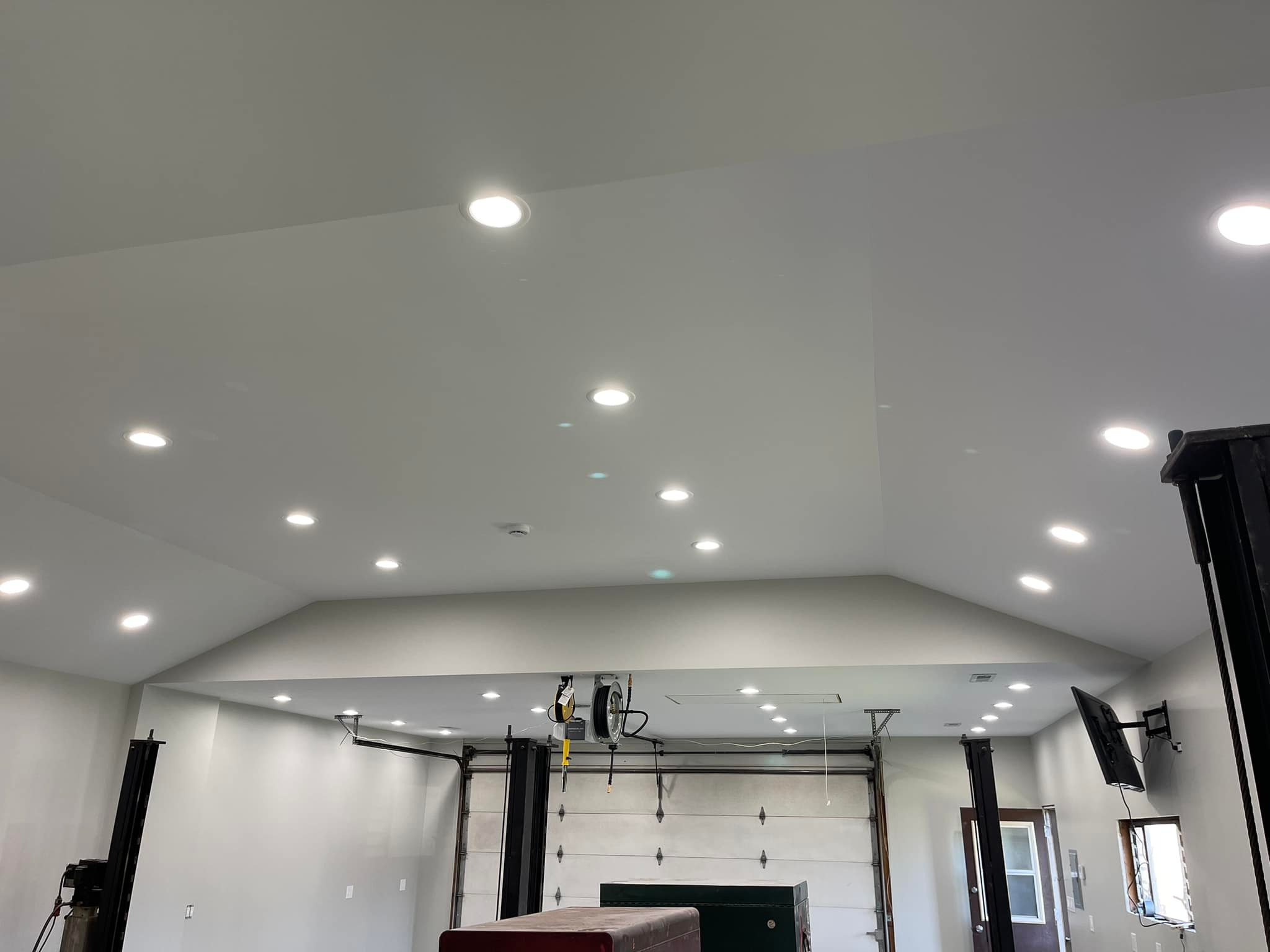
Enhance your Palos Hills home's ambiance with professional recessed lighting installation. Our skilled electricians design and install energy-efficient LED recessed lights that brighten spaces while reducing energy costs. From kitchen task lighting to living room accent features, we create the perfect lighting solution for every room.
New Outlets/Switches
Add convenience and functionality to your Palos Hills home with new outlet and switch installations. Whether you need additional power sources, USB outlets, or smart switches, our electricians ensure safe, code-compliant installations. We strategically place outlets and switches to improve your home's usability and modern appeal.
Whole Home Surge Protection
Protect your Palos Hills home's valuable electronics with comprehensive surge protection systems. Our whole-house surge protectors defend against power surges from lightning strikes, utility issues, and internal electrical problems. Safeguard your appliances, electronics, and HVAC systems with professional-grade protection that gives you complete peace of mind.
Trusted Expertise
Raising the Bar for Electrical Work
Since 2017, Reed Electrical has been providing trusted electrical services in Palos Hills, IL, helping homeowners across Chicago’s southwest suburbs protect their homes and feel confident in every connection. Our licensed team combines skill and craftsmanship with genuine care, taking the time to explain each step and deliver safe, reliable work you can trust. We make electrical service clear, dependable, and worry-free, from start to finish.
Testimonials
Why Our Clients Trust Reed Electrical
Reviews are available after marketing cookies are accepted.
Reviews are available after marketing cookies are accepted.
- Front of the line pass
- Extended service hours from 7 AM to 7 PM
- Diagnostic fees waived
- Annual whole-home electrical safety inspection
The Services You Need
Expert Electrical Services for Homes, Businesses, & More
Reliable, high-quality electrical solutions for installations, repairs, and upgrades, customized for residential, commercial, and industrial needs.


charge up your future
Fast & Eco-Friendly EV Charging in Palos Hills, IL
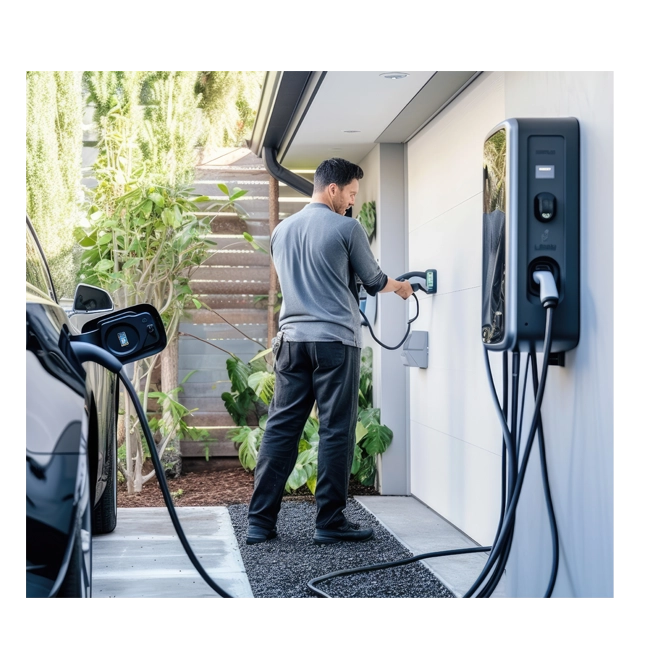
Having a reliable EV charging station is essential to keep you moving. At Reed Electrical, we specialize in the professional installation of EV chargers for homes, businesses, and commercial properties. Our team ensures a seamless setup tailored to your needs, with safety and efficiency as our top priorities. Whether you’re looking to power your fleet or charge up at home, we make the transition to greener energy simple and hassle-free.

Comprehensive Electrical Solutions
Proudly Serving Palos Hills, Orland Park, Tinley Park, Oak Lawn, and Southwest Chicagoland Suburbs Since 2017
Who We Work With
Our Trusted Partners







Serving Palos Township, Worth Township and Southwest Cook County Since 2017
Where We Work
Reed Electrical Services runs out of 81st Avenue in Palos Hills, and most of our work stays inside a fifteen minute drive of that shop. That covers the ridge communities first, Hickory Hills and Palos Park and Palos Heights along 95th and 111th Streets, then east through Worth and Chicago Ridge toward Oak Lawn, north across the Cal-Sag into Bridgeview, Justice, Willow Springs and Bedford Park, and south down La Grange Road into Orland Park and Orland Hills.
We hold contractor registration in the villages we work in, which in Illinois is not optional, because the state issues no electrician license of its own and every municipality writes its own rules. The 60465 and 60457 ZIP codes are home ground. From there we regularly work 60455 in Bridgeview, 60463 in Palos Heights, 60464 in Palos Park, 60482 in Worth, 60480 in Willow Springs, 60458 in Justice, 60415 in Chicago Ridge, 60453 in Oak Lawn, 60459 in Burbank, 60462 and 60467 in Orland Park, 60803 in Alsip, 60418 in Crestwood, and 60805 in Evergreen Park.
We also work the unincorporated pockets of Palos, Worth and Lyons Townships, where Cook County rather than a village building department has jurisdiction, and where the Cook County Electrical Code applies instead of a village-adopted edition of the NEC. Our registration extends past the county line as well: we hold DuPage County contractor registration CR0003930, which covers work in Burr Ridge, Willowbrook, Darien, Westmont and Hinsdale, and a City of Chicago electrical contractor license, number ECC95596, for addresses inside the city.
Finding Us
Our shop sits on 81st Avenue in Palos Hills, about a mile and a half northeast of the Moraine Valley Community College campus on College Parkway and just east of the Palos Forest Preserves. If you are coming down Roberts Road or Harlem Avenue you are a few minutes out. From the Tri-State Tollway, exit at 95th Street and head west past Stony Creek. From the Stevenson Expressway, come south on La Grange Road or Archer Avenue through Willow Springs. Riders on the Metra SouthWest Service can reach us from the Worth, Chicago Ridge or Palos Heights platforms in under ten minutes by car.
That location is the reason we can hold a same-day window across most of Palos and Worth Townships. Advocate Christ Medical Center in Oak Lawn is fifteen minutes east. Orland Square is twelve minutes south. Chicago Ridge Mall is eight minutes northeast. When a panel starts humming or half a house loses power on a Saturday, that geography is the difference between a technician arriving in an hour and a homeowner waiting until Monday.
Driving Directions From Across the Service Area
Our shop is at 9735 S 81st Ave in Palos Hills, a block off 98th Street and minutes from Indian Woods Park and the Stagg High School stadium on Moraine Drive. The links below open turn-by-turn directions from a recognizable landmark in each of the communities we work in most.
- From Indian Woods Park, Palos Hills
- From the Commons of Chicago Ridge, Chicago Ridge
- From 98th and Cicero, Oak Lawn
- From Smile Park, Worth
- From Meyers Park, Palos Heights
- From Palos South Middle School, Palos Park
- From Cranberry Slough Nature Preserve, Willow Springs
- From the Martinique, Burbank
- From Tampier Lake, Orland Park
- From Evergreen Park Community High School, Evergreen Park
What Southwest Suburban Homes Actually Need
The median home in Palos Hills was built in 1977. Hickory Hills, Palos Heights and the older sections of Orland Park share that timeline, and it tells us most of what we need to know before we walk in the door. A house from that window was wired for two televisions, one window air conditioner and a range. It was almost certainly fed by a 60 or 100 amp service. It has no arc-fault protection anywhere, GFCI coverage that stops at one kitchen counter if it exists at all, and a panel that has now been switching load for close to fifty years.
Two specific issues follow the calendar in this market. Homes built roughly between 1965 and 1973 may carry aluminum branch circuit wiring, which expands and contracts at connection points and works itself loose behind receptacles and switches over decades. Those homes need CO/ALR rated devices or approved connectors, not standard hardware from a big-box shelf. Separately, panels from that era include brands whose breakers have a documented history of failing to trip under fault, and we identify those on sight during any service call.
Then there is the ground itself. Palos Hills sits on Mount Forest Island, a glacial till upland that rises roughly eighty feet above the surrounding lowlands, while the eastern and southern edges of town drop toward the Sag Valley outwash plain where the water table sits close to the surface. Driving a ground rod on the ridge and driving one down near the Cal-Sag are two different jobs. Add a 42 inch frost line and the freeze-thaw cycling that comes with it, and exterior service masts, meter socket seals and underground feeders in this area take a beating that a contractor from a milder climate would never anticipate.
Licensed, Registered and Permitted in Every Village We Work
Illinois is one of a small number of states with no statewide electrician license. Authority sits with each municipality, which means a contractor properly registered in Palos Hills may have no standing whatsoever in Oak Lawn, Bridgeview or Orland Park, and no standing at all inside the Chicago city limits, where a separate license and a separate code apply. Reed Electrical Services carries an active Cook County electrical license, is registered with the individual villages where we work, and holds contractor registration in DuPage County under CR0003930. We pull the permit and schedule the rough-in and final inspections on every job that requires them, and our registration appears on every permit we file.
We also hold a City of Chicago Electrical Contractor license, number ECC95596, which is a separate credential from any suburban registration and one that most southwest suburban electricians do not carry. It means we can legally work Chicago addresses in Mount Greenwood, Beverly, Morgan Park, Ashburn, Garfield Ridge and Clearing under the Chicago Electrical Code, not just up to the city line.
Our work is performed to the National Electrical Code edition adopted by the village with jurisdiction, which is not always the same edition from one town to the next, and to the Chicago Electrical Code under Title 14E where city addresses are involved. We carry general liability and workers compensation coverage and provide a certificate of insurance on request. Reed Electrical Services has been a BBB Accredited Business since May 10, 2019 and currently holds an A+ rating from the BBB of Chicago and Northern Illinois. The company was founded by Peter Reed, a lifelong Palos Hills resident, and incorporated in December 2017.
Every job is backed by our Lifetime Craftsmanship Guarantee. If an issue arises from our workmanship, we make it right at no cost to you.
The ComEd EV Charger Rebate, Explained Plainly
Every address we serve is inside ComEd territory. ComEd's residential rebate for Level 2 home charger installation runs to $1,000 for standard customers and up to $2,500 for households in low-income or Equity Investment Eligible Communities, and portions of Chicago Ridge, Alsip, Justice and Evergreen Park fall inside those boundaries. For 2026, ComEd allocated roughly $70 million across its EV programs with more than $4 million reserved for residential charger rebates. Funds are issued first come, first served and have been exhausted before year end in past cycles.
Three conditions matter and homeowners routinely miss them. The charger has to be a Level 2 unit with WiFi or cellular connectivity. The application has to be filed within 90 days of the installation date. And the installation has to be performed by an electrician certified by the Illinois Commerce Commission to install, maintain or repair electric vehicle charging stations under Section 16-128A of the Public Utilities Act, because an installation by anyone else does not qualify no matter how good the workmanship. Reed Electrical Services applied for that certification through the Illinois Commerce Commission under Docket 25-0617. Under the state rules at 83 Illinois Administrative Code 469, the utility can ask you for the docket number under which your installer was certified, so keep it with your paperwork. Rebate recipients also enroll in a time-variant ComEd rate, either hourly pricing or the Delivery Time of Day rate introduced June 1, 2026, for a three year term.
Before the charger goes in, the service has to be evaluated. A Level 2 unit typically draws a dedicated 240 volt, 40 to 60 amp circuit, and a load calculation under NEC Article 220 determines whether an existing 100 amp service can carry it. In 1970s housing stock across Palos Hills, Hickory Hills and Orland Park, the answer is often no, and a service upgrade to 200 amp comes first. We run that calculation before quoting anything.
How a Panel Upgrade Actually Runs
A service upgrade in Palos Hills or any neighboring village follows the same sequence, and knowing it removes most of the anxiety around the job. We start with a load calculation under NEC Article 220 covering square footage, the range, dryer, HVAC equipment, any EV circuit and the general lighting load, which produces the service size the code requires rather than the size someone guesses at. Most 1960s and 1970s homes in this area come off a 60 or 100 amp service and land at 200 amp.
We then file the permit with the village building department, which for Palos Hills means the city, and for Bridgeview, Worth, Hickory Hills, Oak Lawn or Orland Park means that village's own department with its own fee schedule and its own adopted code edition. We coordinate the ComEd disconnect. On the day, the meter is pulled, the old panel and often the meter socket, service mast and weatherhead come off, and new gear goes in, typically a Square D QO, Siemens or Eaton load center sized with spare capacity rather than filled to the last slot. Circuits are landed, labeled properly, and torqued to the manufacturer's specification, which is a code requirement and one of the more common findings in failed inspections.
Grounding gets rebuilt to current code: grounding electrode conductor to a driven rod or rods, bonding to the water service and to the gas piping. AFCI and GFCI protection is added where the adopted edition requires it. ComEd reconnects, the village inspector performs the final, and we do not consider the job closed until that inspection passes. Most single-family upgrades run one working day.
Working in Our Own Neighborhood
We are not a call center routing tickets to whoever is closest. The same people who answer the phone live in these towns. Our crews park on the same streets around Stagg High School and Conrady Junior High, shop the same Roberts Road corridor, and hike the same Palos Preserves trails on days off. We work alongside local businesses we trust and refer to regularly, including Kanda Restoration, Beary Landscaping, Virdual, Legion Detailing, Peppo's Subs and Fox's Pub in Orland Park and Mokena. We would rather turn down a job outside our range than send someone an hour out and give them a worse result than the shop down the street from them could.
We Work Both Sides of the City Line
Most electricians in the southwest suburbs stop at the Chicago boundary, and there is a good reason for that. A Chicago address is not governed by the National Electrical Code. It falls under the Chicago Electrical Code, Title 14E of the Municipal Code of Chicago, which is a locally authored code amended by City Council ordinance rather than an adoption of the NEC. It requires wiring in metal conduit, so NM cable, the product most people know as Romex, is not permitted. It also requires a City of Chicago electrical contractor license, which a suburban village registration does not provide.
Reed Electrical Services holds City of Chicago Electrical Contractor license ECC95596 alongside our Cook County electrical license and our DuPage County registration. That combination lets us take a job in Palos Hills on Monday, a bungalow in Mount Greenwood on Tuesday, and a commercial service in Burr Ridge on Wednesday, each under the correct code, the correct permit and the correct inspector.
It matters most along the eastern edge of our range, where Evergreen Park is surrounded on three sides by Chicago and two homes a hundred feet apart can require entirely different wiring methods. It also matters for anyone in Beverly, Morgan Park, Ashburn, Garfield Ridge or Clearing who has been told by a suburban contractor that the job is out of their range.
What that looks like on a real permit
A Chicago service upgrade we permitted and completed gives a fair picture of the work. The scope was replacing an original 100 amp service with a 200 amp service, setting a new 40-space main breaker panel in Siemens or Square D, replacing the overhead service in rigid conduit as the Chicago code requires, and driving two ground rods at the meter socket. That is the standard shape of a city service change, and it is meaningfully different from the same job in a suburban village, where the service could be run in cable and a single electrode is often accepted.
Common Questions From Palos Hills Homeowners
Do electricians in Palos Hills need a state license?
No. Illinois does not issue a statewide electrician license. Authority rests with each municipality, so an electrician working in Palos Hills must be registered with the City of Palos Hills, and separate registration is required to work in Hickory Hills, Bridgeview, Worth, Oak Lawn or any other village.
Does a permit get pulled for a panel upgrade in Palos Hills?
Yes. A service change or panel replacement requires a permit through the city building department, along with a rough-in and a final inspection. The permit also coordinates the ComEd disconnect and reconnect. Reed Electrical files the permit and schedules both inspections as part of the job.
Is an electrician licensed in Palos Hills allowed to work in Chicago?
Not automatically. Chicago addresses, including Mount Greenwood, Beverly, Ashburn, Garfield Ridge and Clearing, require a Chicago electrical contractor license and are governed by the Chicago Electrical Code under Title 14E rather than the National Electrical Code. Suburban registration does not transfer across the city line. Reed Electrical Services holds City of Chicago Electrical Contractor license ECC95596 in addition to its Cook County electrical license, so we can work both sides.
How long has Reed Electrical Services been in business?
Peter Reed founded the company in 2017 and incorporated it in December of that year. Reed Electrical Services has been a BBB Accredited Business since May 10, 2019 and holds an A+ rating from the BBB of Chicago and Northern Illinois.
What kind of guarantee comes with the work?
Every job is covered by our Lifetime Craftsmanship Guarantee. If an issue arises from our workmanship, we make it right at no cost to you. We accept cash, check and credit card.
Does ComEd offer an EV charger rebate in Palos Hills?
Yes. Palos Hills is in ComEd territory, and the residential rebate for a Level 2 home charger runs to $1,000 for standard customers and up to $2,500 for households in low-income or Equity Investment Eligible Communities. Funding is allocated annually and issued first come, first served, and it has been exhausted before year end in previous cycles.
Who is allowed to install an EV charger for the ComEd rebate to apply?
The installation must be performed by an ICC-certified electrician. An installation by anyone else does not qualify regardless of workmanship quality, which is the single most common reason a Chicagoland homeowner is denied the rebate after the fact.
Does my Palos Hills home have aluminum wiring?
If it was built roughly between 1965 and 1973, it may. Aluminum branch circuit wiring was installed widely in United States homes during that window, which overlaps directly with the Palos Hills, Hickory Hills and Palos Heights buildout. Confirmation comes from reading the conductor markings at the panel and at a sample of devices, not from the age of the house alone.
How much electrical service does a 1970s Palos Hills home usually have?
Most homes built during the Palos Hills buildout, where the median construction year is 1977, were fed by a 60 or 100 amp service. That was adequate for the loads of the period. It is frequently inadequate today once central air, a second refrigerator, a hot tub or an EV charger is added.
How quickly can an electrician reach Palos Hills, Hickory Hills or Worth?
Reed Electrical operates from 81st Avenue in Palos Hills, roughly a mile and a half from the Moraine Valley Community College campus, which puts most of Palos and Worth Townships within a short drive. Our phones are answered around the clock. First-Class Members get a front-of-the-line pass, extended service hours from 7 AM to 7 PM, diagnostic fees waived, and an annual whole-home electrical safety inspection.
Level 2 Charger Installation in Southwest Cook County
A Level 2 charger is a 240 volt appliance on a dedicated circuit, and the install is governed by NEC Article 625. In practice the job comes down to three questions: can the existing service carry the load, how far is the run from the panel to the parking position, and what does the village want to see on the permit.
Load
A 40 amp charger requires a 50 amp circuit under continuous load rules, and a 48 amp unit requires 60 amps. Run against a 1970s 100 amp service already carrying a range, dryer and central air, the Article 220 calculation frequently comes up short. Options at that point are a service upgrade to 200 amp, or a load management device that sheds the charger when other large loads are active, which is often the cheaper and faster path in a Hickory Hills or Palos Heights ranch where the panel is otherwise sound.
The run
An attached garage on the same wall as the panel is a one to two hour job. A detached garage across a Palos Park lot is a different project: a trench below the 42 inch frost line, a subpanel, and a separate grounding electrode at the outbuilding. Homes near the Sag Valley edge with a high water table need particular attention to conduit selection and drainage on that run.
The permit
Palos Hills, Bridgeview, Worth, Oak Lawn and Orland Park each run their own building department, each with its own fee and its own adopted NEC edition. Inside Chicago addresses in Mount Greenwood, Beverly, Ashburn or Garfield Ridge, the Chicago Electrical Code applies instead and the wiring method must be metallic conduit. We pull the permit either way.
Equipment
Chargers we install regularly include the Tesla Wall Connector, ChargePoint Home Flex, Emporia, Wallbox and JuiceBox units. For ComEd rebate eligibility the unit must be WiFi or cellular enabled, so hardwired chargers without connectivity, while perfectly safe and perfectly legal, will cost the homeowner the rebate. ComEd's commercial make-ready program adds a further requirement that Level 2 chargers be ENERGY STAR certified.
Certification
Illinois requires anyone installing, maintaining or repairing an electric vehicle charging station to hold certification from the Illinois Commerce Commission under Section 16-128A of the Public Utilities Act. It is not the same thing as a village electrical registration, and it is the requirement that disqualifies most rebate applications that get denied. Certificate holders must recertify with the Commission by April 1 each year. Reed Electrical Services applied for ICC certification under Docket 25-0617. Under 83 Illinois Administrative Code 469, your utility may ask for the docket number under which your installer was certified, so ask any electrician for theirs before booking the work.
EV Charging Questions
How long do I have to apply for the ComEd charger rebate?
The application has to be submitted within 90 days of the installation date. Recipients also enroll in a time-variant ComEd rate, either hourly pricing or the Delivery Time of Day rate introduced June 1, 2026, for a three year term.
Which EV chargers qualify for the ComEd rebate?
The unit must be a Level 2 charger with WiFi or cellular connectivity. Common qualifying models include the Tesla Wall Connector, ChargePoint Home Flex, JuiceBox, Emporia and Wallbox units. A hardwired charger without connectivity is safe and legal, and it will not qualify.
Do parts of Chicago Ridge or Alsip qualify for the higher ComEd rebate tier?
Portions of several communities in the southwest suburbs fall inside Equity Investment Eligible Community boundaries, which raises the residential rebate ceiling. Eligibility is determined by specific address rather than by municipality, so it should be checked per property before the work is quoted.
How long does EV charger installation take in Worth or Chicago Ridge?
An attached garage with the parking position on the same wall as the panel is typically a two to four hour job. A detached garage, a long run through finished space, or a required service upgrade extends that considerably, and a trenched feeder to an outbuilding becomes a separate day of work.
Do I need a permit for an EV charger in Oak Lawn?
Yes. Level 2 charger installation is permitted work in Oak Lawn and in essentially every surrounding village, and it is governed by NEC Article 625 covering electric vehicle supply equipment. Inside Chicago addresses the Chicago Electrical Code applies instead and the circuit must be run in metal conduit.
Can an EV charger be installed at a Bridgeview apartment or condo building?
Yes, and ComEd's business and public sector rebate programs are separate from the residential program with substantially larger funding pools. Multi-unit installations involve metering and cost-allocation decisions, common-area feeder capacity, and typically an association approval process alongside the village permit.
Panel and Service Upgrade Questions
How do I know if my home needs a 200 amp service?
A load calculation under NEC Article 220 answers it definitively, accounting for square footage, range, dryer, HVAC equipment and any planned EV circuit. Practical signals that point the same direction include a panel with no open slots, tandem breakers filling the bus, lights dimming when the air conditioning starts, and a service that has never been touched since the house was built.
How long does a panel upgrade take?
Most single-family service upgrades run one working day, with power off for a portion of it while the meter is pulled and the new gear is set. The longer variable is scheduling: the village permit and the ComEd disconnect and reconnect both have to be coordinated in advance, which typically adds one to two weeks to the start date rather than the work itself.
Are certain electrical panels considered unsafe in older homes here?
Yes. Several load center brands installed widely during the 1960s and 1970s carry a documented history of breakers failing to trip under fault conditions. They appear regularly in Chicago Ridge, Worth and Palos Hills homes of that era. No circuit-level repair makes such a panel reliable, so identification during a service call leads to a replacement recommendation rather than a patch.
Does a panel upgrade include grounding work?
It should. A code-compliant service change rebuilds the grounding electrode system, which means a grounding electrode conductor to a driven ground rod or rods, plus bonding to the water service and the gas piping. Older homes in this area frequently have grounding that was acceptable when installed and no longer meets any current edition.
Why does driving a ground rod cost more on some Palos Hills lots?
Palos Hills sits on the Mount Forest Island upland, a glacial till and outwash formation rising roughly eighty feet above surrounding lowlands, while the eastern and southern edges of town drop toward the Sag Valley outwash plain. Rod driving conditions differ substantially between the ridge and the valley, and rocky till can require a second rod or an alternate electrode.
Can I add an EV charger without upgrading my panel?
Sometimes. A 40 amp charger needs a dedicated 50 amp circuit, and whether an existing service can carry it comes down to the Article 220 load calculation. On a 100 amp service already running a range, dryer and central air, the calculation often falls short. A load management device that sheds the charger when other large loads are active is frequently a faster and cheaper alternative to a full service upgrade.
What is a subpanel and does my detached garage need one?
A subpanel is a secondary distribution panel fed from the main service. A detached garage on a larger lot typically needs one, along with a feeder trenched below the 42 inch frost line and its own grounding electrode at the outbuilding. Neutral and ground must be kept separate in a subpanel, which is one of the most common defects found in existing garage installations.
Does an electrical panel need to be labeled to pass inspection?
Yes. Circuit directory labeling is a code requirement, not a courtesy, and unlabeled or inaccurately labeled panels are a routine cause of failed finals. Terminations also have to be torqued to the manufacturer's specification, which is another frequent inspection finding on work done without a torque tool.
Does homeowners insurance care about the electrical panel in an older home?
Increasingly yes. Carriers in Cook County have become more likely to question or decline coverage on homes with certain 1960s and 1970s panel brands, undersized services, or aluminum branch circuit wiring without documented remediation. A dated inspection report documenting the correction is often what the carrier is looking for.
Rewiring Suburban Homes and Chicago Bungalows Are Two Different Jobs
We work both sides of the city line, and the wiring method changes the moment you cross it. In Palos Hills, Worth, Bridgeview, Oak Lawn and every other village in our range, the National Electrical Code as adopted by that municipality governs, and NM cable is a permitted wiring method for most residential work. Inside Chicago, including Mount Greenwood, Beverly, Ashburn, Garfield Ridge and Clearing, the Chicago Electrical Code under Title 14E governs instead. It is not an adoption of the NEC. It is a locally authored code, and it requires wiring in metal conduit. NM cable, sold as Romex, is not permitted.
That single difference reshapes the project. A 1970s split-level in Hickory Hills is rewired by fishing cable through wall cavities. A 1920s brick bungalow in Mount Greenwood was wired in conduit from the day it was built, which means in many cases new conductors can be pulled through the existing raceway without opening plaster, and the job is faster, cleaner and less destructive than the suburban equivalent. Where existing conduit is undersized or corroded, new EMT gets run, and flexible metal conduit is permitted for rehab work behind walls and ceilings that are not being removed.
Working a Chicago address also requires a City of Chicago electrical contractor license, which is a separate credential from suburban village registration. Reed Electrical Services holds that license under number ECC95596, so a bungalow rewire in Mount Greenwood or Beverly is inside our range rather than a referral to someone else.
Suburban NEC editions are not uniform either. Illinois adopts the code locally, so a village on one side of Harlem Avenue may enforce a different NEC edition than the village on the other. We confirm the adopted edition with the building department before we quote, which is why our scope does not change after the inspector arrives.
Why Half Your House Goes Dark and the Breaker Never Trips
It is one of the most common calls we take across Palos Hills, Hickory Hills and Worth, and it is rarely the breaker. In a home wired in the late 1960s or early 1970s, the likely cause is a degraded connection: an aluminum branch conductor that has cycled loose behind a receptacle over fifty years of expansion and contraction, a backstabbed device connection that has lost tension, or a neutral that has worked loose in the panel. None of those conditions draws enough fault current to trip an overcurrent device. They just heat up.
The diagnostic sequence is not guesswork. We isolate the affected circuit, verify voltage at the panel under load, then work the circuit device by device looking for the discontinuity, using thermal imaging where a connection is suspected but not yet failed. Loose connections announce themselves as heat before they announce themselves as fire. Where aluminum branch wiring is confirmed, the correction is CO/ALR rated devices or approved connectors at every termination, not a swap to standard hardware, which is the most common mistake we find on work done by others.
If the panel itself is the problem, we say so. Certain load centers installed during the 1960s and 1970s carry a documented history of breakers failing to trip on fault, and no amount of circuit-level repair makes that panel safe. That is a replacement conversation, and we would rather have it honestly than sell three service calls that do not solve anything.
Wiring Questions
Is aluminum wiring dangerous?
The wire itself is not the hazard. The connections are. Aluminum expands and contracts more than copper at terminations, and over decades those connections loosen, resist, and heat. The correction is not a rewire in most cases. It is CO/ALR rated devices or approved connectors at every termination, which is a fraction of the cost and disruption.
Why does my outlet work sometimes and not others?
That is the signature of a degrading connection rather than a failing breaker. Common causes in 1970s southwest suburban homes include a loosened aluminum termination, a backstabbed device connection that has lost tension, or a loose neutral in the panel. None of those draw enough fault current to trip an overcurrent device, which is exactly why the breaker never trips.
Can Romex be used in Mount Greenwood or Beverly?
No. Those are Chicago addresses governed by the Chicago Electrical Code under Title 14E, which requires wiring in metal conduit. NM cable, sold as Romex, is not a permitted wiring method inside the city. In neighboring Evergreen Park, Oak Lawn and the rest of the suburbs, NM cable is permitted for most residential work.
What is knob and tube wiring and does it exist in this area?
Knob and tube is an early wiring method using ceramic supports and no equipment grounding conductor. It predates most of the southwest suburban housing stock, but it appears in the oldest sections of Evergreen Park, Blue Island and the Chicago community areas along the eastern edge of our service range. It has no ground, and insurers frequently require its removal.
Do I need AFCI protection in a home built in 1972?
Existing wiring is generally not required to be retrofitted, but new and modified circuits must comply with the code edition currently adopted by the village. In practice, any significant remodel, added circuit or panel replacement brings arc-fault requirements into scope for the affected circuits.
Where is GFCI protection required in a kitchen?
Current code editions require GFCI protection on receptacles serving kitchen countertops, and coverage extends well beyond kitchens to bathrooms, garages, unfinished basements, outdoors, laundry areas and locations near sinks. Homes from the 1970s buildout typically have far less coverage than a current edition would require.
Can existing conduit in a Garfield Ridge home be reused?
Often yes. If the raceway is sound, correctly sized for the intended conductors and not corroded, new conductors can be pulled through it. Where existing conduit is undersized or damaged, new EMT is run, and flexible metal conduit is permitted for rehab work behind walls and ceilings that are not being removed.
What We Check, and What It Means in a 1970s Southwest Suburban Home
An electrical inspection here is not a checklist exercise. It is a read of a specific housing stock. With a median build year of 1977 across Palos Hills and a similar profile in Hickory Hills, Worth, Palos Heights and older Orland Park subdivisions, we know what we are likely to find before we open the panel.
We start at the service: mast, weatherhead, meter socket and panel. Freeze-thaw cycling and 42 inch frost movement work on mast seals and socket gaskets, and water intrusion at the meter is one of the more common findings on homes that have never had the service touched. Inside the panel we check breaker brand and condition, look for double-tapped breakers, confirm the neutral and ground are separated in any subpanel, and torque-check terminations to specification.
We then evaluate branch circuits. Aluminum branch wiring, common in homes from roughly 1965 to 1973, gets flagged along with any termination not made with CO/ALR devices or approved connectors. We test every GFCI and AFCI device present and identify locations where the currently adopted code edition would require protection that does not exist. Bonding is verified at the water service and gas piping. Where a connection is suspect, thermal imaging shows heat before failure.
Reports include a photo of every finding and are written so a real estate attorney, a buyer, or an insurance adjuster can read them. If you are selling a home in Palos Hills or buying one in Chicago Ridge, that documentation matters more than a verbal all-clear.
Inspection Questions
What do inspectors most often flag in older Chicago Ridge and Worth homes?
Undersized services, double-tapped breakers, neutrals and grounds bonded together in a subpanel, missing GFCI coverage in kitchens, baths, garages and basements, ungrounded receptacles replaced with three-prong outlets, and water intrusion at the meter socket. Nearly all of these are correctable without a full rewire.
Why does water get into the meter socket on older southwest suburban homes?
Freeze-thaw cycling. Chicago-area construction is designed for a 42 inch frost depth, and the repeated freeze and thaw movement across a winter works on service mast seals, socket gaskets and the weatherhead. On homes where the service has never been touched since the 1970s, that seal has had fifty winters to fail.
Should an electrical inspection happen before buying a 1970s Orland Park home?
Yes, and it should be separate from the general home inspection. A general inspector reports what is visible. An electrician opens the panel, identifies the load center brand, reads conductor markings for aluminum branch wiring, checks grounding and bonding, and prices the correction, which is what actually matters at the negotiating table.
What is thermal imaging used for in an electrical inspection?
To find connections that are heating but have not yet failed. A loose or corroded termination shows up as a temperature differential long before it produces a visible symptom, which makes it the most effective way to catch aluminum wiring terminations and panel connections in older Hickory Hills and Palos Hills homes before they become a service call at midnight.
Why do power outages affect some circuits and not others?
If only part of the house is out during a utility event, one leg of the 240 volt service has been lost, which is a service-side or panel-side problem rather than a circuit problem. If it happens without a utility outage, the likely cause is a failing service conductor, a loose neutral, or a failing main breaker. All three warrant a same-day call rather than a wait.
Does whole-home surge protection make sense in this area?
It is worth the cost on any home with modern HVAC controls, appliances with circuit boards, or an EV charger, all of which are damaged by surges that older resistive loads simply absorbed. A whole-home device installed at the panel handles the utility-side and lightning-driven events. Point-of-use protection at sensitive equipment handles what gets past it.
What causes flickering lights?
Common causes range from benign to urgent: an incompatible dimmer and LED combination, a loose connection at a device, a failing neutral in the panel, or a degraded service conductor. Flickering that affects multiple circuits simultaneously, or that coincides with large appliance startup, points to the service or panel and should be diagnosed rather than lived with.
Do outdoor outlets near the Cal-Sag corridor need special treatment?
Yes. Exterior receptacles require GFCI protection and weather-resistant, in-use covers, and in the low-lying areas along the Cal-Sag and the Sag Valley edge where the water table sits high, conduit selection and drainage on underground runs matter more than they do on the Mount Forest Island ridge a mile away.
Commercial and Multi-Family Work Across the Southwest Corridor
The commercial base in this service area is concentrated in a few recognizable corridors: the Harlem Avenue and 95th Street retail strips through Bridgeview, Chicago Ridge and Oak Lawn, the industrial and warehouse pockets around Bedford Park and Summit near the Stevenson, the Roberts Road and La Grange Road corridors, and the retail anchors at Chicago Ridge Mall and Orland Square. Multi-family stock runs heavy through Palos Hills, Justice and Bridgeview, much of it built in the same 1970s window as the single-family housing.
Commercial scope differs from residential in three ways that matter to a building owner. Wiring method requirements are stricter, and in Chicago addresses metallic conduit is absolute for commercial work with no residential exceptions. Load calculations, panelboard schedules and available fault-current documentation are typically required at permit rather than assumed. And inspection sequencing is enforced, which means an unscheduled rough-in costs a week.
We handle tenant build-outs, service upgrades, panelboard and switchgear replacement, parking lot and exterior lighting retrofits, EV charging for multi-unit and fleet applications, and code correction work on properties that have been cited. For multi-family EV projects, ComEd's business and public sector rebate programs are separate from the residential program and carry substantially larger funding pools.
Electrician in Hickory Hills, IL
Two Miles From Our Shop
Hickory Hills sits directly north of us across 95th Street, and our 81st Avenue shop is close enough that a Hickory Hills call is usually the first stop of the day rather than the last. Roberts Road runs the length of town, 88th Avenue and Kean Avenue carry the residential grid, and the Palos Forest Preserves sit along the western edge. Most of what we do in the 60457 ZIP is within a ten minute drive.
The Housing Stock Here Tells Us What to Expect
Hickory Hills built out through the 1960s and 1970s alongside neighboring Palos Hills, where the median home dates to 1977. The result is a town full of brick ranches and split-levels running on original 60 and 100 amp services, wired before arc-fault protection existed and before GFCI coverage extended past the kitchen counter. Homes built between roughly 1965 and 1973 may also carry aluminum branch circuit wiring, which loosens at terminations over decades of thermal cycling and requires CO/ALR rated devices or approved connectors rather than standard hardware.
Those two facts drive most of our Hickory Hills workload: service upgrades from 100 amp to 200 amp, aluminum wiring remediation, GFCI and AFCI retrofit in kitchens, baths, basements and bedrooms, and panel replacement where the original load center is a brand with a documented breaker failure history.
Permits and Code in Hickory Hills
Illinois issues no statewide electrician license. Every municipality registers its own contractors and adopts its own edition of the National Electrical Code, which means the requirements in Hickory Hills are not automatically the requirements in Palos Hills or Bridgeview. We hold registration here, pull the permit through the city building department, and schedule the rough-in and final inspections as part of the job rather than leaving them to the homeowner. Reed Electrical Services carries an active Cook County electrical license and registers with Hickory Hills directly; our registration number appears on every permit we file here, and we will provide it before you book.
EV Charging in Hickory Hills
Hickory Hills is served by ComEd, so residents qualify for the residential Level 2 charger rebate, which runs to $1,000 for standard customers and up to $2,500 for households in eligible communities. The installation has to be performed by an ICC-certified electrician and the application filed within 90 days. Before quoting a charger we run a load calculation under NEC Article 220, because a 40 amp charger needs a 50 amp circuit and a 100 amp service already carrying a range, dryer and central air often cannot take it without a service upgrade first.
Services We Provide in Hickory Hills
Electrical panel upgrades and service changes, whole-house and partial rewiring, aluminum branch circuit correction, EV charger installation, GFCI and AFCI retrofits, recessed and LED lighting, ceiling fan installation, switch and outlet installation, whole-home surge protection, electrical inspections for real estate transactions, and commercial and multi-family work along the Roberts Road and 95th Street corridors.
Getting to Us From Hickory Hills
Hickory Hills is our closest neighbor. From anywhere along Roberts Road, 88th Avenue or Kean Avenue, our 81st Avenue shop is south across 95th Street, usually under ten minutes. Indian Woods Park sits between the two towns and makes an easy reference point.
Hickory Hills Questions
Does a permit get pulled for a panel upgrade in Hickory Hills?
Yes. A service change or panel replacement in Hickory Hills requires a permit through the city building department, along with a rough-in and a final inspection. The permit also coordinates the ComEd disconnect and reconnect.
How do I know if my Hickory Hills home needs a 200 amp service?
A load calculation under NEC Article 220 answers it definitively. Practical signals pointing the same way include a panel with no open slots, tandem breakers filling the bus, lights dimming when the air conditioning starts, and a service never touched since the house was built.
Why does my Hickory Hills outlet work sometimes and not others?
That is the signature of a degrading connection rather than a failing breaker. In 1970s homes here the usual causes are a loosened aluminum termination, a backstabbed device connection that has lost tension, or a loose neutral in the panel. None draw enough fault current to trip a breaker.
Electrician in Bridgeview, IL
Across the Cal-Sag From Our Shop
Bridgeview sits just north of us across the Cal-Sag Channel, bounded roughly by Harlem Avenue and Roberts Road running north to south and 79th through 95th Streets east to west. The 60455 ZIP covers a mix that is unusual for this corner of Cook County: dense single-family and multi-family residential in the interior, with industrial and commercial frontage along Harlem and 87th, plus the SeatGeek Stadium grounds and the Bridgeview Courthouse as anchors.
Two Different Buildings, Two Different Jobs
On the residential side, Bridgeview shares the southwest suburban profile: postwar and 1960s to 1970s construction, original 100 amp services, no arc-fault protection, minimal GFCI coverage, and a meaningful share of homes from the 1965 to 1973 window that may carry aluminum branch circuit wiring. Those homes need CO/ALR rated devices at every termination, and they need a load calculation before anyone adds an EV circuit or a second HVAC condenser.
On the commercial and multi-family side, the requirements change. Panelboard schedules, load calculations and available fault-current documentation are typically required at permit rather than assumed. Inspection sequencing is enforced. We handle tenant build-outs, service and switchgear upgrades, exterior and parking lot lighting retrofits, common-area circuits, and code correction work on cited properties. For multi-family EV charging, ComEd's business and public sector rebate programs are separate from the residential program and carry considerably larger funding pools.
Permits and Registration in Bridgeview
Because Illinois has no statewide electrician license, Bridgeview registers contractors and adopts its own code edition through the village building department. Registration in Palos Hills confers nothing here. We are registered to work in Bridgeview, pull the permit ourselves, and carry the job through final inspection. Reed Electrical Services carries an active Cook County electrical license and registers with Bridgeview directly; our registration number appears on every permit we file here, and we will provide it before you book.
Services We Provide in Bridgeview
Panel upgrades and service changes, rewiring and aluminum wiring correction, EV charger installation for homes and multi-unit properties, GFCI and AFCI retrofits, LED and recessed lighting, ceiling fans, outlets and switches, whole-home surge protection, real estate electrical inspections, and commercial electrical service along the Harlem Avenue and 87th Street corridors.
Getting to Us From Bridgeview
From Founders Park it is a straight shot south on Harlem or Roberts Road across the Cal-Sag, about ten minutes to our 81st Avenue shop. Coming off the 87th Street commercial strip, take Roberts south past 95th.
Bridgeview Questions
Why does a Bridgeview permit cost a different amount than a Palos Hills permit?
Because each municipality in Illinois sets its own fee schedule alongside its own contractor registration and its own adopted code edition. There is no state-level standardization. A quote that does not name the municipality is a quote that has not accounted for this.
Can an EV charger be installed at a Bridgeview apartment or condo building?
Yes, and ComEd's business and public sector rebate programs are separate from the residential program with substantially larger funding pools. Multi-unit installations involve metering and cost-allocation decisions, common-area feeder capacity, and typically an association approval process alongside the village permit.
Does an electrical panel need to be labeled to pass inspection in Bridgeview?
Yes. Circuit directory labeling is a code requirement, not a courtesy, and unlabeled or inaccurately labeled panels are a routine cause of failed finals. Terminations also have to be torqued to the manufacturer's specification.
Electrician in Willow Springs, IL
Up Archer Avenue From Palos Hills
Willow Springs sits northwest of us in Lyons Township, strung along Archer Avenue between the Des Plaines River valley and the Palos Preserves, with the Stevenson Expressway across the northern edge and the Cal-Sag and Sanitary and Ship Canal cutting through the low ground. The 60480 ZIP covers a village with a very different lot profile than the tract subdivisions to the east: larger parcels, more wooded acreage, more detached garages and outbuildings, and a good number of properties in unincorporated pockets where Cook County rather than the village holds jurisdiction.
What That Terrain Means for Electrical Work
Larger lots change the job. A detached garage, workshop or barn on a Willow Springs property needs a feeder trenched below the 42 inch frost line, a subpanel with neutral and ground kept separate, and its own grounding electrode at the outbuilding. Separating neutral and ground in an outbuilding subpanel is one of the most common defects we find on existing installations, and it is a guaranteed inspection failure.
The river valley and canal corridor also mean a high water table on the low ground, which affects conduit selection, direct burial decisions and drainage on any underground run. Properties up on the higher ground near the preserves face the opposite problem, where glacial till makes ground rod driving harder and sometimes requires a second rod or an alternate electrode.
Wooded lots bring one more recurring call: exterior and landscape lighting, generator circuits and outdoor receptacles that all need GFCI protection and weather-resistant, in-use covers, plus the storm exposure that comes with mature tree cover over service drops.
Permits and Jurisdiction in Willow Springs
Illinois issues no statewide electrician license, so Willow Springs registers its own contractors and adopts its own code edition. Some addresses in the area sit in unincorporated Lyons and Palos Townships, where Cook County has jurisdiction and the Cook County Electrical Code applies instead of a village-adopted NEC edition. We confirm which authority governs your address before quoting, because the permit process, fee and inspection sequence differ. Reed Electrical Services carries an active Cook County electrical license and registers with Willow Springs directly; our registration number appears on every permit we file here, and we will provide it before you book.
Services We Provide in Willow Springs
Panel upgrades and service changes, detached garage and outbuilding subpanels with trenched feeders, EV charger installation including long runs to detached structures, generator circuits and transfer switches, whole-house and partial rewiring, aluminum branch circuit correction, GFCI and AFCI retrofits, exterior and landscape lighting, whole-home surge protection, and electrical inspections.
Getting to Us From Willow Springs
From the Cranberry Slough Nature Preserve on Wolf Road it is a short run south and east through the preserves, roughly twelve minutes to Palos Hills. From the Willow Springs Community Center on Archer Avenue, take Archer southwest to Route 83 and head south. Maple Lake and Saganashkee Slough sit along the way.
Willow Springs Questions
Who has jurisdiction over an unincorporated address near Willow Springs?
Unincorporated pockets in Lyons, Palos and Worth Townships fall under Cook County rather than a village building department, and the Cook County Electrical Code applies. The permit process, fee schedule and inspection sequence differ from the surrounding incorporated villages.
What does it take to run power to a detached garage in Willow Springs?
A feeder trenched below the 42 inch frost line, a subpanel at the garage with neutral and ground kept separate, and a grounding electrode at the outbuilding. On low ground near the canal corridor the water table drives conduit selection and drainage detailing on that run.
Can I install an EV charger in a detached Willow Springs garage?
Yes, though it is a larger project than an attached garage install. The charger circuit typically comes off a new subpanel at the outbuilding rather than a long home run from the house panel, and the ComEd rebate still applies provided the unit is a WiFi or cellular enabled Level 2 charger installed by an ICC-certified electrician.
Electrician in Palos Park, IL
Just South of Us Along 123rd Street
Palos Park sits directly south of Palos Hills in Palos Township, wrapped on nearly every side by the Cook County Forest Preserves. Southwest Highway, 123rd Street, 131st Street and La Grange Road carry most of the traffic, Swallow Cliff Stairs anchors the southern edge, and the Metra SouthWest Service stops in the village center. The 60464 ZIP is a short drive from our 81st Avenue shop, and it is unlike any neighboring town in the way its homes are built.
Large Lots, Custom Homes, Longer Runs
Palos Park is not a tract subdivision. Lots are large and wooded, homes are frequently custom or heavily renovated, and detached garages, workshops, guest structures, pool equipment and well or septic systems are common. Every one of those adds electrical scope that the standard suburban service call does not include.
The practical consequence is that runs are long. A detached garage across a Palos Park lot needs a feeder trenched below the 42 inch frost line, a subpanel with neutral and ground properly separated, and its own grounding electrode at the structure. Pool and spa equipment brings equipotential bonding requirements. Well pumps and septic controls need dedicated circuits and disconnects. Larger homes with two HVAC systems, a range, dryer, and now an EV charger routinely exceed what an older 100 or 150 amp service can carry, and the Article 220 load calculation is where that conversation starts.
Whole-house rewiring in Palos Park also runs longer than the suburban average, because square footage is larger and because plaster, hardwood and custom finishes mean access is harder and finish restoration matters more.
Permits and Code in Palos Park
Illinois has no statewide electrician license, so Palos Park registers its own contractors through the village and adopts its own edition of the National Electrical Code. Some surrounding parcels sit in unincorporated Palos Township under Cook County jurisdiction, where the Cook County Electrical Code applies instead. We confirm which authority governs the address before quoting. Reed Electrical Services carries an active Cook County electrical license and registers with Palos Park directly; our registration number appears on every permit we file here, and we will provide it before you book.
Services We Provide in Palos Park
Service and panel upgrades to 200 and 400 amp, detached garage and outbuilding subpanels, EV charger installation including long and trenched runs, whole-house and partial rewiring, pool and spa bonding and circuits, well pump and septic control circuits, generator circuits and transfer switches, recessed and landscape lighting, whole-home surge protection, and pre-purchase electrical inspections.
Getting to Us From Palos Park
From Palos South Middle School on 82nd Avenue we are almost due north, about eight minutes up 82nd and across 111th Street. From the McCord Gallery side on Creek Road, take 123rd east to Route 83 and go north. Swallow Cliff and the preserve trails sit between the two.
Palos Park Questions
What is a subpanel and does my Palos Park detached garage need one?
A subpanel is a secondary distribution panel fed from the main service. A detached garage on a larger Palos Park lot typically needs one, along with a feeder trenched below the 42 inch frost line and its own grounding electrode at the outbuilding. Neutral and ground must be kept separate in a subpanel, which is one of the most common defects found in existing garage installations.
How long does whole-house rewiring take in a Palos Park home?
Larger Palos Park homes on wooded lots typically run longer than the suburban average because of square footage, plaster or hardwood finishes, and frequently a detached garage requiring its own trenched feeder and subpanel. Expect a multi-day to multi-week project depending on scope, occupancy and how much finish work is in play.
Do I need a 400 amp service in Palos Park?
Some larger homes here do, particularly with two HVAC systems, a pool, a detached structure and an EV charger on the same service. The Article 220 load calculation decides it rather than square footage alone, and in many cases a 200 amp service with a properly designed subpanel arrangement is the better answer.
Electrician in Palos Heights, IL
Southeast of Us Across the Cal-Sag
Palos Heights sits southeast of Palos Hills, split between Worth and Palos Townships, with Harlem Avenue and Ridgeland Avenue running north to south and 127th Street through the middle. Lake Katherine Nature Center sits on the north edge along the Cal-Sag Channel, Trinity Christian College anchors the west side, and the Metra SouthWest Service stops in town. The 60463 ZIP is roughly a ten minute drive from our shop.
1970s Housing Stock With a Water Table Problem on the North End
Palos Heights shares the buildout timeline of its neighbors, with the bulk of its housing dating to the 1960s and 1970s and the median for the immediate area sitting around 1977. That means original 60 and 100 amp services, no arc-fault protection anywhere, GFCI coverage that rarely extends past a single kitchen counter, and a real likelihood of aluminum branch circuit wiring in anything built between roughly 1965 and 1973. Aluminum terminations need CO/ALR rated devices or approved connectors, not standard hardware.
The north end of town adds a second variable. Along the Cal-Sag corridor and the Lake Katherine side, the ground drops into the Sag Valley outwash plain where the water table sits close to the surface. That affects underground feeder runs, exterior receptacle installations, sump and ejector pump circuits, and grounding electrode work in ways that do not apply on the higher ground a mile west. Sump circuits in particular should be dedicated, GFCI-considered per the adopted code edition, and ideally backed by a generator or battery arrangement on properties that have taken water before.
Permits and Code in Palos Heights
Illinois issues no statewide electrician license. Palos Heights registers contractors and adopts its own code edition through the city building department, and that edition is not necessarily the same one enforced in Palos Hills, Worth or Crestwood next door. We hold registration here, pull the permit, and carry the job through rough-in and final inspection. Reed Electrical Services carries an active Cook County electrical license and registers with Palos Heights directly; our registration number appears on every permit we file here, and we will provide it before you book.
Services We Provide in Palos Heights
Panel and service upgrades from 100 to 200 amp, aluminum branch circuit correction, whole-house and partial rewiring, sump and ejector pump circuits, generator circuits and transfer switches, EV charger installation, GFCI and AFCI retrofits, recessed and LED lighting, ceiling fans, outlets and switches, whole-home surge protection, and real estate electrical inspections.
Getting to Us From Palos Heights
From Meyers Park on Westgate Drive it is a straight run north on Harlem or Ridgeland and west on 111th Street, about ten minutes to our 81st Avenue shop. Coming from the Lake Katherine side along the Cal-Sag, take 127th west to Route 83 and head north.
Palos Heights Questions
Can a homeowner in Palos Heights do their own electrical work?
Palos Heights, like most municipalities in Cook County, restricts permitted electrical work to registered contractors, with limited homeowner exceptions that vary by village and typically exclude service and panel work. Check with the building department before starting, because unpermitted work commonly surfaces later during a real estate inspection.
Where is GFCI protection required in a Palos Heights kitchen?
Current code editions require GFCI protection on receptacles serving kitchen countertops, and coverage extends to bathrooms, garages, unfinished basements, outdoors, laundry areas and locations near sinks. Homes from the 1970s Palos Heights buildout typically have far less coverage than a current edition would require.
How long does a panel upgrade take in Palos Heights?
Most single-family service upgrades run one working day. The longer variable is scheduling, because the city permit and the ComEd disconnect and reconnect both have to be coordinated in advance, which typically adds one to two weeks to the start date rather than the work itself.
Electrician in Evergreen Park, IL
A Village Surrounded by the City
Evergreen Park is the most jurisdictionally interesting town we work in. The village sits inside the 60805 ZIP with Chicago on three sides: Ashburn to the west, Beverly and Morgan Park to the south and east, and West Lawn to the north. Cross 87th Street, Western Avenue or Kedzie in the wrong direction and you are no longer under village jurisdiction at all.
Why That Matters More Here Than Anywhere Else
Inside Evergreen Park, the village adopts an edition of the National Electrical Code and NM cable is a permitted residential wiring method. A block away inside Chicago, the Chicago Electrical Code under Title 14E applies. It is not an adoption of the NEC. It is a locally authored code amended through City Council ordinance, the 2018 edition of which took effect March 1, 2018, and it requires wiring in metal conduit. NM cable, sold as Romex, is not permitted. A Chicago address also requires a Chicago-licensed electrician, not simply a suburban registration.
The practical result is that two homes a hundred feet apart can require entirely different wiring methods, different permits, different inspectors and different licensing. We work both sides of that line. Reed Electrical Services holds City of Chicago Electrical Contractor license ECC95596 alongside an active Cook County electrical license, so whether your address is inside the village or across the boundary in Ashburn, Beverly or Morgan Park, the job stays with us. We confirm jurisdiction by address before we quote, which is why our scope does not change once an inspector arrives.
Evergreen Park Housing and What It Needs
Evergreen Park housing runs older than the Palos communities, with substantial postwar and midcentury stock plus Chicago bungalow construction along the city edge. Bungalow-era homes were wired in conduit from the day they were built, which often means new conductors can be pulled through existing raceway without opening plaster. Postwar frame construction is fished conventionally. Either way the recurring findings are the same: undersized services, panels well past service life, no arc-fault protection, and GFCI coverage that stops short of what any current code edition would require.
EV Charging and ComEd Rebates in Evergreen Park
Evergreen Park is in ComEd territory, and portions of the area fall within Equity Investment Eligible Community boundaries, which raises the residential Level 2 charger rebate ceiling from $1,000 to as much as $2,500. Eligibility depends on the specific address, the charger must be a WiFi or cellular enabled Level 2 unit, the installer must be ICC-certified, and the application must be filed within 90 days of installation. We check EIEC eligibility by address before quoting.
Services We Provide in Evergreen Park
Panel and service upgrades, whole-house and partial rewiring including conduit work on bungalow-era homes, knob and tube removal, GFCI and AFCI retrofits, EV charger installation, recessed and LED lighting, ceiling fans, outlets and switches, whole-home surge protection, and electrical inspections for real estate transactions on both village and Chicago addresses.
Getting to Us From Evergreen Park
From Evergreen Park Community High School on Kedzie it is a run west on 95th or 99th Street, roughly twenty minutes to Palos Hills. The route crosses Cicero at 98th, passes the Chicago Ridge commercial strip, and stays in village jurisdiction the whole way.
Evergreen Park Questions
Can Romex be used in Evergreen Park?
Inside the village, yes, NM cable is a permitted wiring method for most residential work under the code edition Evergreen Park adopts. Across the boundary in Ashburn, Beverly, Morgan Park or West Lawn, no. Those are Chicago addresses under Title 14E and the wiring must be in metal conduit.
Is an electrician registered in Evergreen Park allowed to work in Beverly?
Not automatically. Beverly is a Chicago community area, and Chicago addresses require a City of Chicago electrical contractor license along with a Chicago permit. Suburban village registration does not transfer across the city line. Reed Electrical Services holds that Chicago license under number ECC95596.
Is rewiring a Chicago bungalow different from rewiring a suburban home?
Substantially. A bungalow was wired in conduit from the day it was built, so new conductors can often be pulled through the existing raceway without opening plaster. A postwar frame home is fished through wall cavities instead. The bungalow job is frequently faster and far less destructive.
What is knob and tube wiring and does it exist in Evergreen Park?
Knob and tube is an early wiring method using ceramic supports and no equipment grounding conductor. It appears in the oldest sections of Evergreen Park and the adjacent Chicago community areas. It has no ground, and insurers frequently require its removal.
Electrician in Orland Park, IL
South Down La Grange Road
Orland Park is the largest village we serve and it spans two ZIP codes, 60462 on the older north and east side and 60467 across the newer western half. La Grange Road and 143rd Street carry the commercial spine, Orland Square anchors the retail core, and the Metra SouthWest Service stops at both 143rd Street and 179th Street. From our Palos Hills shop most of Orland Park is a fifteen to twenty minute drive south.
Two Housing Eras in One Village
Orland Park is really two electrical markets. The older subdivisions on the 60462 side built out in the same 1960s and 1970s window as Palos Hills and Hickory Hills, which means original 60 and 100 amp services, no arc-fault protection, thin GFCI coverage, and homes from the 1965 to 1973 window that may carry aluminum branch circuit wiring requiring CO/ALR rated devices or approved connectors at every termination.
The 60467 side and the later phases are a different problem entirely. Those homes have adequate service capacity and modern panels, but they were built before EV charging was a consideration, and they carry the loads that come with larger square footage: two HVAC systems, finished basements, outdoor kitchens, and now a car that needs 50 amps in the garage. The work there is less about deficiency and more about capacity planning, load management, and adding circuits without exceeding what the service was designed to carry.
Permits and Code in Orland Park
Illinois has no statewide electrician license. Orland Park registers contractors and adopts its own edition of the National Electrical Code through the village development services department, and that edition is not necessarily the one enforced in Palos Park, Tinley Park or Homer Glen next door. We hold registration here, pull the permit, and schedule rough-in and final inspections as part of the job. Note that Orland Park extends into both Cook and Will Counties depending on the parcel, and unincorporated pockets in Orland Township fall under Cook County jurisdiction. Reed Electrical Services carries an active Cook County electrical license and registers with Orland Park directly; our registration number appears on every permit we file here, and we will provide it before you book.
EV Charging in Orland Park
Orland Park is in ComEd territory across both ZIP codes. The residential Level 2 rebate runs to $1,000 for standard customers and up to $2,500 for eligible households, requires a WiFi or cellular enabled Level 2 charger, requires an ICC-certified installer, and requires the application to be filed within 90 days. On the older 60462 side the load calculation under NEC Article 220 frequently returns a service upgrade before the charger. On the 60467 side the more common answer is a straightforward 50 or 60 amp circuit, sometimes with a load management device if the panel is already well populated.
Services We Provide in Orland Park
Panel and service upgrades, EV charger installation for attached and detached garages, aluminum branch circuit correction on older subdivisions, whole-house and partial rewiring, added circuits for finished basements and outdoor kitchens, GFCI and AFCI retrofits, recessed and LED lighting, ceiling fans, outlets and switches, whole-home surge protection, generator circuits, real estate inspections, and commercial work along the La Grange Road and 143rd Street corridors.
Getting to Us From Orland Park
From Tampier Lake on 131st Street it is a short run north on Wolf Road or Route 83, about twelve minutes. From the Ravinia Avenue side near the Veterans Memorial, take 143rd east to La Grange Road and head north past Orland Square.
Orland Park Questions
Which edition of the National Electrical Code applies in Orland Park?
That depends on Orland Park's own adoption ordinance. Illinois adopts the NEC locally rather than statewide, which means adjacent villages can enforce different editions of the code at the same time. We confirm the adopted edition with the building department before quoting any permitted work.
Can I add an EV charger without upgrading my Orland Park panel?
Sometimes. A 40 amp charger needs a dedicated 50 amp circuit, and whether an existing service can carry it comes down to the Article 220 load calculation. On an older 60462 home with a 100 amp service already running a range, dryer and central air, the calculation often falls short. A load management device is frequently a faster and cheaper alternative to a full service upgrade.
Is aluminum wiring dangerous in an Orland Park home?
The wire itself is not the hazard. The connections are. Aluminum expands and contracts more than copper at terminations, and over decades those connections loosen, resist, and heat. The correction is not a rewire in most cases. It is CO/ALR rated devices or approved connectors at every termination.
Should an electrical inspection happen before buying a 1970s Orland Park home?
Yes, and it should be separate from the general home inspection. A general inspector reports what is visible. An electrician opens the panel, identifies the load center brand, reads conductor markings for aluminum branch wiring, checks grounding and bonding, and prices the correction, which is what actually matters at the negotiating table.
Electrician in Mount Greenwood, Chicago
Licensed for Chicago, Based Minutes Away
Mount Greenwood sits in the 60655 ZIP on Chicago's far southwest side, bounded roughly by 103rd and 115th Streets and running east from the city limits at Central Park Avenue. It is close enough to Evergreen Park, Alsip and Merrionette Park that many residents call suburban contractors first, and far enough into the city that most of those contractors cannot legally take the job.
Reed Electrical Services can. We hold City of Chicago Electrical Contractor license ECC95596 alongside an active Cook County electrical license, and we operate from Palos Hills, about twenty minutes west. Same crew, same guarantee, correct license for the address.
Chicago Code Is Not the National Electrical Code
This is the part that surprises homeowners who have moved in from the suburbs. Chicago does not adopt the NEC. It maintains its own code, Title 14E of the Municipal Code of Chicago, amended through City Council ordinance, with the 2018 edition taking effect March 1, 2018 and aligning to the 2017 NEC while keeping Chicago's own amendments in place.
The most consequential of those amendments is the wiring method. Chicago requires wiring in metal conduit. NM cable, sold as Romex and used routinely in Palos Hills, Oak Lawn and Orland Park, is not a permitted wiring method inside the city. Flexible metal conduit is permitted for rehab work behind walls and ceilings that are not being removed, which is what makes remodel work practical without gutting plaster.
Working on Mount Greenwood Bungalows
The housing stock here is largely Chicago bungalow and brick two-flat construction dating to the 1920s and the decades after, with newer infill scattered through. Because the city required conduit from the beginning, these homes were wired in raceway from the day they were built. That changes the rewire conversation entirely. Where the existing conduit is sound and correctly sized, new conductors can frequently be pulled through it without opening plaster, which makes a Mount Greenwood rewire faster, cleaner and less destructive than the equivalent job on a 1970s suburban frame house.
What we find most often: original services still at 60 or 100 amps, panels long past service life, knob and tube surviving in pockets of the oldest construction with no equipment grounding conductor at all, ungrounded two-prong receptacles that have been swapped for three-prong without a ground, and GFCI coverage far short of what any current code edition requires. Insurers increasingly ask about the first and the third.
A Chicago Service Upgrade, in Detail
A recent permitted job gives the shape of the work. The scope replaced an original 100 amp service with a 200 amp service, set a new 40-space main breaker panel in Siemens or Square D, replaced the overhead service in rigid conduit as the Chicago code requires, and drove two ground rods at the meter socket. The permit was pulled with the Chicago Department of Buildings and carried through inspection. That rigid conduit service run is the detail that separates a Chicago job from a suburban one, and it is the detail an unlicensed contractor gets wrong.
EV Charging in Mount Greenwood
Mount Greenwood is in ComEd territory, so the residential Level 2 charger rebate applies, running to $1,000 for standard customers and up to $2,500 for households in Equity Investment Eligible Communities. Eligibility is set by specific address. The installer must hold Illinois Commerce Commission certification under Section 16-128A of the Public Utilities Act, the charger must be a WiFi or cellular enabled Level 2 unit, and the application must be filed within 90 days.
The Chicago wrinkle is the circuit itself. NEC Article 625 governs electric vehicle supply equipment, but the run to the garage has to be made in metal conduit under Title 14E, and most Mount Greenwood garages are detached and sit off the alley. That means a trenched or overhead feeder, a subpanel at the garage with neutral and ground kept separate, and a grounding electrode at the structure. It is a larger job than an attached-garage install in the suburbs, and it needs a permit from the Chicago Department of Buildings.
Services We Provide in Mount Greenwood
Service upgrades from 60 and 100 amp to 200 amp with rigid conduit service runs, panel replacement, bungalow and two-flat rewiring using existing raceway where sound, knob and tube removal, garage feeders and subpanels, EV charger installation, GFCI and AFCI retrofits, recessed and LED lighting, ceiling fans, outlets and switches, whole-home surge protection, and electrical inspections for real estate transactions.
Getting to Us From the Far Southwest Side
From the Kedzie Avenue corridor at 83rd Street it is a straight run southwest, about twenty minutes to our Palos Hills shop. From Mount Greenwood and Beverly, 111th Street west or 95th Street west both land you at Route 83. We hold City of Chicago Electrical Contractor license ECC95596, so the city line is not the edge of our range.
Mount Greenwood Questions
Can Romex be used in Mount Greenwood?
No. Mount Greenwood is a Chicago address governed by the Chicago Electrical Code under Title 14E, which requires wiring in metal conduit. NM cable, sold as Romex, is not a permitted wiring method inside the city, even though it is permitted in Evergreen Park and Alsip a few blocks away.
Do I need a Chicago-licensed electrician for work in Mount Greenwood?
Yes. Chicago requires a City of Chicago electrical contractor license, and a suburban village registration does not transfer across the city line. Reed Electrical Services holds Chicago Electrical Contractor license ECC95596.
Is rewiring a Mount Greenwood bungalow different from rewiring a suburban home?
Substantially, and usually in your favor. The bungalow was wired in conduit from the day it was built, so new conductors can often be pulled through the existing raceway without opening plaster. A suburban frame home has to be fished through wall cavities instead.
Can existing conduit in an older Chicago home be reused?
Often yes. If the raceway is sound, correctly sized for the intended conductors and not corroded, new conductors can be pulled through it. Where existing conduit is undersized or damaged, new EMT is run.
Does a service upgrade in Chicago need a permit?
Yes. A service change is permitted work through the Chicago Department of Buildings, and the overhead service run must be made in rigid conduit. The permit also coordinates the ComEd disconnect and reconnect.
Serving Palos Township, Worth Township and Southwest Cook County Since 2017
Where We Work
Reed Electrical Services runs out of 81st Avenue in Palos Hills, and most of our work stays inside a fifteen minute drive of that shop. That covers the ridge communities first, Hickory Hills and Palos Park and Palos Heights along 95th and 111th Streets, then east through Worth and Chicago Ridge toward Oak Lawn, north across the Cal-Sag into Bridgeview, Justice, Willow Springs and Bedford Park, and south down La Grange Road into Orland Park and Orland Hills.
We hold contractor registration in the villages we work in, which in Illinois is not optional, because the state issues no electrician license of its own and every municipality writes its own rules. The 60465 and 60457 ZIP codes are home ground. From there we regularly work 60455 in Bridgeview, 60463 in Palos Heights, 60464 in Palos Park, 60482 in Worth, 60480 in Willow Springs, 60458 in Justice, 60415 in Chicago Ridge, 60453 in Oak Lawn, 60459 in Burbank, 60462 and 60467 in Orland Park, 60803 in Alsip, 60418 in Crestwood, and 60805 in Evergreen Park.
We also work the unincorporated pockets of Palos, Worth and Lyons Townships, where Cook County rather than a village building department has jurisdiction, and where the Cook County Electrical Code applies instead of a village-adopted edition of the NEC. Our registration extends past the county line as well: we hold DuPage County contractor registration CR0003930, which covers work in Burr Ridge, Willowbrook, Darien, Westmont and Hinsdale, and a City of Chicago electrical contractor license, number ECC95596, for addresses inside the city.
Finding Us
Our shop sits on 81st Avenue in Palos Hills, about a mile and a half northeast of the Moraine Valley Community College campus on College Parkway and just east of the Palos Forest Preserves. If you are coming down Roberts Road or Harlem Avenue you are a few minutes out. From the Tri-State Tollway, exit at 95th Street and head west past Stony Creek. From the Stevenson Expressway, come south on La Grange Road or Archer Avenue through Willow Springs. Riders on the Metra SouthWest Service can reach us from the Worth, Chicago Ridge or Palos Heights platforms in under ten minutes by car.
That location is the reason we can hold a same-day window across most of Palos and Worth Townships. Advocate Christ Medical Center in Oak Lawn is fifteen minutes east. Orland Square is twelve minutes south. Chicago Ridge Mall is eight minutes northeast. When a panel starts humming or half a house loses power on a Saturday, that geography is the difference between a technician arriving in an hour and a homeowner waiting until Monday.
Driving Directions From Across the Service Area
Our shop is at 9735 S 81st Ave in Palos Hills, a block off 98th Street and minutes from Indian Woods Park and the Stagg High School stadium on Moraine Drive. The links below open turn-by-turn directions from a recognizable landmark in each of the communities we work in most.
- From Indian Woods Park, Palos Hills
- From the Commons of Chicago Ridge, Chicago Ridge
- From 98th and Cicero, Oak Lawn
- From Smile Park, Worth
- From Meyers Park, Palos Heights
- From Palos South Middle School, Palos Park
- From Cranberry Slough Nature Preserve, Willow Springs
- From the Martinique, Burbank
- From Tampier Lake, Orland Park
- From Evergreen Park Community High School, Evergreen Park
What Southwest Suburban Homes Actually Need
The median home in Palos Hills was built in 1977. Hickory Hills, Palos Heights and the older sections of Orland Park share that timeline, and it tells us most of what we need to know before we walk in the door. A house from that window was wired for two televisions, one window air conditioner and a range. It was almost certainly fed by a 60 or 100 amp service. It has no arc-fault protection anywhere, GFCI coverage that stops at one kitchen counter if it exists at all, and a panel that has now been switching load for close to fifty years.
Two specific issues follow the calendar in this market. Homes built roughly between 1965 and 1973 may carry aluminum branch circuit wiring, which expands and contracts at connection points and works itself loose behind receptacles and switches over decades. Those homes need CO/ALR rated devices or approved connectors, not standard hardware from a big-box shelf. Separately, panels from that era include brands whose breakers have a documented history of failing to trip under fault, and we identify those on sight during any service call.
Then there is the ground itself. Palos Hills sits on Mount Forest Island, a glacial till upland that rises roughly eighty feet above the surrounding lowlands, while the eastern and southern edges of town drop toward the Sag Valley outwash plain where the water table sits close to the surface. Driving a ground rod on the ridge and driving one down near the Cal-Sag are two different jobs. Add a 42 inch frost line and the freeze-thaw cycling that comes with it, and exterior service masts, meter socket seals and underground feeders in this area take a beating that a contractor from a milder climate would never anticipate.
Licensed, Registered and Permitted in Every Village We Work
Illinois is one of a small number of states with no statewide electrician license. Authority sits with each municipality, which means a contractor properly registered in Palos Hills may have no standing whatsoever in Oak Lawn, Bridgeview or Orland Park, and no standing at all inside the Chicago city limits, where a separate license and a separate code apply. Reed Electrical Services carries an active Cook County electrical license, is registered with the individual villages where we work, and holds contractor registration in DuPage County under CR0003930. We pull the permit and schedule the rough-in and final inspections on every job that requires them, and our registration appears on every permit we file.
We also hold a City of Chicago Electrical Contractor license, number ECC95596, which is a separate credential from any suburban registration and one that most southwest suburban electricians do not carry. It means we can legally work Chicago addresses in Mount Greenwood, Beverly, Morgan Park, Ashburn, Garfield Ridge and Clearing under the Chicago Electrical Code, not just up to the city line.
Our work is performed to the National Electrical Code edition adopted by the village with jurisdiction, which is not always the same edition from one town to the next, and to the Chicago Electrical Code under Title 14E where city addresses are involved. We carry general liability and workers compensation coverage and provide a certificate of insurance on request. Reed Electrical Services has been a BBB Accredited Business since May 10, 2019 and currently holds an A+ rating from the BBB of Chicago and Northern Illinois. The company was founded by Peter Reed, a lifelong Palos Hills resident, and incorporated in December 2017.
Every job is backed by our Lifetime Craftsmanship Guarantee. If an issue arises from our workmanship, we make it right at no cost to you.
The ComEd EV Charger Rebate, Explained Plainly
Every address we serve is inside ComEd territory. ComEd's residential rebate for Level 2 home charger installation runs to $1,000 for standard customers and up to $2,500 for households in low-income or Equity Investment Eligible Communities, and portions of Chicago Ridge, Alsip, Justice and Evergreen Park fall inside those boundaries. For 2026, ComEd allocated roughly $70 million across its EV programs with more than $4 million reserved for residential charger rebates. Funds are issued first come, first served and have been exhausted before year end in past cycles.
Three conditions matter and homeowners routinely miss them. The charger has to be a Level 2 unit with WiFi or cellular connectivity. The application has to be filed within 90 days of the installation date. And the installation has to be performed by an electrician certified by the Illinois Commerce Commission to install, maintain or repair electric vehicle charging stations under Section 16-128A of the Public Utilities Act, because an installation by anyone else does not qualify no matter how good the workmanship. Reed Electrical Services applied for that certification through the Illinois Commerce Commission under Docket 25-0617. Under the state rules at 83 Illinois Administrative Code 469, the utility can ask you for the docket number under which your installer was certified, so keep it with your paperwork. Rebate recipients also enroll in a time-variant ComEd rate, either hourly pricing or the Delivery Time of Day rate introduced June 1, 2026, for a three year term.
Before the charger goes in, the service has to be evaluated. A Level 2 unit typically draws a dedicated 240 volt, 40 to 60 amp circuit, and a load calculation under NEC Article 220 determines whether an existing 100 amp service can carry it. In 1970s housing stock across Palos Hills, Hickory Hills and Orland Park, the answer is often no, and a service upgrade to 200 amp comes first. We run that calculation before quoting anything.
How a Panel Upgrade Actually Runs
A service upgrade in Palos Hills or any neighboring village follows the same sequence, and knowing it removes most of the anxiety around the job. We start with a load calculation under NEC Article 220 covering square footage, the range, dryer, HVAC equipment, any EV circuit and the general lighting load, which produces the service size the code requires rather than the size someone guesses at. Most 1960s and 1970s homes in this area come off a 60 or 100 amp service and land at 200 amp.
We then file the permit with the village building department, which for Palos Hills means the city, and for Bridgeview, Worth, Hickory Hills, Oak Lawn or Orland Park means that village's own department with its own fee schedule and its own adopted code edition. We coordinate the ComEd disconnect. On the day, the meter is pulled, the old panel and often the meter socket, service mast and weatherhead come off, and new gear goes in, typically a Square D QO, Siemens or Eaton load center sized with spare capacity rather than filled to the last slot. Circuits are landed, labeled properly, and torqued to the manufacturer's specification, which is a code requirement and one of the more common findings in failed inspections.
Grounding gets rebuilt to current code: grounding electrode conductor to a driven rod or rods, bonding to the water service and to the gas piping. AFCI and GFCI protection is added where the adopted edition requires it. ComEd reconnects, the village inspector performs the final, and we do not consider the job closed until that inspection passes. Most single-family upgrades run one working day.
Working in Our Own Neighborhood
We are not a call center routing tickets to whoever is closest. The same people who answer the phone live in these towns. Our crews park on the same streets around Stagg High School and Conrady Junior High, shop the same Roberts Road corridor, and hike the same Palos Preserves trails on days off. We work alongside local businesses we trust and refer to regularly, including Kanda Restoration, Beary Landscaping, Virdual, Legion Detailing, Peppo's Subs and Fox's Pub in Orland Park and Mokena. We would rather turn down a job outside our range than send someone an hour out and give them a worse result than the shop down the street from them could.
We Work Both Sides of the City Line
Most electricians in the southwest suburbs stop at the Chicago boundary, and there is a good reason for that. A Chicago address is not governed by the National Electrical Code. It falls under the Chicago Electrical Code, Title 14E of the Municipal Code of Chicago, which is a locally authored code amended by City Council ordinance rather than an adoption of the NEC. It requires wiring in metal conduit, so NM cable, the product most people know as Romex, is not permitted. It also requires a City of Chicago electrical contractor license, which a suburban village registration does not provide.
Reed Electrical Services holds City of Chicago Electrical Contractor license ECC95596 alongside our Cook County electrical license and our DuPage County registration. That combination lets us take a job in Palos Hills on Monday, a bungalow in Mount Greenwood on Tuesday, and a commercial service in Burr Ridge on Wednesday, each under the correct code, the correct permit and the correct inspector.
It matters most along the eastern edge of our range, where Evergreen Park is surrounded on three sides by Chicago and two homes a hundred feet apart can require entirely different wiring methods. It also matters for anyone in Beverly, Morgan Park, Ashburn, Garfield Ridge or Clearing who has been told by a suburban contractor that the job is out of their range.
What that looks like on a real permit
A Chicago service upgrade we permitted and completed gives a fair picture of the work. The scope was replacing an original 100 amp service with a 200 amp service, setting a new 40-space main breaker panel in Siemens or Square D, replacing the overhead service in rigid conduit as the Chicago code requires, and driving two ground rods at the meter socket. That is the standard shape of a city service change, and it is meaningfully different from the same job in a suburban village, where the service could be run in cable and a single electrode is often accepted.
Common Questions From Palos Hills Homeowners
Do electricians in Palos Hills need a state license?
No. Illinois does not issue a statewide electrician license. Authority rests with each municipality, so an electrician working in Palos Hills must be registered with the City of Palos Hills, and separate registration is required to work in Hickory Hills, Bridgeview, Worth, Oak Lawn or any other village.
Does a permit get pulled for a panel upgrade in Palos Hills?
Yes. A service change or panel replacement requires a permit through the city building department, along with a rough-in and a final inspection. The permit also coordinates the ComEd disconnect and reconnect. Reed Electrical files the permit and schedules both inspections as part of the job.
Is an electrician licensed in Palos Hills allowed to work in Chicago?
Not automatically. Chicago addresses, including Mount Greenwood, Beverly, Ashburn, Garfield Ridge and Clearing, require a Chicago electrical contractor license and are governed by the Chicago Electrical Code under Title 14E rather than the National Electrical Code. Suburban registration does not transfer across the city line. Reed Electrical Services holds City of Chicago Electrical Contractor license ECC95596 in addition to its Cook County electrical license, so we can work both sides.
How long has Reed Electrical Services been in business?
Peter Reed founded the company in 2017 and incorporated it in December of that year. Reed Electrical Services has been a BBB Accredited Business since May 10, 2019 and holds an A+ rating from the BBB of Chicago and Northern Illinois.
What kind of guarantee comes with the work?
Every job is covered by our Lifetime Craftsmanship Guarantee. If an issue arises from our workmanship, we make it right at no cost to you. We accept cash, check and credit card.
Does ComEd offer an EV charger rebate in Palos Hills?
Yes. Palos Hills is in ComEd territory, and the residential rebate for a Level 2 home charger runs to $1,000 for standard customers and up to $2,500 for households in low-income or Equity Investment Eligible Communities. Funding is allocated annually and issued first come, first served, and it has been exhausted before year end in previous cycles.
Who is allowed to install an EV charger for the ComEd rebate to apply?
The installation must be performed by an ICC-certified electrician. An installation by anyone else does not qualify regardless of workmanship quality, which is the single most common reason a Chicagoland homeowner is denied the rebate after the fact.
Does my Palos Hills home have aluminum wiring?
If it was built roughly between 1965 and 1973, it may. Aluminum branch circuit wiring was installed widely in United States homes during that window, which overlaps directly with the Palos Hills, Hickory Hills and Palos Heights buildout. Confirmation comes from reading the conductor markings at the panel and at a sample of devices, not from the age of the house alone.
How much electrical service does a 1970s Palos Hills home usually have?
Most homes built during the Palos Hills buildout, where the median construction year is 1977, were fed by a 60 or 100 amp service. That was adequate for the loads of the period. It is frequently inadequate today once central air, a second refrigerator, a hot tub or an EV charger is added.
How quickly can an electrician reach Palos Hills, Hickory Hills or Worth?
Reed Electrical operates from 81st Avenue in Palos Hills, roughly a mile and a half from the Moraine Valley Community College campus, which puts most of Palos and Worth Townships within a short drive. Our phones are answered around the clock. First-Class Members get a front-of-the-line pass, extended service hours from 7 AM to 7 PM, diagnostic fees waived, and an annual whole-home electrical safety inspection.
Level 2 Charger Installation in Southwest Cook County
A Level 2 charger is a 240 volt appliance on a dedicated circuit, and the install is governed by NEC Article 625. In practice the job comes down to three questions: can the existing service carry the load, how far is the run from the panel to the parking position, and what does the village want to see on the permit.
Load
A 40 amp charger requires a 50 amp circuit under continuous load rules, and a 48 amp unit requires 60 amps. Run against a 1970s 100 amp service already carrying a range, dryer and central air, the Article 220 calculation frequently comes up short. Options at that point are a service upgrade to 200 amp, or a load management device that sheds the charger when other large loads are active, which is often the cheaper and faster path in a Hickory Hills or Palos Heights ranch where the panel is otherwise sound.
The run
An attached garage on the same wall as the panel is a one to two hour job. A detached garage across a Palos Park lot is a different project: a trench below the 42 inch frost line, a subpanel, and a separate grounding electrode at the outbuilding. Homes near the Sag Valley edge with a high water table need particular attention to conduit selection and drainage on that run.
The permit
Palos Hills, Bridgeview, Worth, Oak Lawn and Orland Park each run their own building department, each with its own fee and its own adopted NEC edition. Inside Chicago addresses in Mount Greenwood, Beverly, Ashburn or Garfield Ridge, the Chicago Electrical Code applies instead and the wiring method must be metallic conduit. We pull the permit either way.
Equipment
Chargers we install regularly include the Tesla Wall Connector, ChargePoint Home Flex, Emporia, Wallbox and JuiceBox units. For ComEd rebate eligibility the unit must be WiFi or cellular enabled, so hardwired chargers without connectivity, while perfectly safe and perfectly legal, will cost the homeowner the rebate. ComEd's commercial make-ready program adds a further requirement that Level 2 chargers be ENERGY STAR certified.
Certification
Illinois requires anyone installing, maintaining or repairing an electric vehicle charging station to hold certification from the Illinois Commerce Commission under Section 16-128A of the Public Utilities Act. It is not the same thing as a village electrical registration, and it is the requirement that disqualifies most rebate applications that get denied. Certificate holders must recertify with the Commission by April 1 each year. Reed Electrical Services applied for ICC certification under Docket 25-0617. Under 83 Illinois Administrative Code 469, your utility may ask for the docket number under which your installer was certified, so ask any electrician for theirs before booking the work.
EV Charging Questions
How long do I have to apply for the ComEd charger rebate?
The application has to be submitted within 90 days of the installation date. Recipients also enroll in a time-variant ComEd rate, either hourly pricing or the Delivery Time of Day rate introduced June 1, 2026, for a three year term.
Which EV chargers qualify for the ComEd rebate?
The unit must be a Level 2 charger with WiFi or cellular connectivity. Common qualifying models include the Tesla Wall Connector, ChargePoint Home Flex, JuiceBox, Emporia and Wallbox units. A hardwired charger without connectivity is safe and legal, and it will not qualify.
Do parts of Chicago Ridge or Alsip qualify for the higher ComEd rebate tier?
Portions of several communities in the southwest suburbs fall inside Equity Investment Eligible Community boundaries, which raises the residential rebate ceiling. Eligibility is determined by specific address rather than by municipality, so it should be checked per property before the work is quoted.
How long does EV charger installation take in Worth or Chicago Ridge?
An attached garage with the parking position on the same wall as the panel is typically a two to four hour job. A detached garage, a long run through finished space, or a required service upgrade extends that considerably, and a trenched feeder to an outbuilding becomes a separate day of work.
Do I need a permit for an EV charger in Oak Lawn?
Yes. Level 2 charger installation is permitted work in Oak Lawn and in essentially every surrounding village, and it is governed by NEC Article 625 covering electric vehicle supply equipment. Inside Chicago addresses the Chicago Electrical Code applies instead and the circuit must be run in metal conduit.
Can an EV charger be installed at a Bridgeview apartment or condo building?
Yes, and ComEd's business and public sector rebate programs are separate from the residential program with substantially larger funding pools. Multi-unit installations involve metering and cost-allocation decisions, common-area feeder capacity, and typically an association approval process alongside the village permit.
Panel and Service Upgrade Questions
How do I know if my home needs a 200 amp service?
A load calculation under NEC Article 220 answers it definitively, accounting for square footage, range, dryer, HVAC equipment and any planned EV circuit. Practical signals that point the same direction include a panel with no open slots, tandem breakers filling the bus, lights dimming when the air conditioning starts, and a service that has never been touched since the house was built.
How long does a panel upgrade take?
Most single-family service upgrades run one working day, with power off for a portion of it while the meter is pulled and the new gear is set. The longer variable is scheduling: the village permit and the ComEd disconnect and reconnect both have to be coordinated in advance, which typically adds one to two weeks to the start date rather than the work itself.
Are certain electrical panels considered unsafe in older homes here?
Yes. Several load center brands installed widely during the 1960s and 1970s carry a documented history of breakers failing to trip under fault conditions. They appear regularly in Chicago Ridge, Worth and Palos Hills homes of that era. No circuit-level repair makes such a panel reliable, so identification during a service call leads to a replacement recommendation rather than a patch.
Does a panel upgrade include grounding work?
It should. A code-compliant service change rebuilds the grounding electrode system, which means a grounding electrode conductor to a driven ground rod or rods, plus bonding to the water service and the gas piping. Older homes in this area frequently have grounding that was acceptable when installed and no longer meets any current edition.
Why does driving a ground rod cost more on some Palos Hills lots?
Palos Hills sits on the Mount Forest Island upland, a glacial till and outwash formation rising roughly eighty feet above surrounding lowlands, while the eastern and southern edges of town drop toward the Sag Valley outwash plain. Rod driving conditions differ substantially between the ridge and the valley, and rocky till can require a second rod or an alternate electrode.
Can I add an EV charger without upgrading my panel?
Sometimes. A 40 amp charger needs a dedicated 50 amp circuit, and whether an existing service can carry it comes down to the Article 220 load calculation. On a 100 amp service already running a range, dryer and central air, the calculation often falls short. A load management device that sheds the charger when other large loads are active is frequently a faster and cheaper alternative to a full service upgrade.
What is a subpanel and does my detached garage need one?
A subpanel is a secondary distribution panel fed from the main service. A detached garage on a larger lot typically needs one, along with a feeder trenched below the 42 inch frost line and its own grounding electrode at the outbuilding. Neutral and ground must be kept separate in a subpanel, which is one of the most common defects found in existing garage installations.
Does an electrical panel need to be labeled to pass inspection?
Yes. Circuit directory labeling is a code requirement, not a courtesy, and unlabeled or inaccurately labeled panels are a routine cause of failed finals. Terminations also have to be torqued to the manufacturer's specification, which is another frequent inspection finding on work done without a torque tool.
Does homeowners insurance care about the electrical panel in an older home?
Increasingly yes. Carriers in Cook County have become more likely to question or decline coverage on homes with certain 1960s and 1970s panel brands, undersized services, or aluminum branch circuit wiring without documented remediation. A dated inspection report documenting the correction is often what the carrier is looking for.
Rewiring Suburban Homes and Chicago Bungalows Are Two Different Jobs
We work both sides of the city line, and the wiring method changes the moment you cross it. In Palos Hills, Worth, Bridgeview, Oak Lawn and every other village in our range, the National Electrical Code as adopted by that municipality governs, and NM cable is a permitted wiring method for most residential work. Inside Chicago, including Mount Greenwood, Beverly, Ashburn, Garfield Ridge and Clearing, the Chicago Electrical Code under Title 14E governs instead. It is not an adoption of the NEC. It is a locally authored code, and it requires wiring in metal conduit. NM cable, sold as Romex, is not permitted.
That single difference reshapes the project. A 1970s split-level in Hickory Hills is rewired by fishing cable through wall cavities. A 1920s brick bungalow in Mount Greenwood was wired in conduit from the day it was built, which means in many cases new conductors can be pulled through the existing raceway without opening plaster, and the job is faster, cleaner and less destructive than the suburban equivalent. Where existing conduit is undersized or corroded, new EMT gets run, and flexible metal conduit is permitted for rehab work behind walls and ceilings that are not being removed.
Working a Chicago address also requires a City of Chicago electrical contractor license, which is a separate credential from suburban village registration. Reed Electrical Services holds that license under number ECC95596, so a bungalow rewire in Mount Greenwood or Beverly is inside our range rather than a referral to someone else.
Suburban NEC editions are not uniform either. Illinois adopts the code locally, so a village on one side of Harlem Avenue may enforce a different NEC edition than the village on the other. We confirm the adopted edition with the building department before we quote, which is why our scope does not change after the inspector arrives.
Why Half Your House Goes Dark and the Breaker Never Trips
It is one of the most common calls we take across Palos Hills, Hickory Hills and Worth, and it is rarely the breaker. In a home wired in the late 1960s or early 1970s, the likely cause is a degraded connection: an aluminum branch conductor that has cycled loose behind a receptacle over fifty years of expansion and contraction, a backstabbed device connection that has lost tension, or a neutral that has worked loose in the panel. None of those conditions draws enough fault current to trip an overcurrent device. They just heat up.
The diagnostic sequence is not guesswork. We isolate the affected circuit, verify voltage at the panel under load, then work the circuit device by device looking for the discontinuity, using thermal imaging where a connection is suspected but not yet failed. Loose connections announce themselves as heat before they announce themselves as fire. Where aluminum branch wiring is confirmed, the correction is CO/ALR rated devices or approved connectors at every termination, not a swap to standard hardware, which is the most common mistake we find on work done by others.
If the panel itself is the problem, we say so. Certain load centers installed during the 1960s and 1970s carry a documented history of breakers failing to trip on fault, and no amount of circuit-level repair makes that panel safe. That is a replacement conversation, and we would rather have it honestly than sell three service calls that do not solve anything.
Wiring Questions
Is aluminum wiring dangerous?
The wire itself is not the hazard. The connections are. Aluminum expands and contracts more than copper at terminations, and over decades those connections loosen, resist, and heat. The correction is not a rewire in most cases. It is CO/ALR rated devices or approved connectors at every termination, which is a fraction of the cost and disruption.
Why does my outlet work sometimes and not others?
That is the signature of a degrading connection rather than a failing breaker. Common causes in 1970s southwest suburban homes include a loosened aluminum termination, a backstabbed device connection that has lost tension, or a loose neutral in the panel. None of those draw enough fault current to trip an overcurrent device, which is exactly why the breaker never trips.
Can Romex be used in Mount Greenwood or Beverly?
No. Those are Chicago addresses governed by the Chicago Electrical Code under Title 14E, which requires wiring in metal conduit. NM cable, sold as Romex, is not a permitted wiring method inside the city. In neighboring Evergreen Park, Oak Lawn and the rest of the suburbs, NM cable is permitted for most residential work.
What is knob and tube wiring and does it exist in this area?
Knob and tube is an early wiring method using ceramic supports and no equipment grounding conductor. It predates most of the southwest suburban housing stock, but it appears in the oldest sections of Evergreen Park, Blue Island and the Chicago community areas along the eastern edge of our service range. It has no ground, and insurers frequently require its removal.
Do I need AFCI protection in a home built in 1972?
Existing wiring is generally not required to be retrofitted, but new and modified circuits must comply with the code edition currently adopted by the village. In practice, any significant remodel, added circuit or panel replacement brings arc-fault requirements into scope for the affected circuits.
Where is GFCI protection required in a kitchen?
Current code editions require GFCI protection on receptacles serving kitchen countertops, and coverage extends well beyond kitchens to bathrooms, garages, unfinished basements, outdoors, laundry areas and locations near sinks. Homes from the 1970s buildout typically have far less coverage than a current edition would require.
Can existing conduit in a Garfield Ridge home be reused?
Often yes. If the raceway is sound, correctly sized for the intended conductors and not corroded, new conductors can be pulled through it. Where existing conduit is undersized or damaged, new EMT is run, and flexible metal conduit is permitted for rehab work behind walls and ceilings that are not being removed.
What We Check, and What It Means in a 1970s Southwest Suburban Home
An electrical inspection here is not a checklist exercise. It is a read of a specific housing stock. With a median build year of 1977 across Palos Hills and a similar profile in Hickory Hills, Worth, Palos Heights and older Orland Park subdivisions, we know what we are likely to find before we open the panel.
We start at the service: mast, weatherhead, meter socket and panel. Freeze-thaw cycling and 42 inch frost movement work on mast seals and socket gaskets, and water intrusion at the meter is one of the more common findings on homes that have never had the service touched. Inside the panel we check breaker brand and condition, look for double-tapped breakers, confirm the neutral and ground are separated in any subpanel, and torque-check terminations to specification.
We then evaluate branch circuits. Aluminum branch wiring, common in homes from roughly 1965 to 1973, gets flagged along with any termination not made with CO/ALR devices or approved connectors. We test every GFCI and AFCI device present and identify locations where the currently adopted code edition would require protection that does not exist. Bonding is verified at the water service and gas piping. Where a connection is suspect, thermal imaging shows heat before failure.
Reports include a photo of every finding and are written so a real estate attorney, a buyer, or an insurance adjuster can read them. If you are selling a home in Palos Hills or buying one in Chicago Ridge, that documentation matters more than a verbal all-clear.
Inspection Questions
What do inspectors most often flag in older Chicago Ridge and Worth homes?
Undersized services, double-tapped breakers, neutrals and grounds bonded together in a subpanel, missing GFCI coverage in kitchens, baths, garages and basements, ungrounded receptacles replaced with three-prong outlets, and water intrusion at the meter socket. Nearly all of these are correctable without a full rewire.
Why does water get into the meter socket on older southwest suburban homes?
Freeze-thaw cycling. Chicago-area construction is designed for a 42 inch frost depth, and the repeated freeze and thaw movement across a winter works on service mast seals, socket gaskets and the weatherhead. On homes where the service has never been touched since the 1970s, that seal has had fifty winters to fail.
Should an electrical inspection happen before buying a 1970s Orland Park home?
Yes, and it should be separate from the general home inspection. A general inspector reports what is visible. An electrician opens the panel, identifies the load center brand, reads conductor markings for aluminum branch wiring, checks grounding and bonding, and prices the correction, which is what actually matters at the negotiating table.
What is thermal imaging used for in an electrical inspection?
To find connections that are heating but have not yet failed. A loose or corroded termination shows up as a temperature differential long before it produces a visible symptom, which makes it the most effective way to catch aluminum wiring terminations and panel connections in older Hickory Hills and Palos Hills homes before they become a service call at midnight.
Why do power outages affect some circuits and not others?
If only part of the house is out during a utility event, one leg of the 240 volt service has been lost, which is a service-side or panel-side problem rather than a circuit problem. If it happens without a utility outage, the likely cause is a failing service conductor, a loose neutral, or a failing main breaker. All three warrant a same-day call rather than a wait.
Does whole-home surge protection make sense in this area?
It is worth the cost on any home with modern HVAC controls, appliances with circuit boards, or an EV charger, all of which are damaged by surges that older resistive loads simply absorbed. A whole-home device installed at the panel handles the utility-side and lightning-driven events. Point-of-use protection at sensitive equipment handles what gets past it.
What causes flickering lights?
Common causes range from benign to urgent: an incompatible dimmer and LED combination, a loose connection at a device, a failing neutral in the panel, or a degraded service conductor. Flickering that affects multiple circuits simultaneously, or that coincides with large appliance startup, points to the service or panel and should be diagnosed rather than lived with.
Do outdoor outlets near the Cal-Sag corridor need special treatment?
Yes. Exterior receptacles require GFCI protection and weather-resistant, in-use covers, and in the low-lying areas along the Cal-Sag and the Sag Valley edge where the water table sits high, conduit selection and drainage on underground runs matter more than they do on the Mount Forest Island ridge a mile away.
Commercial and Multi-Family Work Across the Southwest Corridor
The commercial base in this service area is concentrated in a few recognizable corridors: the Harlem Avenue and 95th Street retail strips through Bridgeview, Chicago Ridge and Oak Lawn, the industrial and warehouse pockets around Bedford Park and Summit near the Stevenson, the Roberts Road and La Grange Road corridors, and the retail anchors at Chicago Ridge Mall and Orland Square. Multi-family stock runs heavy through Palos Hills, Justice and Bridgeview, much of it built in the same 1970s window as the single-family housing.
Commercial scope differs from residential in three ways that matter to a building owner. Wiring method requirements are stricter, and in Chicago addresses metallic conduit is absolute for commercial work with no residential exceptions. Load calculations, panelboard schedules and available fault-current documentation are typically required at permit rather than assumed. And inspection sequencing is enforced, which means an unscheduled rough-in costs a week.
We handle tenant build-outs, service upgrades, panelboard and switchgear replacement, parking lot and exterior lighting retrofits, EV charging for multi-unit and fleet applications, and code correction work on properties that have been cited. For multi-family EV projects, ComEd's business and public sector rebate programs are separate from the residential program and carry substantially larger funding pools.
Electrician in Hickory Hills, IL
Two Miles From Our Shop
Hickory Hills sits directly north of us across 95th Street, and our 81st Avenue shop is close enough that a Hickory Hills call is usually the first stop of the day rather than the last. Roberts Road runs the length of town, 88th Avenue and Kean Avenue carry the residential grid, and the Palos Forest Preserves sit along the western edge. Most of what we do in the 60457 ZIP is within a ten minute drive.
The Housing Stock Here Tells Us What to Expect
Hickory Hills built out through the 1960s and 1970s alongside neighboring Palos Hills, where the median home dates to 1977. The result is a town full of brick ranches and split-levels running on original 60 and 100 amp services, wired before arc-fault protection existed and before GFCI coverage extended past the kitchen counter. Homes built between roughly 1965 and 1973 may also carry aluminum branch circuit wiring, which loosens at terminations over decades of thermal cycling and requires CO/ALR rated devices or approved connectors rather than standard hardware.
Those two facts drive most of our Hickory Hills workload: service upgrades from 100 amp to 200 amp, aluminum wiring remediation, GFCI and AFCI retrofit in kitchens, baths, basements and bedrooms, and panel replacement where the original load center is a brand with a documented breaker failure history.
Permits and Code in Hickory Hills
Illinois issues no statewide electrician license. Every municipality registers its own contractors and adopts its own edition of the National Electrical Code, which means the requirements in Hickory Hills are not automatically the requirements in Palos Hills or Bridgeview. We hold registration here, pull the permit through the city building department, and schedule the rough-in and final inspections as part of the job rather than leaving them to the homeowner. Reed Electrical Services carries an active Cook County electrical license and registers with Hickory Hills directly; our registration number appears on every permit we file here, and we will provide it before you book.
EV Charging in Hickory Hills
Hickory Hills is served by ComEd, so residents qualify for the residential Level 2 charger rebate, which runs to $1,000 for standard customers and up to $2,500 for households in eligible communities. The installation has to be performed by an ICC-certified electrician and the application filed within 90 days. Before quoting a charger we run a load calculation under NEC Article 220, because a 40 amp charger needs a 50 amp circuit and a 100 amp service already carrying a range, dryer and central air often cannot take it without a service upgrade first.
Services We Provide in Hickory Hills
Electrical panel upgrades and service changes, whole-house and partial rewiring, aluminum branch circuit correction, EV charger installation, GFCI and AFCI retrofits, recessed and LED lighting, ceiling fan installation, switch and outlet installation, whole-home surge protection, electrical inspections for real estate transactions, and commercial and multi-family work along the Roberts Road and 95th Street corridors.
Getting to Us From Hickory Hills
Hickory Hills is our closest neighbor. From anywhere along Roberts Road, 88th Avenue or Kean Avenue, our 81st Avenue shop is south across 95th Street, usually under ten minutes. Indian Woods Park sits between the two towns and makes an easy reference point.
Hickory Hills Questions
Does a permit get pulled for a panel upgrade in Hickory Hills?
Yes. A service change or panel replacement in Hickory Hills requires a permit through the city building department, along with a rough-in and a final inspection. The permit also coordinates the ComEd disconnect and reconnect.
How do I know if my Hickory Hills home needs a 200 amp service?
A load calculation under NEC Article 220 answers it definitively. Practical signals pointing the same way include a panel with no open slots, tandem breakers filling the bus, lights dimming when the air conditioning starts, and a service never touched since the house was built.
Why does my Hickory Hills outlet work sometimes and not others?
That is the signature of a degrading connection rather than a failing breaker. In 1970s homes here the usual causes are a loosened aluminum termination, a backstabbed device connection that has lost tension, or a loose neutral in the panel. None draw enough fault current to trip a breaker.
Electrician in Bridgeview, IL
Across the Cal-Sag From Our Shop
Bridgeview sits just north of us across the Cal-Sag Channel, bounded roughly by Harlem Avenue and Roberts Road running north to south and 79th through 95th Streets east to west. The 60455 ZIP covers a mix that is unusual for this corner of Cook County: dense single-family and multi-family residential in the interior, with industrial and commercial frontage along Harlem and 87th, plus the SeatGeek Stadium grounds and the Bridgeview Courthouse as anchors.
Two Different Buildings, Two Different Jobs
On the residential side, Bridgeview shares the southwest suburban profile: postwar and 1960s to 1970s construction, original 100 amp services, no arc-fault protection, minimal GFCI coverage, and a meaningful share of homes from the 1965 to 1973 window that may carry aluminum branch circuit wiring. Those homes need CO/ALR rated devices at every termination, and they need a load calculation before anyone adds an EV circuit or a second HVAC condenser.
On the commercial and multi-family side, the requirements change. Panelboard schedules, load calculations and available fault-current documentation are typically required at permit rather than assumed. Inspection sequencing is enforced. We handle tenant build-outs, service and switchgear upgrades, exterior and parking lot lighting retrofits, common-area circuits, and code correction work on cited properties. For multi-family EV charging, ComEd's business and public sector rebate programs are separate from the residential program and carry considerably larger funding pools.
Permits and Registration in Bridgeview
Because Illinois has no statewide electrician license, Bridgeview registers contractors and adopts its own code edition through the village building department. Registration in Palos Hills confers nothing here. We are registered to work in Bridgeview, pull the permit ourselves, and carry the job through final inspection. Reed Electrical Services carries an active Cook County electrical license and registers with Bridgeview directly; our registration number appears on every permit we file here, and we will provide it before you book.
Services We Provide in Bridgeview
Panel upgrades and service changes, rewiring and aluminum wiring correction, EV charger installation for homes and multi-unit properties, GFCI and AFCI retrofits, LED and recessed lighting, ceiling fans, outlets and switches, whole-home surge protection, real estate electrical inspections, and commercial electrical service along the Harlem Avenue and 87th Street corridors.
Getting to Us From Bridgeview
From Founders Park it is a straight shot south on Harlem or Roberts Road across the Cal-Sag, about ten minutes to our 81st Avenue shop. Coming off the 87th Street commercial strip, take Roberts south past 95th.
Bridgeview Questions
Why does a Bridgeview permit cost a different amount than a Palos Hills permit?
Because each municipality in Illinois sets its own fee schedule alongside its own contractor registration and its own adopted code edition. There is no state-level standardization. A quote that does not name the municipality is a quote that has not accounted for this.
Can an EV charger be installed at a Bridgeview apartment or condo building?
Yes, and ComEd's business and public sector rebate programs are separate from the residential program with substantially larger funding pools. Multi-unit installations involve metering and cost-allocation decisions, common-area feeder capacity, and typically an association approval process alongside the village permit.
Does an electrical panel need to be labeled to pass inspection in Bridgeview?
Yes. Circuit directory labeling is a code requirement, not a courtesy, and unlabeled or inaccurately labeled panels are a routine cause of failed finals. Terminations also have to be torqued to the manufacturer's specification.
Electrician in Willow Springs, IL
Up Archer Avenue From Palos Hills
Willow Springs sits northwest of us in Lyons Township, strung along Archer Avenue between the Des Plaines River valley and the Palos Preserves, with the Stevenson Expressway across the northern edge and the Cal-Sag and Sanitary and Ship Canal cutting through the low ground. The 60480 ZIP covers a village with a very different lot profile than the tract subdivisions to the east: larger parcels, more wooded acreage, more detached garages and outbuildings, and a good number of properties in unincorporated pockets where Cook County rather than the village holds jurisdiction.
What That Terrain Means for Electrical Work
Larger lots change the job. A detached garage, workshop or barn on a Willow Springs property needs a feeder trenched below the 42 inch frost line, a subpanel with neutral and ground kept separate, and its own grounding electrode at the outbuilding. Separating neutral and ground in an outbuilding subpanel is one of the most common defects we find on existing installations, and it is a guaranteed inspection failure.
The river valley and canal corridor also mean a high water table on the low ground, which affects conduit selection, direct burial decisions and drainage on any underground run. Properties up on the higher ground near the preserves face the opposite problem, where glacial till makes ground rod driving harder and sometimes requires a second rod or an alternate electrode.
Wooded lots bring one more recurring call: exterior and landscape lighting, generator circuits and outdoor receptacles that all need GFCI protection and weather-resistant, in-use covers, plus the storm exposure that comes with mature tree cover over service drops.
Permits and Jurisdiction in Willow Springs
Illinois issues no statewide electrician license, so Willow Springs registers its own contractors and adopts its own code edition. Some addresses in the area sit in unincorporated Lyons and Palos Townships, where Cook County has jurisdiction and the Cook County Electrical Code applies instead of a village-adopted NEC edition. We confirm which authority governs your address before quoting, because the permit process, fee and inspection sequence differ. Reed Electrical Services carries an active Cook County electrical license and registers with Willow Springs directly; our registration number appears on every permit we file here, and we will provide it before you book.
Services We Provide in Willow Springs
Panel upgrades and service changes, detached garage and outbuilding subpanels with trenched feeders, EV charger installation including long runs to detached structures, generator circuits and transfer switches, whole-house and partial rewiring, aluminum branch circuit correction, GFCI and AFCI retrofits, exterior and landscape lighting, whole-home surge protection, and electrical inspections.
Getting to Us From Willow Springs
From the Cranberry Slough Nature Preserve on Wolf Road it is a short run south and east through the preserves, roughly twelve minutes to Palos Hills. From the Willow Springs Community Center on Archer Avenue, take Archer southwest to Route 83 and head south. Maple Lake and Saganashkee Slough sit along the way.
Willow Springs Questions
Who has jurisdiction over an unincorporated address near Willow Springs?
Unincorporated pockets in Lyons, Palos and Worth Townships fall under Cook County rather than a village building department, and the Cook County Electrical Code applies. The permit process, fee schedule and inspection sequence differ from the surrounding incorporated villages.
What does it take to run power to a detached garage in Willow Springs?
A feeder trenched below the 42 inch frost line, a subpanel at the garage with neutral and ground kept separate, and a grounding electrode at the outbuilding. On low ground near the canal corridor the water table drives conduit selection and drainage detailing on that run.
Can I install an EV charger in a detached Willow Springs garage?
Yes, though it is a larger project than an attached garage install. The charger circuit typically comes off a new subpanel at the outbuilding rather than a long home run from the house panel, and the ComEd rebate still applies provided the unit is a WiFi or cellular enabled Level 2 charger installed by an ICC-certified electrician.
Electrician in Palos Park, IL
Just South of Us Along 123rd Street
Palos Park sits directly south of Palos Hills in Palos Township, wrapped on nearly every side by the Cook County Forest Preserves. Southwest Highway, 123rd Street, 131st Street and La Grange Road carry most of the traffic, Swallow Cliff Stairs anchors the southern edge, and the Metra SouthWest Service stops in the village center. The 60464 ZIP is a short drive from our 81st Avenue shop, and it is unlike any neighboring town in the way its homes are built.
Large Lots, Custom Homes, Longer Runs
Palos Park is not a tract subdivision. Lots are large and wooded, homes are frequently custom or heavily renovated, and detached garages, workshops, guest structures, pool equipment and well or septic systems are common. Every one of those adds electrical scope that the standard suburban service call does not include.
The practical consequence is that runs are long. A detached garage across a Palos Park lot needs a feeder trenched below the 42 inch frost line, a subpanel with neutral and ground properly separated, and its own grounding electrode at the structure. Pool and spa equipment brings equipotential bonding requirements. Well pumps and septic controls need dedicated circuits and disconnects. Larger homes with two HVAC systems, a range, dryer, and now an EV charger routinely exceed what an older 100 or 150 amp service can carry, and the Article 220 load calculation is where that conversation starts.
Whole-house rewiring in Palos Park also runs longer than the suburban average, because square footage is larger and because plaster, hardwood and custom finishes mean access is harder and finish restoration matters more.
Permits and Code in Palos Park
Illinois has no statewide electrician license, so Palos Park registers its own contractors through the village and adopts its own edition of the National Electrical Code. Some surrounding parcels sit in unincorporated Palos Township under Cook County jurisdiction, where the Cook County Electrical Code applies instead. We confirm which authority governs the address before quoting. Reed Electrical Services carries an active Cook County electrical license and registers with Palos Park directly; our registration number appears on every permit we file here, and we will provide it before you book.
Services We Provide in Palos Park
Service and panel upgrades to 200 and 400 amp, detached garage and outbuilding subpanels, EV charger installation including long and trenched runs, whole-house and partial rewiring, pool and spa bonding and circuits, well pump and septic control circuits, generator circuits and transfer switches, recessed and landscape lighting, whole-home surge protection, and pre-purchase electrical inspections.
Getting to Us From Palos Park
From Palos South Middle School on 82nd Avenue we are almost due north, about eight minutes up 82nd and across 111th Street. From the McCord Gallery side on Creek Road, take 123rd east to Route 83 and go north. Swallow Cliff and the preserve trails sit between the two.
Palos Park Questions
What is a subpanel and does my Palos Park detached garage need one?
A subpanel is a secondary distribution panel fed from the main service. A detached garage on a larger Palos Park lot typically needs one, along with a feeder trenched below the 42 inch frost line and its own grounding electrode at the outbuilding. Neutral and ground must be kept separate in a subpanel, which is one of the most common defects found in existing garage installations.
How long does whole-house rewiring take in a Palos Park home?
Larger Palos Park homes on wooded lots typically run longer than the suburban average because of square footage, plaster or hardwood finishes, and frequently a detached garage requiring its own trenched feeder and subpanel. Expect a multi-day to multi-week project depending on scope, occupancy and how much finish work is in play.
Do I need a 400 amp service in Palos Park?
Some larger homes here do, particularly with two HVAC systems, a pool, a detached structure and an EV charger on the same service. The Article 220 load calculation decides it rather than square footage alone, and in many cases a 200 amp service with a properly designed subpanel arrangement is the better answer.
Electrician in Palos Heights, IL
Southeast of Us Across the Cal-Sag
Palos Heights sits southeast of Palos Hills, split between Worth and Palos Townships, with Harlem Avenue and Ridgeland Avenue running north to south and 127th Street through the middle. Lake Katherine Nature Center sits on the north edge along the Cal-Sag Channel, Trinity Christian College anchors the west side, and the Metra SouthWest Service stops in town. The 60463 ZIP is roughly a ten minute drive from our shop.
1970s Housing Stock With a Water Table Problem on the North End
Palos Heights shares the buildout timeline of its neighbors, with the bulk of its housing dating to the 1960s and 1970s and the median for the immediate area sitting around 1977. That means original 60 and 100 amp services, no arc-fault protection anywhere, GFCI coverage that rarely extends past a single kitchen counter, and a real likelihood of aluminum branch circuit wiring in anything built between roughly 1965 and 1973. Aluminum terminations need CO/ALR rated devices or approved connectors, not standard hardware.
The north end of town adds a second variable. Along the Cal-Sag corridor and the Lake Katherine side, the ground drops into the Sag Valley outwash plain where the water table sits close to the surface. That affects underground feeder runs, exterior receptacle installations, sump and ejector pump circuits, and grounding electrode work in ways that do not apply on the higher ground a mile west. Sump circuits in particular should be dedicated, GFCI-considered per the adopted code edition, and ideally backed by a generator or battery arrangement on properties that have taken water before.
Permits and Code in Palos Heights
Illinois issues no statewide electrician license. Palos Heights registers contractors and adopts its own code edition through the city building department, and that edition is not necessarily the same one enforced in Palos Hills, Worth or Crestwood next door. We hold registration here, pull the permit, and carry the job through rough-in and final inspection. Reed Electrical Services carries an active Cook County electrical license and registers with Palos Heights directly; our registration number appears on every permit we file here, and we will provide it before you book.
Services We Provide in Palos Heights
Panel and service upgrades from 100 to 200 amp, aluminum branch circuit correction, whole-house and partial rewiring, sump and ejector pump circuits, generator circuits and transfer switches, EV charger installation, GFCI and AFCI retrofits, recessed and LED lighting, ceiling fans, outlets and switches, whole-home surge protection, and real estate electrical inspections.
Getting to Us From Palos Heights
From Meyers Park on Westgate Drive it is a straight run north on Harlem or Ridgeland and west on 111th Street, about ten minutes to our 81st Avenue shop. Coming from the Lake Katherine side along the Cal-Sag, take 127th west to Route 83 and head north.
Palos Heights Questions
Can a homeowner in Palos Heights do their own electrical work?
Palos Heights, like most municipalities in Cook County, restricts permitted electrical work to registered contractors, with limited homeowner exceptions that vary by village and typically exclude service and panel work. Check with the building department before starting, because unpermitted work commonly surfaces later during a real estate inspection.
Where is GFCI protection required in a Palos Heights kitchen?
Current code editions require GFCI protection on receptacles serving kitchen countertops, and coverage extends to bathrooms, garages, unfinished basements, outdoors, laundry areas and locations near sinks. Homes from the 1970s Palos Heights buildout typically have far less coverage than a current edition would require.
How long does a panel upgrade take in Palos Heights?
Most single-family service upgrades run one working day. The longer variable is scheduling, because the city permit and the ComEd disconnect and reconnect both have to be coordinated in advance, which typically adds one to two weeks to the start date rather than the work itself.
Electrician in Evergreen Park, IL
A Village Surrounded by the City
Evergreen Park is the most jurisdictionally interesting town we work in. The village sits inside the 60805 ZIP with Chicago on three sides: Ashburn to the west, Beverly and Morgan Park to the south and east, and West Lawn to the north. Cross 87th Street, Western Avenue or Kedzie in the wrong direction and you are no longer under village jurisdiction at all.
Why That Matters More Here Than Anywhere Else
Inside Evergreen Park, the village adopts an edition of the National Electrical Code and NM cable is a permitted residential wiring method. A block away inside Chicago, the Chicago Electrical Code under Title 14E applies. It is not an adoption of the NEC. It is a locally authored code amended through City Council ordinance, the 2018 edition of which took effect March 1, 2018, and it requires wiring in metal conduit. NM cable, sold as Romex, is not permitted. A Chicago address also requires a Chicago-licensed electrician, not simply a suburban registration.
The practical result is that two homes a hundred feet apart can require entirely different wiring methods, different permits, different inspectors and different licensing. We work both sides of that line. Reed Electrical Services holds City of Chicago Electrical Contractor license ECC95596 alongside an active Cook County electrical license, so whether your address is inside the village or across the boundary in Ashburn, Beverly or Morgan Park, the job stays with us. We confirm jurisdiction by address before we quote, which is why our scope does not change once an inspector arrives.
Evergreen Park Housing and What It Needs
Evergreen Park housing runs older than the Palos communities, with substantial postwar and midcentury stock plus Chicago bungalow construction along the city edge. Bungalow-era homes were wired in conduit from the day they were built, which often means new conductors can be pulled through existing raceway without opening plaster. Postwar frame construction is fished conventionally. Either way the recurring findings are the same: undersized services, panels well past service life, no arc-fault protection, and GFCI coverage that stops short of what any current code edition would require.
EV Charging and ComEd Rebates in Evergreen Park
Evergreen Park is in ComEd territory, and portions of the area fall within Equity Investment Eligible Community boundaries, which raises the residential Level 2 charger rebate ceiling from $1,000 to as much as $2,500. Eligibility depends on the specific address, the charger must be a WiFi or cellular enabled Level 2 unit, the installer must be ICC-certified, and the application must be filed within 90 days of installation. We check EIEC eligibility by address before quoting.
Services We Provide in Evergreen Park
Panel and service upgrades, whole-house and partial rewiring including conduit work on bungalow-era homes, knob and tube removal, GFCI and AFCI retrofits, EV charger installation, recessed and LED lighting, ceiling fans, outlets and switches, whole-home surge protection, and electrical inspections for real estate transactions on both village and Chicago addresses.
Getting to Us From Evergreen Park
From Evergreen Park Community High School on Kedzie it is a run west on 95th or 99th Street, roughly twenty minutes to Palos Hills. The route crosses Cicero at 98th, passes the Chicago Ridge commercial strip, and stays in village jurisdiction the whole way.
Evergreen Park Questions
Can Romex be used in Evergreen Park?
Inside the village, yes, NM cable is a permitted wiring method for most residential work under the code edition Evergreen Park adopts. Across the boundary in Ashburn, Beverly, Morgan Park or West Lawn, no. Those are Chicago addresses under Title 14E and the wiring must be in metal conduit.
Is an electrician registered in Evergreen Park allowed to work in Beverly?
Not automatically. Beverly is a Chicago community area, and Chicago addresses require a City of Chicago electrical contractor license along with a Chicago permit. Suburban village registration does not transfer across the city line. Reed Electrical Services holds that Chicago license under number ECC95596.
Is rewiring a Chicago bungalow different from rewiring a suburban home?
Substantially. A bungalow was wired in conduit from the day it was built, so new conductors can often be pulled through the existing raceway without opening plaster. A postwar frame home is fished through wall cavities instead. The bungalow job is frequently faster and far less destructive.
What is knob and tube wiring and does it exist in Evergreen Park?
Knob and tube is an early wiring method using ceramic supports and no equipment grounding conductor. It appears in the oldest sections of Evergreen Park and the adjacent Chicago community areas. It has no ground, and insurers frequently require its removal.
Electrician in Orland Park, IL
South Down La Grange Road
Orland Park is the largest village we serve and it spans two ZIP codes, 60462 on the older north and east side and 60467 across the newer western half. La Grange Road and 143rd Street carry the commercial spine, Orland Square anchors the retail core, and the Metra SouthWest Service stops at both 143rd Street and 179th Street. From our Palos Hills shop most of Orland Park is a fifteen to twenty minute drive south.
Two Housing Eras in One Village
Orland Park is really two electrical markets. The older subdivisions on the 60462 side built out in the same 1960s and 1970s window as Palos Hills and Hickory Hills, which means original 60 and 100 amp services, no arc-fault protection, thin GFCI coverage, and homes from the 1965 to 1973 window that may carry aluminum branch circuit wiring requiring CO/ALR rated devices or approved connectors at every termination.
The 60467 side and the later phases are a different problem entirely. Those homes have adequate service capacity and modern panels, but they were built before EV charging was a consideration, and they carry the loads that come with larger square footage: two HVAC systems, finished basements, outdoor kitchens, and now a car that needs 50 amps in the garage. The work there is less about deficiency and more about capacity planning, load management, and adding circuits without exceeding what the service was designed to carry.
Permits and Code in Orland Park
Illinois has no statewide electrician license. Orland Park registers contractors and adopts its own edition of the National Electrical Code through the village development services department, and that edition is not necessarily the one enforced in Palos Park, Tinley Park or Homer Glen next door. We hold registration here, pull the permit, and schedule rough-in and final inspections as part of the job. Note that Orland Park extends into both Cook and Will Counties depending on the parcel, and unincorporated pockets in Orland Township fall under Cook County jurisdiction. Reed Electrical Services carries an active Cook County electrical license and registers with Orland Park directly; our registration number appears on every permit we file here, and we will provide it before you book.
EV Charging in Orland Park
Orland Park is in ComEd territory across both ZIP codes. The residential Level 2 rebate runs to $1,000 for standard customers and up to $2,500 for eligible households, requires a WiFi or cellular enabled Level 2 charger, requires an ICC-certified installer, and requires the application to be filed within 90 days. On the older 60462 side the load calculation under NEC Article 220 frequently returns a service upgrade before the charger. On the 60467 side the more common answer is a straightforward 50 or 60 amp circuit, sometimes with a load management device if the panel is already well populated.
Services We Provide in Orland Park
Panel and service upgrades, EV charger installation for attached and detached garages, aluminum branch circuit correction on older subdivisions, whole-house and partial rewiring, added circuits for finished basements and outdoor kitchens, GFCI and AFCI retrofits, recessed and LED lighting, ceiling fans, outlets and switches, whole-home surge protection, generator circuits, real estate inspections, and commercial work along the La Grange Road and 143rd Street corridors.
Getting to Us From Orland Park
From Tampier Lake on 131st Street it is a short run north on Wolf Road or Route 83, about twelve minutes. From the Ravinia Avenue side near the Veterans Memorial, take 143rd east to La Grange Road and head north past Orland Square.
Orland Park Questions
Which edition of the National Electrical Code applies in Orland Park?
That depends on Orland Park's own adoption ordinance. Illinois adopts the NEC locally rather than statewide, which means adjacent villages can enforce different editions of the code at the same time. We confirm the adopted edition with the building department before quoting any permitted work.
Can I add an EV charger without upgrading my Orland Park panel?
Sometimes. A 40 amp charger needs a dedicated 50 amp circuit, and whether an existing service can carry it comes down to the Article 220 load calculation. On an older 60462 home with a 100 amp service already running a range, dryer and central air, the calculation often falls short. A load management device is frequently a faster and cheaper alternative to a full service upgrade.
Is aluminum wiring dangerous in an Orland Park home?
The wire itself is not the hazard. The connections are. Aluminum expands and contracts more than copper at terminations, and over decades those connections loosen, resist, and heat. The correction is not a rewire in most cases. It is CO/ALR rated devices or approved connectors at every termination.
Should an electrical inspection happen before buying a 1970s Orland Park home?
Yes, and it should be separate from the general home inspection. A general inspector reports what is visible. An electrician opens the panel, identifies the load center brand, reads conductor markings for aluminum branch wiring, checks grounding and bonding, and prices the correction, which is what actually matters at the negotiating table.
Electrician in Mount Greenwood, Chicago
Licensed for Chicago, Based Minutes Away
Mount Greenwood sits in the 60655 ZIP on Chicago's far southwest side, bounded roughly by 103rd and 115th Streets and running east from the city limits at Central Park Avenue. It is close enough to Evergreen Park, Alsip and Merrionette Park that many residents call suburban contractors first, and far enough into the city that most of those contractors cannot legally take the job.
Reed Electrical Services can. We hold City of Chicago Electrical Contractor license ECC95596 alongside an active Cook County electrical license, and we operate from Palos Hills, about twenty minutes west. Same crew, same guarantee, correct license for the address.
Chicago Code Is Not the National Electrical Code
This is the part that surprises homeowners who have moved in from the suburbs. Chicago does not adopt the NEC. It maintains its own code, Title 14E of the Municipal Code of Chicago, amended through City Council ordinance, with the 2018 edition taking effect March 1, 2018 and aligning to the 2017 NEC while keeping Chicago's own amendments in place.
The most consequential of those amendments is the wiring method. Chicago requires wiring in metal conduit. NM cable, sold as Romex and used routinely in Palos Hills, Oak Lawn and Orland Park, is not a permitted wiring method inside the city. Flexible metal conduit is permitted for rehab work behind walls and ceilings that are not being removed, which is what makes remodel work practical without gutting plaster.
Working on Mount Greenwood Bungalows
The housing stock here is largely Chicago bungalow and brick two-flat construction dating to the 1920s and the decades after, with newer infill scattered through. Because the city required conduit from the beginning, these homes were wired in raceway from the day they were built. That changes the rewire conversation entirely. Where the existing conduit is sound and correctly sized, new conductors can frequently be pulled through it without opening plaster, which makes a Mount Greenwood rewire faster, cleaner and less destructive than the equivalent job on a 1970s suburban frame house.
What we find most often: original services still at 60 or 100 amps, panels long past service life, knob and tube surviving in pockets of the oldest construction with no equipment grounding conductor at all, ungrounded two-prong receptacles that have been swapped for three-prong without a ground, and GFCI coverage far short of what any current code edition requires. Insurers increasingly ask about the first and the third.
A Chicago Service Upgrade, in Detail
A recent permitted job gives the shape of the work. The scope replaced an original 100 amp service with a 200 amp service, set a new 40-space main breaker panel in Siemens or Square D, replaced the overhead service in rigid conduit as the Chicago code requires, and drove two ground rods at the meter socket. The permit was pulled with the Chicago Department of Buildings and carried through inspection. That rigid conduit service run is the detail that separates a Chicago job from a suburban one, and it is the detail an unlicensed contractor gets wrong.
EV Charging in Mount Greenwood
Mount Greenwood is in ComEd territory, so the residential Level 2 charger rebate applies, running to $1,000 for standard customers and up to $2,500 for households in Equity Investment Eligible Communities. Eligibility is set by specific address. The installer must hold Illinois Commerce Commission certification under Section 16-128A of the Public Utilities Act, the charger must be a WiFi or cellular enabled Level 2 unit, and the application must be filed within 90 days.
The Chicago wrinkle is the circuit itself. NEC Article 625 governs electric vehicle supply equipment, but the run to the garage has to be made in metal conduit under Title 14E, and most Mount Greenwood garages are detached and sit off the alley. That means a trenched or overhead feeder, a subpanel at the garage with neutral and ground kept separate, and a grounding electrode at the structure. It is a larger job than an attached-garage install in the suburbs, and it needs a permit from the Chicago Department of Buildings.
Services We Provide in Mount Greenwood
Service upgrades from 60 and 100 amp to 200 amp with rigid conduit service runs, panel replacement, bungalow and two-flat rewiring using existing raceway where sound, knob and tube removal, garage feeders and subpanels, EV charger installation, GFCI and AFCI retrofits, recessed and LED lighting, ceiling fans, outlets and switches, whole-home surge protection, and electrical inspections for real estate transactions.
Getting to Us From the Far Southwest Side
From the Kedzie Avenue corridor at 83rd Street it is a straight run southwest, about twenty minutes to our Palos Hills shop. From Mount Greenwood and Beverly, 111th Street west or 95th Street west both land you at Route 83. We hold City of Chicago Electrical Contractor license ECC95596, so the city line is not the edge of our range.
Mount Greenwood Questions
Can Romex be used in Mount Greenwood?
No. Mount Greenwood is a Chicago address governed by the Chicago Electrical Code under Title 14E, which requires wiring in metal conduit. NM cable, sold as Romex, is not a permitted wiring method inside the city, even though it is permitted in Evergreen Park and Alsip a few blocks away.
Do I need a Chicago-licensed electrician for work in Mount Greenwood?
Yes. Chicago requires a City of Chicago electrical contractor license, and a suburban village registration does not transfer across the city line. Reed Electrical Services holds Chicago Electrical Contractor license ECC95596.
Is rewiring a Mount Greenwood bungalow different from rewiring a suburban home?
Substantially, and usually in your favor. The bungalow was wired in conduit from the day it was built, so new conductors can often be pulled through the existing raceway without opening plaster. A suburban frame home has to be fished through wall cavities instead.
Can existing conduit in an older Chicago home be reused?
Often yes. If the raceway is sound, correctly sized for the intended conductors and not corroded, new conductors can be pulled through it. Where existing conduit is undersized or damaged, new EMT is run.
Does a service upgrade in Chicago need a permit?
Yes. A service change is permitted work through the Chicago Department of Buildings, and the overhead service run must be made in rigid conduit. The permit also coordinates the ComEd disconnect and reconnect.
Ready To Start?
Contact Us
The Reed Advantage
Why Choose Us?
At Reed Electrical, we combine unmatched expertise, reliable service, and a commitment to safety, ensuring your projects are powered with precision and care every time.