
03 Jul
Why Palos Hills Homeowners Are Asking About Generator Backup Power
The southwest suburbs of Cook County take a beating from summer thunderstorms and winter ice events. Residents along Wolf Road near 95th Street and further south toward the Palos Township corridor know what it’s like to sit through a multi-hour outage. After a bad storm, the searches for “electrician near me” spike hard, and most of those homeowners wish they’d made a call before the power went out.
A whole-home generator paired with a properly rated automatic transfer switch changes that equation entirely. When utility power drops, the transfer switch detects the outage in seconds and signals the generator to take over. Your HVAC, refrigerator, sump pump, and lights keep running without you touching a thing. For homes in lower-lying pockets near Palos Hills Drive and the creek drainages off 107th Street, that sump pump protection alone is worth the installation cost.

This isn’t just a comfort upgrade. If you’ve had water intrusion in the past, your homeowner’s insurance carrier may look favorably on documented backup power when reviewing a flood-related claim. It’s a practical investment, not a luxury add-on.
Standby vs. Portable: What Actually Makes Sense for This Area
Portable generators are cheaper up front, but they require manual setup, outdoor ventilation, and transfer cords. They also can’t legally connect to your home’s panel without a proper interlock or transfer switch. A standby generator, typically natural gas or propane-fueled, mounts permanently outside and connects directly to your electrical panel through an automatic transfer switch. It starts itself. For households with medical equipment, young children, or elderly residents, that automatic response matters.
The electrical panel upgrade services needed to support a standby generator are a key part of the job. Homes with older 100-amp panels may need a capacity evaluation before a generator can be integrated safely. That’s a conversation worth having before you buy equipment.
What the Installation Process Looks Like for Local Homeowners
A lot of homeowners in the area assume a generator installation is a weekend project. It’s not. The work involves a licensed electrician, a gas plumber for the fuel line, a concrete or gravel pad for the unit, and in most cases a Cook County electrical permit. Skipping the permit isn’t just a code violation, it creates real problems when you sell the home or file an insurance claim.
The electrical portion covers installing the automatic transfer switch, running conduit from the transfer switch to the main panel, testing load capacity, and verifying that the generator cycles correctly under simulated outage conditions. Depending on the home’s existing wiring condition, there may be additional prep work. Homes near Kean Avenue that were built in the 1960s and 1970s sometimes have wiring configurations that need updating before a generator integration goes smoothly.
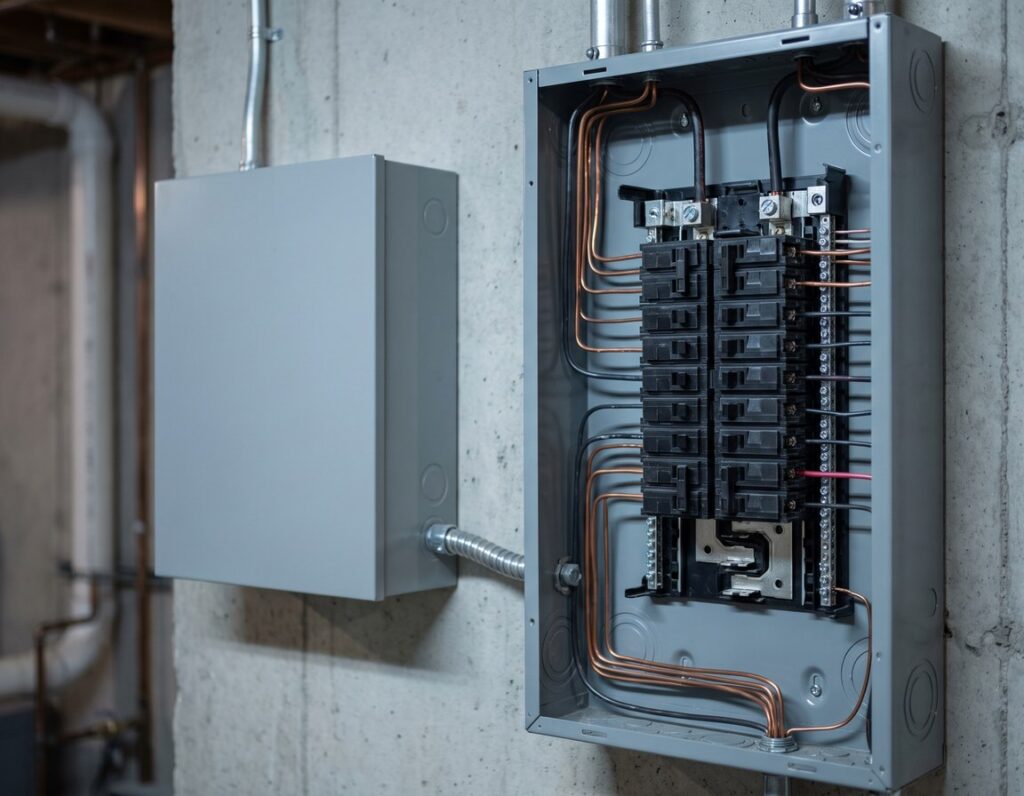
For a closer look at what whole-home electrical work involves at the panel level, the electrical panel installation process in neighboring Orland Park follows similar code requirements and gives a good sense of what to expect.
Sizing the Generator to Your Home’s Real Load
Generator sizing is calculated in kilowatts, and getting it wrong in either direction costs you money. Undersized units get overloaded and fail early. Oversized units are inefficient and more expensive to run on natural gas or propane.
A load calculation takes stock of your essential circuits: HVAC tonnage, water heater type, well pump (if applicable), refrigerators, and any dedicated circuits you want covered. Most homes in this part of southwest Cook County land between a 14kW and 22kW standby unit for full-home coverage. If you only need to protect critical circuits, a smaller transfer switch setup covering 8-10 circuits can work at a lower cost. The full range of electrical services available locally can help identify what your home actually needs before any equipment is ordered.
Permits, Inspections, and the Cook County Process
Palos Hills falls under Cook County jurisdiction for building permits, and generator installations require both an electrical permit and an inspection before the system is considered code-compliant. The Village of Palos Hills building department handles local review, and the work must be performed by a licensed electrical contractor to pass inspection.
This is the step many homeowners skip when they hire a general handyman or an unlicensed installer. An uninspected transfer switch installation can be flagged during a home sale, flagged by your insurer after a claim, or create liability if a utility worker is injured by backfeed during an outage. The permit process exists for all three of those reasons.
The Illinois Department of Financial and Professional Regulation maintains licensing records for electrical contractors statewide. If you’re vetting an installer, it takes about two minutes to confirm their license is active. You can also review general guidance on generator safety and installation standards through the U.S. Consumer Product Safety Commission’s generator safety resources.
Reed Electrical Services, LLC. is licensed and works through the proper permit process for every generator and transfer switch job. That’s not a sales pitch, it’s just how compliant electrical work gets done.
Frequently Asked Questions
How long does a whole-home generator installation take in Palos Hills?
Most installations take one to two days for the electrical work, assuming the panel is in good condition and the gas line is already stubbed close to the installation location. If the panel needs upgrading or the fuel run is long, add a day. Permit processing time through the Village of Palos Hills varies but typically runs a few business days for residential projects. Plan for about a week from permit submittal to final inspection in most cases.
Do I need a new electrical panel to install a standby generator?
Not always, but it depends on your current panel’s age and capacity. Homes with a 200-amp panel in good working order typically don’t need a full replacement. Homes still running a 100-amp service or older panels with known breaker issues may need upgrades before a transfer switch can be safely integrated. A load evaluation during the quote visit will tell you exactly what’s needed. You can read more about panel upgrade decisions on the panel upgrade guidance page for local homeowners.
What’s the difference between an automatic transfer switch and a manual interlock?
A manual interlock is a physical device installed on your existing panel that prevents the generator breaker and the main utility breaker from being on at the same time. It’s less expensive but requires you to manually start the generator and flip the interlock. An automatic transfer switch monitors utility power continuously and switches over on its own within seconds of detecting an outage. For most standby generator setups, the automatic switch is the standard choice because the generator itself is designed to start and run without any human intervention.
If you’re close to the Palos Hills and 95th Street area or anywhere along the southwest Cook County corridor and want a straight answer about what backup power would cost and require for your specific home, Reed Electrical Services, LLC. is the right call. Reach out through the contact page to schedule an on-site evaluation, or browse the full list of residential electrical services in Palos Hills to see what else might be worth addressing while a licensed electrician is already on site.