
15 Jun
Why Would a Newly Installed Outlet Stop Working the Same Day?
A brand-new outlet that goes dead within hours of installation usually points to one of three things: a loose wire connection at the terminal, a tripped GFCI outlet somewhere upstream on the same circuit, or a wiring error made during the install itself. It is almost never a defective outlet fresh out of the box, though that does happen on rare occasions.
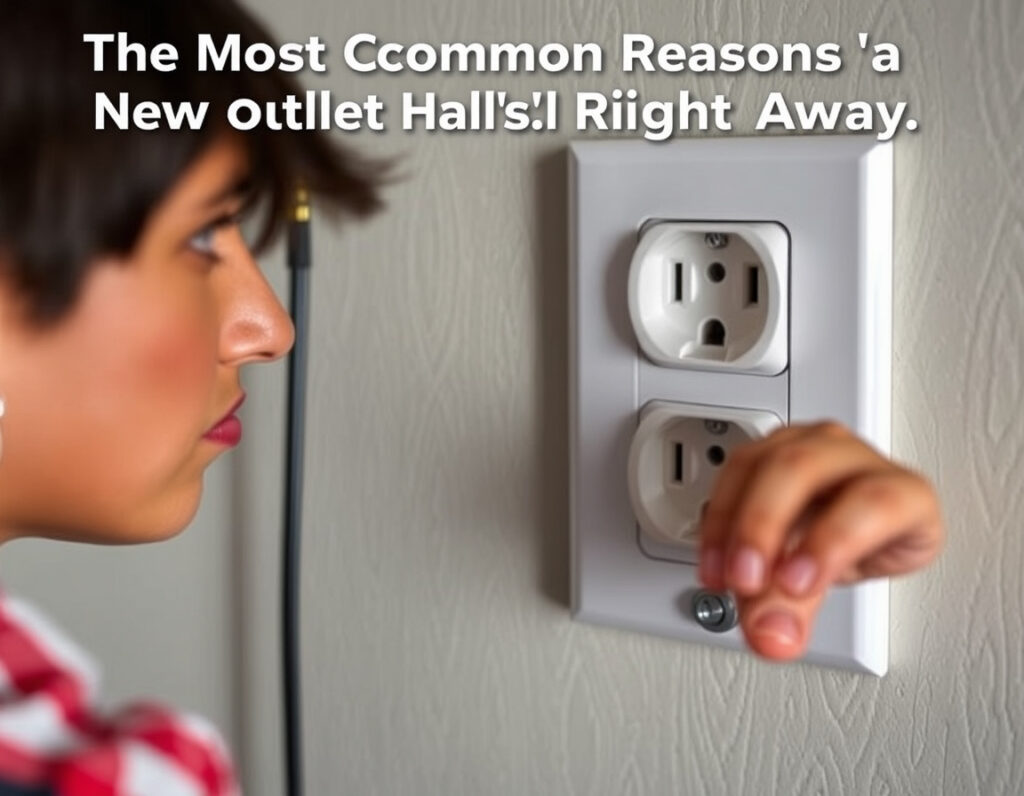
The Most Common Reasons a New Outlet Fails Right Away

The Upstream GFCI Has Already Tripped
This one catches a lot of homeowners off guard. Many circuits in a home share protection from a single GFCI outlet that sits earlier in the wiring run. If that master outlet trips, every regular outlet “downstream” from it goes dead too. The newly installed outlet looks broken, but the real problem is a GFCI in a bathroom, garage, or kitchen that needs a simple reset. Press the TEST and then RESET buttons on that GFCI and check whether your new outlet comes back to life. If it does, the outlet itself is fine.
This is worth knowing before calling anyone. A quick walk around the home looking for tripped GFCI outlets can save time and money.
A Loose Wire at the Terminal
Even a professional installation can leave a wire that looks seated but is not making solid contact inside the terminal. Loose wire connections are actually one of the leading causes of electrical problems in residential work. When a screw terminal is not torqued properly, the wire can back out slightly the first time current runs through it, breaking the connection. This is especially common with backstab-style outlets, where the wire just pokes into a small hole rather than wrapping around a screw. Backstab connections are notorious for failing early. A quality installation uses the screw terminals and tightens them to spec.
A Wiring Error During Installation
Mixing up the hot, neutral, and ground wires is a real possibility, especially in older homes where wire insulation colors have faded or the wiring was done with aluminum. If the outlet was wired incorrectly, it may appear dead, or worse, it may create a shock hazard while still appearing to work. A non-contact voltage tester can confirm whether power is even reaching the outlet. If power is present but the outlet is still dead, the internal wiring of the device itself was likely miswired.
If you had a contractor install the outlet and it failed the same day, that is a workmanship issue the contractor should fix at no charge. For professional, properly done work on switch and outlet installation in Palos Hills, IL, getting it right the first time avoids exactly this kind of frustration.
What to Check Before Calling an Electrician
Run Through This Quick Checklist
Before picking up the phone, run through these checks. First, look at your electrical panel and confirm no breaker has tripped. A breaker that tripped mid-installation sometimes stays in a middle position that is easy to miss. Second, find every GFCI outlet in the house and press RESET on any that feel “clicked out.” Third, plug a lamp or phone charger into the new outlet to confirm it is truly dead rather than just not working with one specific device. Fourth, if you feel comfortable doing so safely, remove the outlet cover and look for any wire that has visibly pulled away from a terminal.
If none of that resolves it, the problem is inside the wiring and should be handled by a licensed electrician. The residential electrical services team at Reed Electrical Services covers exactly these kinds of diagnostic calls for homeowners in the area.
When the Problem Is Deeper in the Circuit
Sometimes a new outlet failing immediately signals a bigger issue with the circuit itself. An overloaded circuit, deteriorated wiring, or a faulty neutral connection further back in the run will cause problems no matter how well the new outlet was installed. Homes built before 1980 in the southwest Chicago suburbs are especially likely to have wiring that complicates new outlet work. If your home is in that age range, it may be worth having the full circuit inspected. The National Fire Protection Association consistently identifies loose and deteriorated connections as a leading cause of residential electrical fires, which is reason enough to take a dead outlet seriously rather than ignoring it.
Palos Hills follows the Illinois Electrical Licensing Act, meaning all electrical work requires a licensed contractor. You can verify contractor licensing through the Illinois Department of Financial and Professional Regulation before hiring anyone.
Related Questions
Can a bad outlet damage appliances plugged into it?
Yes. An outlet with a loose neutral wire can cause voltage fluctuations that send irregular current to anything plugged in. Sensitive electronics like TVs, computers, and smart devices are particularly vulnerable, and the damage can happen quickly. If an outlet feels warm, sparks, or causes devices to behave erratically, stop using it and have it inspected.
How long does it take an electrician to replace a standard outlet?
A straightforward outlet swap on an accessible, properly wired circuit typically takes 20 to 30 minutes. If the electrician needs to trace a wiring fault, inspect the circuit, or replace a damaged box in the wall, that can push the job to an hour or more. Older homes where wiring is hard to access or circuits are not labeled take longer than newer construction.