What’s the Difference Between a Regular Breaker and an AFCI Breaker in Palos Hills?

The Short Answer

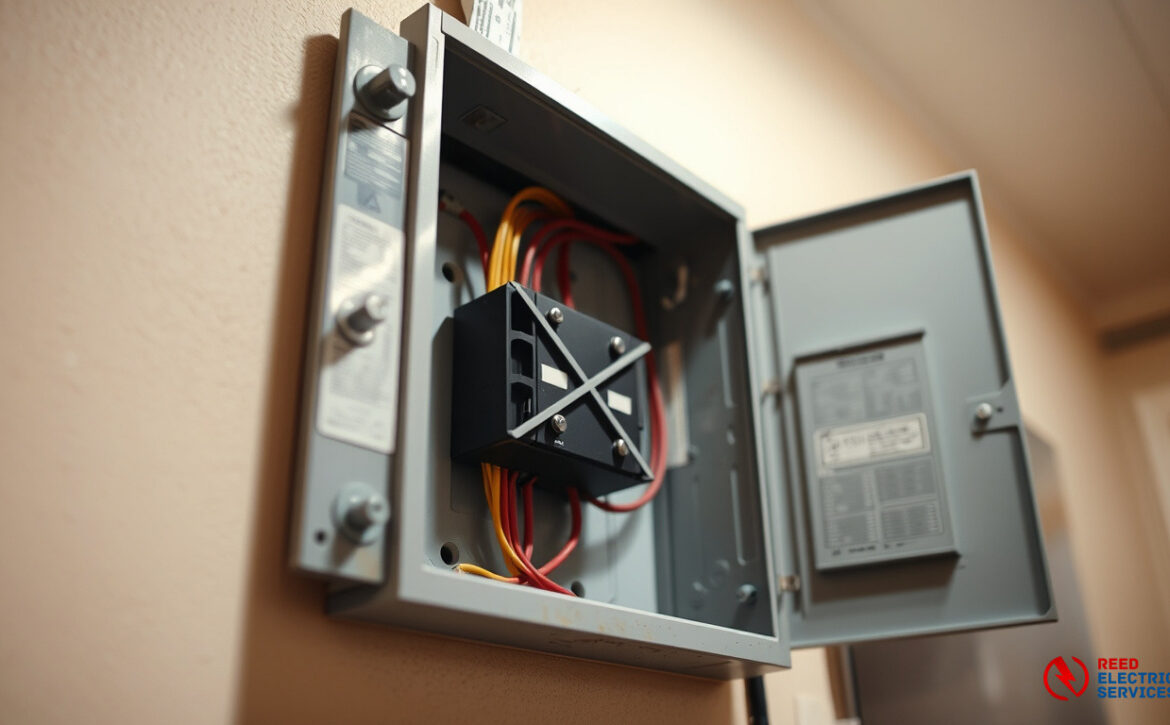
An arc fault happens when electricity jumps across a gap or damaged wire, creating a spark that can ignite surrounding materials. AFCI breakers are designed specifically to detect those erratic electrical signatures and cut power before a fire starts, making them one of the more important safety upgrades in an older home.

A standard breaker only trips when a circuit is overloaded or short-circuited. It has no way of detecting the subtle, high-frequency arcing that causes most residential electrical fires.

Why Arc Faults Are Dangerous in Ways You Wouldn’t Expect

The Short Answer — Electrical Services, Palos Hills

Most homeowners picture an electrical fire starting from something obvious — a sparking outlet or a burning smell. In reality, arc fault fires often start silently inside a wall, in a junction box, or behind a bookcase where a cord has been pinched for years. There’s no visible flame, no immediate warning. By the time smoke is detectable, the fire is already growing inside the wall cavity.

Common Causes of Arc Faults at Home

Loose wire connections at outlets and switches are a frequent culprit, especially in homes where the wiring is 20 or more years old. Damaged insulation from staples, nails, or rodents creates gaps where electricity can arc across. Cords run under rugs, jammed behind furniture, or kinked at the wall are also high-risk spots that a homeowner might never think twice about.

One thing worth understanding: arcing doesn’t always mean something is broken in a dramatic way. A wire terminal that simply wasn’t tightened enough during installation can arc quietly for months before anything goes wrong.

What an AFCI Breaker Actually Does Differently

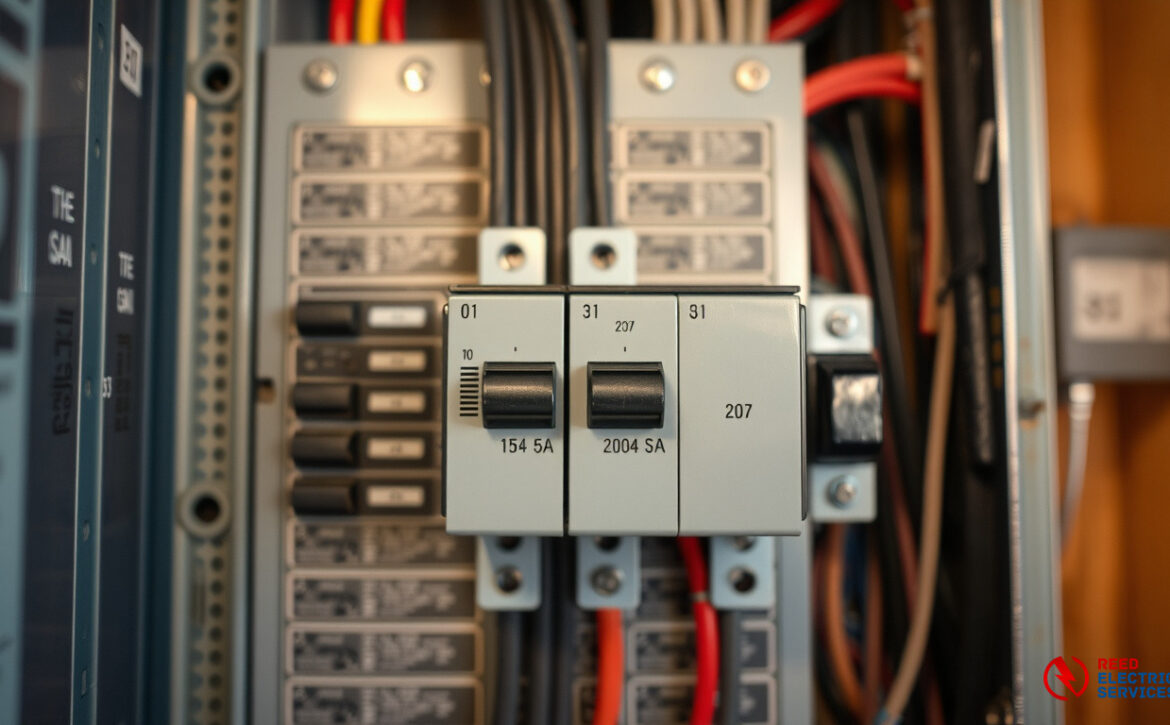
A standard breaker monitors current flow. If too much current passes through, it trips. That’s it. An AFCI breaker goes a step further by analyzing the pattern of that current many times per second. Arcing produces a distinctive electrical signature — irregular, high-frequency pulses — that the AFCI’s built-in processor recognizes and responds to almost instantly.

Think of it like the difference between a smoke alarm that only goes off when the room is already full of smoke versus one that detects the first trace of combustion gases. The technology isn’t new, but adoption in older homes across the southwest Chicago suburbs has been slow simply because upgrades aren’t required until you pull a permit for new work.

If your home still has an older panel without arc fault protection, it’s worth talking to a licensed electrician about a panel upgrade or targeted AFCI breaker replacements. You can see what a full electrical panel upgrade looks like for nearby Oak Lawn residents to get a sense of what’s involved.

Where AFCI Protection Is Required and Where It Isn’t

Current Code Requirements

The National Electrical Code (NEC) has steadily expanded AFCI requirements over the years. As of the 2020 NEC edition, AFCI breakers are required in virtually all habitable rooms — bedrooms, living rooms, kitchens, hallways, and even garages. Illinois municipalities adopt their own code cycles, so requirements can vary slightly depending on when your local jurisdiction last updated.

Palos Hills homes built before 2000 almost certainly don’t have AFCI protection anywhere in the house. That doesn’t make them immediately dangerous, but it does mean they lack a layer of protection that current electrical standards consider standard practice for good reason.

Should You Upgrade Even If It’s Not Required?

If you’re not doing permitted work, nobody is going to force the issue. That said, AFCI breakers typically cost $35 to $55 each at the breaker level, and an electrician can swap them in during a service call. For a home with aging wiring, that’s a relatively low cost compared to the risk. The U.S. Fire Administration estimates that electrical fires cause roughly 51,000 home fires each year in the country, and arc faults account for a significant portion of those.

If you’ve been considering a home electrical inspection in Palos Hills, asking the inspector to evaluate your arc fault protection coverage is a smart addition to that conversation.

Related Questions

Why Arc Faults Are Dangerous in Ways You Wouldn't Expect — Electrical Services, Palos Hills

How do I know if my breaker is an AFCI breaker?

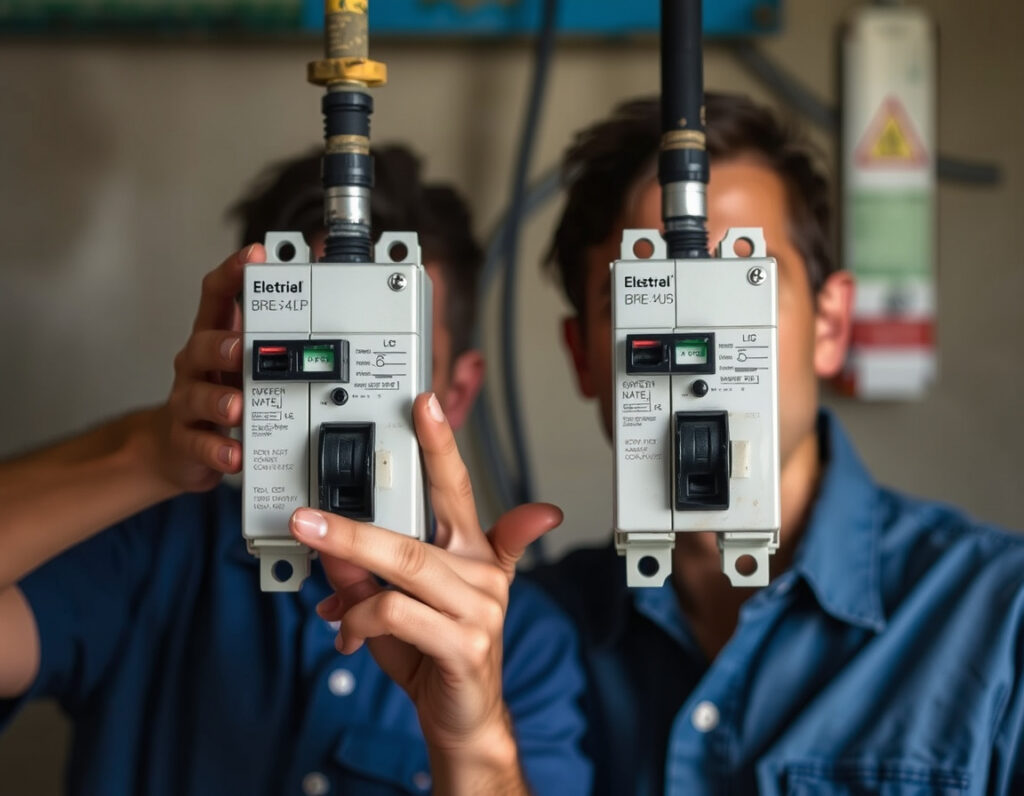
Look at the breaker itself. AFCI breakers have a small test button on the face of the breaker, usually labeled “TEST,” and they are typically marked “AF,” “AFCI,” or “Arc Fault” on the front. A standard breaker has no test button. If you’re unsure, a licensed electrician can identify the breaker types in your panel during a routine visit.

Can an AFCI breaker trip for reasons other than an arc fault?

Yes. AFCI breakers are more sensitive than standard breakers, and certain appliances with older motors — like some vacuum cleaners, treadmills, or power tools — can produce an electrical pattern that triggers a nuisance trip. If a specific breaker keeps tripping with a particular appliance but not others, the breaker is likely doing its job correctly and the appliance may need a dedicated circuit or to be replaced.

Read More

What’s the Difference Between a 120-Volt and a 240-Volt Outlet in Palos Hills?

The Short Answer

A standard outlet runs on 120 volts and handles everyday loads like lamps, phone chargers, and small appliances. A 240-volt outlet supplies twice the voltage and is built for high-draw equipment such as electric dryers, ranges, and EV chargers. You cannot simply swap one for the other — each requires its own wiring, breaker size, and outlet configuration.

What Actually Makes Them Different

The Short Answer — Electrical Services, Palos Hills

Voltage, Amperage, and Plug Shape

The most obvious difference is the plug shape. A 120-volt outlet has two vertical slots and a round ground hole, which is the three-prong design most people recognize. A 240-volt outlet looks completely different — it might have an L-shaped slot, a large round pin, or a horizontal slot arrangement, depending on what it powers.

Beyond looks, the real gap is in how much power gets delivered. Standard outlets in a home are typically rated at 15 or 20 amps. A 240-volt circuit for a dryer or range is usually 30 to 50 amps. That combination of higher voltage and higher amperage means the circuit can move serious energy — which is exactly what large appliances need.

Each 240-volt circuit also ties up two slots on your electrical panel instead of one, because it draws from two hot legs of incoming power simultaneously. That matters when homeowners start wondering whether their panel has room for a new high-draw appliance.

What Each Outlet Type Is Used For

Knowing which voltage rating matches which appliance saves a lot of headaches. Here is a quick breakdown:

  • 120-volt outlets — TVs, lamps, desktop computers, microwaves under 1,200 watts, phone and tablet chargers, coffee makers
  • 240-volt outlets — Electric clothes dryers, electric ranges and ovens, central air conditioning units, Level 2 EV chargers, electric water heaters, and hot tubs

Plugging a 120-volt appliance into a 240-volt circuit will almost certainly damage it immediately. Going the other way — trying to run a 240-volt appliance on a standard outlet — simply will not work. The plug will not fit, and the circuit could not handle the load anyway.

When Palos Hills Homeowners Need a 240-Volt Circuit Added

Upgrading Appliances or Adding an EV Charger

The most common reason residents around this area call an electrician is that they bought a new appliance and discovered the right outlet is not there. Switching from a gas dryer to an electric one, installing a new electric range, or adding a home EV charger all require a dedicated 240-volt circuit that runs directly from the panel to the location where the appliance will live.

This is not a DIY project. Running a 240-volt circuit involves pulling wire through walls, sizing the breaker correctly, and making sure the work passes a local inspection. In the southwest Chicago suburbs, that means following Illinois electrical code and any local permit requirements.

Checking If Your Panel Can Handle It

Before any new 240-volt circuit gets installed, an electrician will check whether your electrical panel has available capacity. Older panels in the area — particularly those rated at 100 amps — sometimes struggle to accommodate added high-draw circuits. If space is tight, a panel upgrade may come first. The U.S. Department of Energy notes that Level 2 home chargers alone can draw 7,200 watts or more, which is why proper panel capacity matters before installation begins.

For background on the area, Palos Hills is a southwest suburb of Chicago with a mix of mid-century and newer single-family homes — many of which were built during an era when 240-volt circuits were only planned for a dryer and a range, not for EV chargers or high-efficiency HVAC systems.

Related Questions

What Actually Makes Them Different — Electrical Services, Palos Hills

Can I convert a 120-volt outlet to a 240-volt outlet myself?

No, and it is not worth the risk. Converting between voltage types means replacing the wiring, the breaker, and the outlet itself — all of which require working inside your electrical panel. That work needs to be done by a licensed electrician and typically requires a permit so the installation gets inspected.

How do I know if an outlet is 120 or 240 volts without touching it?

Look at the plug slots. A standard three-prong outlet with two vertical slots is 120 volts. Any outlet with a different slot arrangement — angled slots, an L-shape, a large round pin, or four slots — is almost certainly 240 volts. When in doubt, an electrician can test it safely with a voltmeter in seconds.

Read More

Does Every Appliance in My House Need Its Own Dedicated Circuit in Palos Hills?

The Short Answer

A dedicated circuit is a circuit that runs from your electrical panel directly to a single appliance or outlet, with no other devices sharing it. Most large household appliances — refrigerators, washing machines, dishwashers, and air conditioners — require one because they draw too much power to share safely with anything else. Without it, you risk constant tripped breakers, overheating wires, and potential fire hazards.

Which Appliances Actually Need Their Own Circuit?

The Short Answer — Electrical Services, Palos Hills

A lot of homeowners assume a dedicated circuit is only for something huge, like a central AC unit. The real list is longer than most people expect.

Kitchen and Laundry Appliances

The National Electrical Code (NEC) requires dedicated circuits for appliances that pull continuous or high loads. In the kitchen, that means your refrigerator, dishwasher, microwave, and garbage disposal each need their own line. Your kitchen countertops also need at least two dedicated 20-amp circuits just for small appliances like toasters and coffee makers — even if no single device is plugged in permanently.

In the laundry room, the washing machine needs a dedicated 20-amp circuit. The dryer needs a 30-amp, 240-volt circuit all to itself. Sharing either of those with anything else is a code violation and a real safety problem.

HVAC, Water Heaters, and EV Chargers

Central air conditioning units, electric furnaces, and electric water heaters all require dedicated circuits, typically at 240 volts. The same goes for EV chargers. A Level 2 home charger pulls anywhere from 30 to 50 amps, and it needs a circuit sized specifically for that load. If you are thinking about installing a home EV charger, you can learn more about what that involves on our EV Charger Installation page for Palos Hills.

Sump pumps also land on this list. If your sump pump shares a circuit and that circuit trips during a heavy rainstorm, you will find out quickly how important that dedicated line was.

Home Office and Entertainment Equipment

This one surprises people. High-end desktop computers, home theater receivers, and gaming setups with multiple components can benefit from a dedicated circuit, even if the NEC does not strictly require it for all of them. When sensitive electronics share a circuit with a hair dryer or vacuum cleaner, the power fluctuations cause performance problems and can shorten equipment life. A dedicated line keeps voltage stable for that gear.

Signs Your Current Setup Is Overloaded

If you are regularly resetting breakers in the same spot, or you notice the lights dim when the refrigerator compressor kicks on, those are clear signals that circuits are being pushed past their designed load. Warm outlets or a faint burning smell near a panel are more serious warning signs that need attention right away.

When to Call an Electrician

Adding a dedicated circuit is not a DIY job. It involves running new wire from the electrical panel, installing the correct breaker size, and making sure everything meets local code. In the Palos Hills area, permitted electrical work also needs to pass inspection. The City of Palos Hills has specific permit requirements for electrical work, and skipping that step can create problems when you sell your home.

If your panel is already near capacity, adding new circuits might also mean a panel upgrade is part of the conversation. Our team can assess your current setup and tell you exactly what is needed before any work starts. You can also check our Switch and Outlet Installation page if you need new outlets added as part of that work.

For detailed technical guidance on circuit load requirements, the National Fire Protection Association’s NEC resources are a solid reference for understanding why these rules exist.

Related Questions

Which Appliances Actually Need Their Own Circuit? — Electrical Services, Palos Hills

Can I add a dedicated circuit to an older home with a small panel?

Yes, but it depends on how much capacity your panel has left. Many older homes in the area have 100-amp panels, which can fill up fast once you account for modern appliance loads. An electrician will check your current breaker slots and total load before recommending whether a simple circuit addition works or whether a panel upgrade makes more sense first.

How much does it cost to have a dedicated circuit installed?

Costs vary based on the distance from your panel, whether the circuit needs to be 120V or 240V, and how accessible the walls are for running new wire. A straightforward single circuit in an accessible area typically runs between $150 and $350 for a local residential job, though more complex runs or higher-amperage circuits for things like EV chargers or electric dryers will cost more. Getting a firm quote before work starts is always the right move.

Read More

Why Do My Outdoor Outlets Stop Working After It Rains in Palos Hills?

Direct Answer

If your outdoor outlets stop working after rain, the most likely cause is a tripped GFCI outlet that needs to be reset, or a GFCI that has failed and needs replacing. Outdoor outlets are required by code to be GFCI-protected because moisture and electricity are a dangerous combination, and that protection trips fast when water gets involved. In some cases, water has actually entered the outlet box itself, which means the fix goes beyond a simple reset.

Why Rain Triggers a GFCI Trip

Direct Answer — Electrical Services, Palos Hills

A ground fault circuit interrupter works by constantly comparing the current flowing out of the hot wire to the current returning through the neutral. The moment those numbers differ by as little as 5 milliamps, it cuts power in a fraction of a second. Rain creates exactly the kind of leakage path that triggers this response.

Common Ways Moisture Gets In

Even a small gap matters. Cracked or missing weatherproof covers let rain splash directly onto the receptacle face. Old outlet gaskets dry out and shrink over time, leaving space around the edges. Conduit fittings that weren’t sealed properly act as a funnel, directing water straight to the wiring. Any of these paths can cause a nuisance trip or, worse, a ground fault that keeps tripping every time power is restored.

It’s also worth checking whether the outlet box has a “while-in-use” cover. Standard flip covers are only rated for protection when nothing is plugged in. If you’re running a power tool or holiday lights outdoors, you need a bubble-style cover that stays closed around the cord. Many older homes in the area were built before this became standard practice.

When the GFCI Has Actually Failed

A GFCI outlet has a lifespan. Most manufacturers rate them for around 10 to 15 years, and exposure to heat, cold, and moisture shortens that. If you press the reset button and it won’t click, or it trips again within seconds, the device itself may have worn out. A failed GFCI that won’t hold a reset is not something to work around with an extension cord from inside. That’s a replacement job. Switch and outlet installation in Palos Hills covers exactly this kind of repair when a receptacle has reached the end of its service life.

What to Check Before Calling an Electrician

You can safely do a few things yourself before picking up the phone.

Locate the Controlling GFCI

Outdoor outlets are often protected by a GFCI that’s actually located indoors. Garages, bathrooms, and utility rooms are common spots. One GFCI can protect multiple downstream outlets on the same circuit, so the dead outdoor receptacle may be controlled by a GFCI you’ve never touched. Walk through those rooms and look for a black “TEST” button and red “RESET” button on any outlet. Press the reset firmly until you hear a click, then check your outdoor outlet again.

If none of the indoor GFCIs seem connected to the outdoor outlet, check your electrical panel for a tripped breaker. A breaker that has moved to the middle position needs to be pushed fully off before it can be reset to on.

Signs You Need a Pro

Call a licensed electrician when the reset doesn’t hold, when you see burn marks or discoloration around the outlet face, when you smell something burning near the box, or when the outlet is completely dead and no GFCI or breaker appears to be tripped. Water intrusion that reaches the wiring behind the box can damage insulation and create a shock risk that isn’t visible from the outside. A proper electrical inspection in Palos Hills can identify hidden water damage before it becomes a bigger problem.

Homes near the city of Palos Hills that were built in the 1970s and 1980s often have older wiring that wasn’t designed with today’s outdoor power demands in mind. Adding a proper weatherproof outlet with updated GFCI protection is a relatively quick job for a licensed electrician. The OSHA guidance on ground fault hazards makes clear why skipping this repair is not a safe option.

Related Questions

Why Rain Triggers a GFCI Trip — Electrical Services, Palos Hills

Can I replace an outdoor GFCI outlet myself?

Swapping a GFCI receptacle is within the skill range of a careful DIYer who knows how to turn off the breaker and confirm power is off with a voltage tester. That said, if the wiring inside the box looks corroded, melted, or the box itself has standing water damage, stop and call a licensed electrician. Moisture-compromised wiring needs more than a new outlet.

How many outdoor outlets should a house have on one GFCI circuit?

There’s no strict code limit on how many outlets one GFCI can protect downstream, but practical wiring usually puts two to four outdoor outlets on a single 20-amp circuit. The problem comes when high-draw tools trip the GFCI from overload rather than a ground fault. If your outdoor circuit trips frequently under load, a dedicated outdoor circuit is often the right fix rather than simply resetting the same GFCI over and over.

Read More

Can One GFCI Outlet Protect Multiple Outlets on the Same Circuit in Palos Hills?

The Short Answer

Yes, a GFCI outlet can protect other outlets on the same circuit, but only if it’s wired correctly. When an electrician installs a GFCI as the first outlet in a circuit run, every outlet downstream from it gets the same ground-fault protection — without needing individual GFCI devices at each location.

How GFCI Protection Actually Travels Through a Circuit

The Short Answer — Electrical Services, Palos Hills

Most people think of a GFCI outlet as a single-point device that only protects whatever you plug directly into it. That’s a reasonable assumption, but it misses half the picture.

A standard GFCI outlet has two sets of terminals: LINE terminals (where power comes in from the panel) and LOAD terminals (where power continues to the next outlet in the chain). When the outlet is connected to the LOAD terminals, the GFCI’s internal sensor monitors current flow for every outlet it feeds. The moment it detects an imbalance of as little as 4–6 milliamps, it trips and cuts power to the entire downstream chain.

Why the Wiring Order Matters

Here’s where things go wrong for DIYers. If someone swaps the LINE and LOAD connections, the downstream outlets lose their protection entirely — and there’s no obvious sign anything is wrong. The outlet still powers devices normally. You’d never know until something goes sideways. This is one of the clearest reasons that outlet wiring work is better left to a licensed electrician who can verify proper installation and test each protected location.

Where You’ll Typically Find GFCI Circuits

The National Electrical Code requires GFCI protection in areas where water and electricity could meet. In most homes, that means:

  • Bathrooms
  • Kitchen countertop circuits within 6 feet of a sink
  • Garages and outdoor receptacles
  • Unfinished basements and crawl spaces
  • Near pools, hot tubs, and wet bar sinks

In older homes throughout Palos Hills and the surrounding southwest suburbs, these protections are often missing entirely or were installed incorrectly decades ago. A home electrical inspection can flag every location that’s out of compliance before it becomes a hazard.

Signs Your GFCI Setup Might Not Be Working Right

A GFCI outlet that trips constantly isn’t necessarily broken — it may be doing its job correctly. But there are some patterns worth knowing.

Nuisance Tripping vs. Real Faults

If a GFCI trips every time you run a specific appliance, the appliance itself may be leaking current. That’s a sign to retire the device, not reset the outlet repeatedly. On the other hand, if the outlet trips randomly with no load at all, there could be a wiring fault or moisture intrusion in the wall — both of which need a professional look.

The TEST and RESET Button Test

Press the TEST button. The RESET button should pop out and power to the outlet (and any downstream outlets) should cut off. Press RESET and power returns. If the TEST button doesn’t trip the outlet, or if RESET won’t stay in, the GFCI device has failed and needs replacement. These devices don’t last forever — most manufacturers rate them for 10 to 15 years under normal use.

If you’ve got older receptacles throughout the house and aren’t sure which ones are actually protected, a switch and outlet inspection can map out exactly what you have and what needs updating.

Related Questions

How GFCI Protection Actually Travels Through a Circuit — Electrical Services, Palos Hills

Can I replace a two-prong outlet with a GFCI outlet instead of rewiring for a ground?

Yes, and the National Electrical Code explicitly allows this. A GFCI outlet provides shock protection even without a grounding wire, making it a code-legal upgrade for older two-prong circuits. The outlet must be labeled “No Equipment Ground” when installed this way — something a licensed electrician handles as part of the job.

How do I know which outlets in my home are protected by a single GFCI?

The most reliable method is to plug a simple outlet tester with a GFCI test function into each outlet and press the test button on the GFCI device. Any outlets that lose power are on the protected downstream circuit. Local residents with homes built before 1985 often discover that what looks like a GFCI circuit was never wired through the LOAD terminals at all, leaving multiple outlets unprotected.

Read More

What Causes Flickering Lights in One Room vs. the Whole House in Palos Hills?

What Causes Flickering Lights in One Room vs. the Whole House?

Flickering confined to a single room almost always points to a loose wire or failing fixture in that space, while house-wide flickering typically signals a problem at your electrical panel or the utility’s service connection. The root cause matters because one scenario is a minor fix and the other can be a serious safety issue that needs attention right away.

Breaking Down the Two Scenarios

What Causes Flickering Lights in One Room vs. the Whole House? — Electrical Services, Palos Hills

When Only One Room Flickers

If your lights flicker only in the kitchen or only in the bedroom, the problem is almost always local. The most common culprits are a loose wire connection at the switch, outlet, or fixture itself. Over time, connections loosen from vibration, heat cycling, or just age. A bulb that isn’t fully seated in its socket can do it too, though that’s an easy fix you can handle yourself in about ten seconds.

Dimmer switches are another common offender. Older dimmers weren’t designed for LED bulbs, so if you swapped incandescents for LEDs without changing the dimmer, the mismatch causes that annoying rapid flicker. Swapping to a compatible dimmer usually solves it clean. If you’ve ruled out the bulb and the switch, a licensed electrician should check the wiring in that circuit before the loose connection becomes an arc fault — the kind of fault that starts fires inside walls.

When the Whole House Flickers

House-wide flickering is a different animal. If every light in the building dims or blinks at the same time, especially when a large appliance like an HVAC unit or refrigerator kicks on, your panel may be undersized or aging. Homes in the southwest Chicago suburbs that were built in the 1960s and 1970s often still have original 100-amp panels that struggle under the load of modern appliances.

A more serious possibility is a problem with the utility service connection at the weatherhead. A corroded or partially broken service conductor can cause voltage fluctuations across the entire home. That’s not something a homeowner should touch. If flickering is constant, severe, or accompanied by a humming sound from your panel, call an electrician the same day. An electrical inspection in Palos Hills can pinpoint whether the issue lives inside your panel or outside at the service drop.

When to DIY and When to Call a Pro

Safe Checks You Can Do Yourself

A few things are safe to check before picking up the phone. Confirm the bulb is seated properly and not a mismatched type for the fixture or dimmer. Check whether the flickering happens only when a specific appliance runs, which helps narrow down a dedicated circuit issue. Look at your panel for any breakers that look slightly off-center (that’s a tripped breaker, not a cause of flickering, but it tells you the circuit is being overloaded).

What Needs a Licensed Electrician

Anything involving wiring inside a wall, connections at the panel, or the service entrance requires a licensed pro. Loose connections generate heat. Heat causes electrical arcing, and arcing is one of the leading causes of residential house fires according to the National Fire Protection Association. The risk-to-reward ratio on DIY panel work is simply not there.

If you’re in the area and dealing with persistent flickering, an electrical panel upgrade may be the long-term answer, especially in older homes running 100-amp service. Reed Electrical Services handles diagnostics and panel work for residents across the southwest suburbs.

Related Questions

Breaking Down the Two Scenarios — Electrical Services, Palos Hills

Can a bad outlet cause lights to flicker in the same room?

Yes. If a faulty outlet and a light fixture share the same circuit, a poor connection at the outlet can cause voltage drops that make the lights flicker. A quick way to test it is to unplug everything from that circuit and see if the flickering stops. If it does, you’ve found your circuit — but tracing the bad connection still requires an electrician.

Is it normal for lights to dim briefly when the AC turns on?

A brief, slight dim when the air conditioner compressor starts up is common because the motor draws a large surge of current at startup. If the dimming is dramatic, lasts more than a second or two, or happens with other smaller appliances too, that’s a sign of an undersized panel or a wiring issue that deserves a professional look. You can learn more about Palos Hills and its housing stock to understand why older homes here are especially prone to this.

Read More

Why Does My Circuit Breaker Keep Tripping Even After I Reset It in Palos Hills?

The Short Answer

Yes, a tripped breaker can come back on its own in rare cases, but a breaker that keeps tripping is telling you something is genuinely wrong. It could be an overloaded circuit, a short circuit, or a ground fault — and ignoring repeat trips puts your home at real risk of electrical fire or equipment damage.

Resetting it once is usually fine. Resetting it three times a week is not.

Why Breakers Trip in the First Place

The Short Answer — Electrical Services, Palos Hills

A circuit breaker has one job: cut power when something goes wrong. When it trips, the internal mechanism detects more current flowing through the wire than that circuit was designed to handle. The breaker flips to the off position to stop that flow before the wire overheats.

There are three main reasons this happens, and they are not equally serious.

Overloaded Circuits

This is the most common cause and the least alarming — at first. You plug a space heater into the same outlet strip as your computer and monitor, and suddenly the kitchen or bedroom circuit flips. Circuit overloads happen when the total wattage demand exceeds what that circuit’s breaker is rated for, typically 15 or 20 amps in residential wiring.

The fix might be as simple as redistributing appliances to different circuits. But if your home has older wiring where too many devices share too few circuits, you’re running into a structural problem that unplugging things won’t permanently solve. An electrical panel upgrade or additional circuit installation may be the right answer.

Short Circuits and Ground Faults

A short circuit happens when a hot wire touches a neutral wire. A ground fault happens when a hot wire contacts a grounded surface. Both cause an immediate, dramatic spike in current — the kind that trips a breaker fast. These are more serious than a simple overload.

Signs of a short or ground fault include a burning smell near outlets, discolored outlet covers, or a breaker that trips the instant you reset it. Don’t keep resetting a breaker that behaves this way. That’s the electrical system doing exactly what it’s supposed to do, and overriding it manually creates genuine danger.

A Weak or Failing Breaker

Breakers aren’t designed to last forever. After years of trips and resets, the internal mechanism can wear down. A failing breaker might trip under loads it should handle easily, or it may not trip when it actually should — which is arguably the scarier scenario. If your breaker feels warm to the touch, won’t stay reset, or the panel is more than 25 years old, it deserves a look from a licensed electrician. Reed Electrical Services works throughout Palos Hills and the surrounding southwest suburbs and can assess whether the panel itself is the problem.

What You Should (and Shouldn’t) Do

Safe Steps When a Breaker Trips

First, unplug or turn off devices on that circuit before you reset anything. Then go to your panel, find the tripped breaker (it’ll sit between ON and OFF, or be fully flipped to OFF), and push it firmly to OFF before switching it back to ON. If it holds, you’re likely dealing with a temporary overload. Spread your devices across multiple circuits and monitor it.

If it trips again within a short period or immediately on reset, stop. That’s the point where a professional electrical inspection in the area makes sense. Trying to force a breaker that keeps tripping is how electrical fires start.

When to Call an Electrician

Call a licensed electrician if you notice any of these situations: the breaker trips repeatedly with normal loads, you smell burning near the panel or outlets, the breaker feels hot, or the panel itself shows signs of rust, scorch marks, or buzzing sounds. These aren’t inconveniences — they’re warnings. Licensed electricians in Illinois are required to follow the National Electrical Code, and for good reason. The National Fire Protection Association’s NFPA 70 sets the standards that keep residential wiring safe, and those rules exist because electrical fires cause thousands of home losses every year.

Local residents in the southwest Chicago suburbs can also check the State of Illinois official site for licensing verification resources to confirm any electrician they hire is properly credentialed.

Related Questions

Why Breakers Trip in the First Place — Electrical Services, Palos Hills

Can I replace a circuit breaker myself?

Technically, a homeowner can replace a breaker, but it requires working inside a live electrical panel — a genuinely dangerous task even for careful DIYers. In Illinois, work inside the main panel typically requires a licensed electrician and may need an inspection permit. Hiring a pro is the safer and legally safer route.

How do I know if my home needs more circuits added?

If you’re regularly tripping breakers in the kitchen, home office, or garage, or if you rely heavily on extension cords and power strips, your home’s circuit layout probably hasn’t kept pace with your electrical demand. An electrician can assess your outlet and circuit setup and recommend adding dedicated circuits where needed.

Read More