Can I Replace a Two-Prong Outlet with a Three-Prong Without Rewiring the Whole Circuit in Palos Hills?

The Short Answer

Yes, but only in very specific circumstances. A two-prong outlet can be legally replaced with a three-prong outlet without running new ground wire, provided you use a GFCI outlet or GFCI breaker to protect that circuit. The National Electrical Code (NEC) allows this as an accepted alternative to full rewiring, but the outlet must be labeled “No Equipment Ground” after the swap.

Why the Ground Wire Actually Matters Here

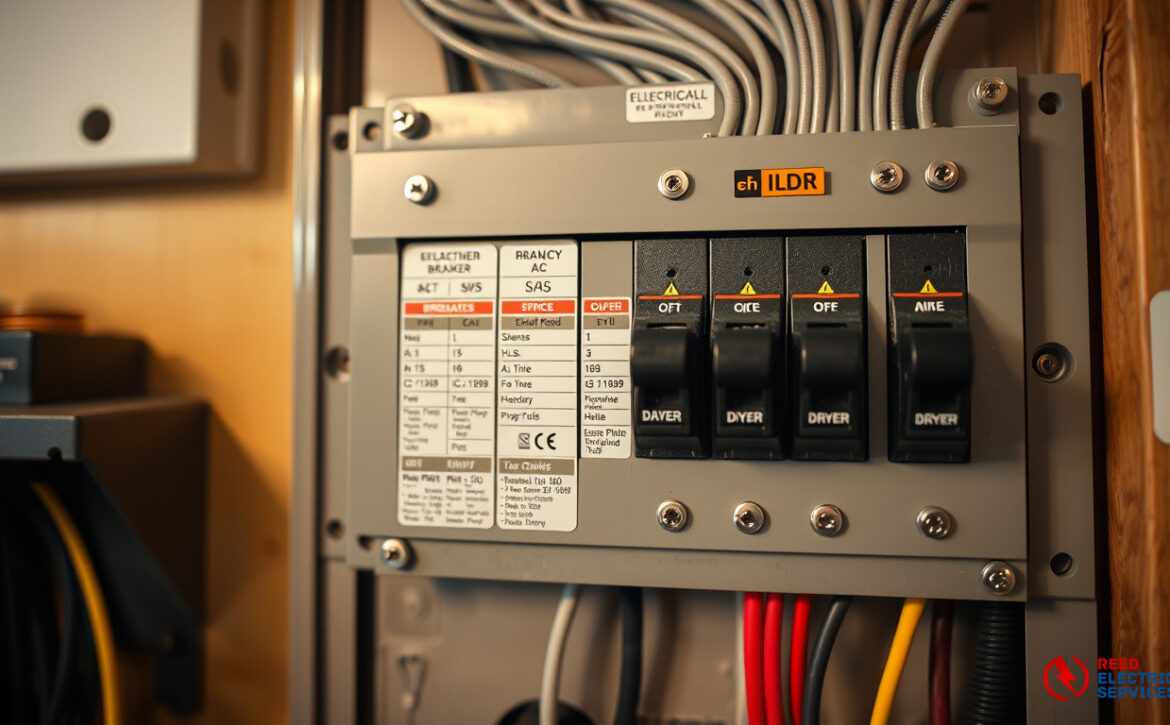
The Short Answer — Electrical Services, Palos Hills

Two-prong outlets are ungrounded, meaning there’s no path for stray electrical current to safely exit if something goes wrong inside a device. That third hole on a modern outlet isn’t just for looks. It connects to a wire that runs back to your panel and gives fault current somewhere to go besides through you or your appliance.

The Problem with Just Swapping the Outlet

A lot of homeowners assume they can pull out the old two-prong outlet, screw in a three-prong replacement, and call it a day. Electrically speaking, that’s a mistake. Without an actual ground wire connected to the new outlet, that third slot is essentially a lie. Devices plugged into it believe they’re grounded when they aren’t, which can damage sensitive electronics and create a shock hazard during a fault.

Older homes in the Palos Hills area built before the 1960s commonly have this wiring setup throughout. Running new ground wires through finished walls to every outlet is possible, but it’s a major project that involves fishing wire through insulation, drywall work, and considerable labor cost.

The GFCI Workaround the Code Actually Allows

Installing a GFCI outlet in place of a two-prong outlet is the NEC-approved shortcut. A GFCI monitors the current flowing in and out of a circuit in real time. If it detects even a small imbalance (as little as 4 to 6 milliamps), it cuts power within milliseconds. That protection replaces the job that a ground wire would normally do in a fault scenario.

You can also install a GFCI breaker at the panel, which then covers every outlet on that entire circuit. Either approach satisfies code, but the outlet must be stickered with the “No Equipment Ground” label that comes in the GFCI package. Skipping that label isn’t optional. Inspectors look for it.

One thing GFCI protection can’t do is provide a true equipment ground for sensitive electronics. Surge protectors and some audio or computer equipment need a genuine ground path to work correctly. For those situations, running a proper grounding conductor is still the right call. If you’re unsure what’s in your walls, an electrical inspection can tell you exactly what you’re working with before committing to any approach.

What the Replacement Process Actually Looks Like

The swap itself isn’t complicated for a licensed electrician, but there are a few things that determine how it goes.

What Gets Checked Before Anything Is Changed

The electrician will confirm what type of wiring is in the box. Older cloth-wrapped or knob-and-tube wiring requires extra attention because the insulation can be brittle, and disturbing it too aggressively causes problems. The box depth matters too since GFCI outlets are physically deeper than standard outlets and won’t fit properly in shallow old-work boxes.

If the outlet is in a kitchen, bathroom, garage, or outdoors, it likely needs GFCI protection under current code regardless of the grounding situation. Local residents upgrading an entire bathroom or kitchen often find it makes more sense to handle all the outlets at once rather than doing them piecemeal.

Permits and Inspections

Replacing a two-prong outlet with a three-prong in the same location generally doesn’t require a permit in most Illinois municipalities. But if the scope grows to include panel work or rewiring multiple circuits, that changes. The State of Illinois requires licensed electricians to pull permits for work that crosses certain thresholds, and the NEC published by NFPA sets the baseline standards that Illinois and most jurisdictions adopt. Your electrician should know exactly where the line is for your specific project.

For anyone in the southwest Chicago suburbs dealing with a house full of two-prong outlets, services like outlet installation and upgrades are a practical way to bring the whole home up to a safer standard without tearing out every wall.

Related Questions

Why the Ground Wire Actually Matters Here — Electrical Services, Palos Hills

Can I use a three-to-two-prong adapter instead of replacing the outlet?

Those “cheater plugs” are legal to own but they don’t actually ground anything unless the screw tab on the adapter is connected to a grounded metal box, which is rare in the homes that have two-prong outlets. Using one long-term on a device that needs a ground, like a desktop computer or power tool, leaves that device unprotected.

How do I know if my outlets are actually grounded or just look like they are?

A simple outlet tester from any hardware store plugs in and lights up to tell you whether the outlet is correctly wired, ungrounded, or has a reversed polarity problem. They cost about $10 and take five seconds to use. If you find a three-prong outlet showing as ungrounded, a previous owner likely did the exact swap described above without the GFCI protection, which means you’re getting false security from that third slot.

Read More

Can You Actually Overload a Circuit Just by Plugging In Too Many Things in Palos Hills?

The Short Answer

Yes, you can have too many things plugged into a single circuit, and it’s more common than most homeowners realize. Every circuit has a maximum amperage rating, and when the combined load of all devices on that circuit exceeds it, you risk tripped breakers, overheated wiring, and in worst cases, an electrical fire.

Several appliance cords sharing a single household power strip

The standard rule is to keep the total load on any circuit at or below 80% of its rated capacity — so a 15-amp circuit should carry no more than 12 amps of continuous load.

How Circuit Overloads Actually Happen

Most people picture a circuit overload as plugging one too many things into a power strip. The reality is a bit more gradual. Circuits in older homes around Palos Hills were often designed for the appliance loads of the 1960s or 70s. Back then, a kitchen circuit handled a toaster and a coffee percolator. Today that same circuit might be dealing with an air fryer, an instant pot, a microwave, and a phone charger all at once.

What the Numbers Look Like

A typical 15-amp, 120-volt circuit can handle a maximum of 1,800 watts. Apply the 80% rule and you’re really working with 1,440 watts of safe continuous load. A single space heater runs around 1,500 watts on its own. Add a laptop charger, and you’ve already pushed past the limit before you’ve turned on a light.

Here’s a quick breakdown of common appliance wattages to keep in mind:

  • Space heater: 1,000–1,500W
  • Hair dryer: 1,200–1,875W
  • Microwave: 600–1,200W
  • Window AC unit: 500–1,400W
  • Refrigerator: 100–400W (but with high startup surge)

Why Your Breaker Trips (and Why That’s Actually a Good Thing)

The circuit breaker is doing exactly what it’s supposed to do when it trips under load. It’s not failing — it’s protecting the wiring inside your walls from getting hot enough to ignite insulation or framing. The danger sign isn’t a breaker that trips once. It’s a breaker that trips repeatedly, because that pattern usually means the circuit is consistently overloaded or the breaker itself is worn out and needs replacement.

Circuit breakers in a residential panel, one sitting out of line with the rest

If you’re regularly resetting the same breaker in your home, that’s worth having a licensed electrician look at. Repeated tripping on an older panel can also point toward a panel that needs upgrading to handle modern electrical demand.

What You Can Do About It

Redistribute Loads Across Circuits

The simplest fix costs nothing. Look at which outlets are on which circuit (your breaker panel labels are a starting point, though they’re often inaccurate in older homes) and spread high-draw devices across different circuits. Avoid running two high-wattage appliances from the same room if possible.

Kitchens and bathrooms in homes built after 1978 are typically required to have dedicated 20-amp circuits for countertop appliances, but many older properties in the area were never updated to meet current code.

Add Dedicated Circuits for Heavy Hitters

Some appliances should never share a circuit. Electric dryers, refrigerators, dishwashers, and window AC units all benefit from their own dedicated line. This isn’t just about convenience — it’s about safety and the long-term reliability of your home’s wiring. The National Electrical Code published by NFPA sets minimum requirements for dedicated circuits, and a local electrician can tell you whether your current setup is up to standard.

If your home has only two-prong outlets in rooms where you’re running modern appliances, a switch and outlet upgrade paired with new circuit wiring can make a meaningful difference in both safety and usability.

Know When a Panel Upgrade Is the Real Fix

A 60-amp or 100-amp panel was standard in homes built before 1980. Most households today need at least 200 amps to run comfortably without constant load juggling. If you’re tripping breakers regularly, running extension cords as permanent solutions, or planning to add an EV charger or home addition, a panel upgrade is likely the right call rather than just redistributing outlets.

Related Questions

How do I know if my home’s wiring can handle a new appliance?

Check the wattage or amperage rating on the appliance’s label, then compare it to the circuit it would be plugged into. If you’re not sure which circuit covers that outlet, a licensed electrician can trace and label your panel accurately. For larger appliances like dryers or EV chargers, the answer almost always involves a dedicated circuit rather than sharing an existing one.

Is it safe to use a high-wattage extension cord instead of adding a new outlet?

Extension cords, even heavy-duty ones, are designed for temporary use. Running a space heater or appliance through an extension cord long-term creates heat buildup at the connection points, which is a real fire risk. The right solution is adding a properly wired outlet where you need it. Palos Hills homeowners dealing with this situation should have an electrician install a new outlet rather than relying on cord workarounds.

Read More

What’s the Difference Between a Grounded and Ungrounded Outlet in Palos Hills?

The Short Answer

A grounded outlet has three slots — two vertical slots and a round hole at the bottom — and connects to a dedicated ground wire that safely redirects stray electrical current away from you. A non-grounded (two-prong) outlet only has two slots and no ground path, which means any fault current has nowhere safe to go. In older homes, the difference matters quite a bit for both safety and what you can plug in.

An older two-slot ungrounded receptacle in a Palos Hills home

Why the Ground Wire Actually Matters

What Happens Without a Ground

Picture a faulty appliance — say, an older lamp with a frayed internal wire. If that live wire touches the metal body of the lamp and your outlet has no ground, the fault current has two choices: sit there and build up heat, or find a path through you. That’s the scenario a ground wire is designed to prevent. It gives the current a low-resistance escape route straight back to the panel, which trips the breaker before anything worse happens.

Homes built in Palos Hills before the mid-1960s commonly used two-wire wiring systems. The circuits worked fine for the appliances of that era, but today’s electronics, power tools, and kitchen gear expect a ground connection. Running without one isn’t just a code issue — it’s a real shock and fire risk.

The Third Prong Is Not Just for Show

A lot of people grab a three-to-two prong adapter and call it solved. It isn’t. Those cheap adapters bypass the ground entirely unless you also connect the adapter’s small tab to a verified ground screw on the outlet cover plate — something that’s almost never done. The adapter looks like it fits, but it provides zero shock protection. It’s one of those “fix” options that creates a false sense of security without actually changing anything about the circuit’s safety.

How Electricians Fix Ungrounded Outlets

Option 1: Run New Wiring

The gold-standard repair is to pull new three-wire cable from the outlet back to the panel. This gives you a true ground all the way through the circuit. It’s the most work and the most expensive path, but it’s also the one that leaves your wiring fully up to current code. If your home is getting a wiring upgrade anyway, bundling ungrounded outlet repairs into that project saves time and money.

Bare copper grounding conductors landed on the ground bar of a residential panel

Option 2: Install a GFCI Outlet

The National Electrical Code actually allows a GFCI outlet as a replacement for an ungrounded receptacle, as long as it’s labeled “No Equipment Ground.” A GFCI outlet monitors current flow and trips in milliseconds if it detects an imbalance — which is what happens when current starts flowing through a person. It doesn’t give you a true ground wire in the wall, but it does provide the shock protection that matters most in areas like kitchens, bathrooms, and garages.

This is often the most practical fix in older homes where fishing new wire through finished walls would mean tearing up plaster or drywall. A licensed electrician can swap the outlet, test it, and add the required label in under an hour.

When to Call Someone Instead of DIY

Swapping one outlet for another is a job some homeowners handle themselves. But diagnosing whether your home’s wiring is actually grounded — or just has three-prong outlets installed over two-wire circuits by a previous owner — takes a tester and some knowledge of what the readings mean. In the southwest Chicago suburbs, plenty of homes have been “updated” cosmetically without the wiring to back it up. If you’re not sure what you have, an electrical inspection in Palos Hills is the fastest way to find out exactly where you stand before buying new appliances or doing any outlet work.

Related Questions

Can I use a surge protector with an ungrounded outlet?

Technically yes, but the surge protection won’t work. Most surge protectors route excess voltage to ground — if there’s no ground wire, that protection is inactive. The power strip will still function as a multi-outlet extension, but your connected devices have no surge defense. It’s worth fixing the outlet before plugging in anything expensive.

Do older homes need to replace every ungrounded outlet at once?

No. The local code doesn’t require you to rip out all two-prong outlets the moment you buy a home — you’re only required to bring things up to code when you’re doing permitted work on those circuits. That said, prioritizing high-use areas like the kitchen, bathrooms, and any room with a home office setup is smart. Those spots carry the most load and the most risk if something goes wrong. Check out the switch and outlet installation services available locally if you want to start upgrading room by room.

Read More

Why Does My Light Switch Feel Warm to the Touch in Palos Hills?

The Short Answer

Yes, but only up to a point. A light switch that feels warm to the touch is often a sign of a wiring problem, a failing switch, or a circuit that’s carrying more load than it should. A slight warmth on a dimmer switch is normal because dimmers generate a small amount of heat as part of how they work, but a standard toggle switch should never feel warm at all.

What’s Actually Causing the Heat

The Short Answer — Electrical Services, Palos Hills

The Switch Itself Is Worn Out or Faulty

Switches don’t last forever. Over years of use, the internal contacts inside a switch can corrode or loosen, creating resistance where there shouldn’t be any. Resistance means heat. If your switch is more than 15 or 20 years old and feels warm, it may simply be at the end of its useful life. Replacing it is a quick fix a licensed electrician can knock out in under an hour.

A faulty switch is also a real fire risk. Loose internal contacts can arc, which means tiny electrical sparks inside the wall. That’s not something to ignore for a few weeks while you get around to it.

The Circuit Is Overloaded

Switches are rated for a specific amperage. Most residential switches are rated for 15 amps. If a circuit is drawing close to or beyond that, the switch will start warming up. This is especially common when a single overloaded circuit controls multiple high-draw fixtures or devices like older halogen lights, bathroom exhaust fans, or space heaters.

If the switch controls a ceiling fan or a bank of recessed lights in a finished basement, check whether someone swapped in higher-wattage bulbs at some point. That small change can push a circuit closer to its limit than it looks. Palos Hills homes built in the 1970s and 80s are particularly prone to this because the original wiring wasn’t designed for today’s electrical loads. A whole-home electrical inspection can identify whether a circuit is undersized before it becomes a bigger problem.

Loose Wire Connections Behind the Switch Plate

This one is sneaky. The switch itself might be perfectly fine, but a wire that’s loosely connected to it creates resistance at the connection point. Heat builds up there instead of at the switch contacts. You won’t see any visible damage from the outside, but the switch plate can still feel warm because of what’s happening a half-inch behind it.

Loose wire connections are one of the leading causes of residential electrical fires according to the National Fire Protection Association. Wires can loosen over time simply from thermal expansion and contraction, especially in older homes. If you notice warmth combined with any flickering or buzzing, that’s a clear signal to call someone out.

When to Stop Waiting and Call an Electrician

Signs the Problem Needs Same-Day Attention

Warmth alone is worth scheduling a visit. But if you also notice any of the following, treat it as urgent:

  • A burning smell near the switch plate
  • Visible discoloration or scorch marks on the cover plate
  • Lights flickering when you touch the switch
  • A crackling or buzzing sound from the wall

Any one of those symptoms points to active arcing or overheating inside the wall. Turn off the circuit at the breaker and don’t use the switch until a licensed electrician has looked at it. If you’re in the southwest suburbs and need someone local, Reed Electrical handles switch and outlet work throughout the area.

The Dimmer Exception

Worth repeating: dimmer switches are the one exception where mild warmth is expected. A properly installed dimmer may feel warm because it’s absorbing excess voltage to dim the light. However, “warm” and “hot” are different things. If you can’t keep your finger on the switch comfortably for a few seconds, it’s running too hot even for a dimmer.

Related Questions

What's Actually Causing the Heat — Electrical Services, Palos Hills

Can a warm light switch cause a fire?

It can, yes. A switch that’s warm due to a faulty contact, loose wire, or overloaded circuit is generating heat inside the wall cavity where it can contact wood framing or insulation. This is exactly the kind of slow-burn hazard that residential electrical fires are traced back to, which is why even a mildly warm switch deserves a professional look rather than a wait-and-see approach.

Should I replace a warm switch myself or hire an electrician?

Swapping a switch isn’t complicated if the wiring is straightforward and in good shape. But if the switch is warm, there’s a good chance the wiring behind it needs attention too, and that’s where DIY gets risky. An electrician can check the connections, verify the circuit load, and make sure the replacement switch is properly rated for what it’s controlling.

Read More

What’s the Difference Between a Whole-Home Surge Protector and a Power Strip in Palos Hills?

Direct Answer

A whole-home surge protector guards every circuit in your house from voltage spikes that come through the utility line, while a standard power strip offers only basic protection for the devices plugged directly into it. The two serve different jobs, and relying on a power strip alone leaves most of your home’s wiring, appliances, and electronics completely exposed.

What Each Device Actually Does

Direct Answer — Electrical Services, Palos Hills

How a Power Strip Protector Works

Most people own at least one power strip with a built-in surge suppressor. These devices are rated in joules, meaning they absorb a limited amount of surge energy before they stop protecting anything. A big spike — say, from a nearby lightning strike — can wipe out that joule rating in a single event. After that, the strip still passes power but offers zero protection. Worse, many people never replace them after a major surge because the strip keeps working and there’s no obvious sign the protection is gone.

Power strips are also point-of-use devices. They cover only what’s plugged into them. Your refrigerator, HVAC system, washing machine, and hardwired lighting are all sitting unprotected no matter how many strips you buy.

How Whole-Home Surge Protection Works

A whole-home surge protector installs directly at your electrical panel. The moment a voltage spike enters from the utility line — or even travels back through your own home from a large motor like an AC compressor cycling off — the device clamps it before it can reach your circuits. This protects every outlet, every hardwired appliance, and every piece of connected equipment in the building simultaneously.

The UL standards for surge protective devices actually recognize these two categories separately because they’re designed for fundamentally different threat levels. Type 1 and Type 2 devices (installed at the panel) handle the large upstream surges that a simple power strip was never built to absorb.

Why the Gap Between Them Matters More Than You’d Think

The Appliances You Can’t Plug Into a Strip

Consider everything in a typical home that connects directly to the wiring: the furnace, central air conditioning, electric range, water heater, garage door opener, and built-in lighting fixtures. None of those are protected by a power strip. A single surge event from a utility fault or a nearby lightning strike can damage all of them at once. Replacement costs for major appliances add up fast, often running into thousands of dollars before you’re done.

Palos Hills sits in the southwest suburbs where summer thunderstorm activity is a real and recurring issue. Homes that haven’t had an electrical inspection in Palos Hills in several years may also have older panels that are more vulnerable to voltage fluctuations from an aging utility grid.

Layered Protection Is the Right Approach

The standard industry recommendation is to use both. A panel-mounted surge protector handles the large spikes at the source. Point-of-use strips with suppression then handle smaller transient voltages that originate inside the home, like the kind created by motors and compressors cycling on and off. Together, the two create a layered defense rather than a gap-filled one.

If you’re already thinking about your panel’s condition, it’s worth knowing that an electrical panel upgrade often goes hand-in-hand with adding whole-home surge protection. A newer panel makes installation cleaner and more reliable. Local residents in the area who’ve added EV chargers or high-draw appliances recently have even more reason to look at surge protection, since those loads put more stress on the home’s electrical system overall. You can also read more about whole-home surge protection options in Palos Hills to get a sense of what installation looks like in this area.

Related Questions

What Each Device Actually Does — Electrical Services, Palos Hills

How long does a whole-home surge protector last?

Most quality units are rated to last 5 to 10 years, but their actual lifespan depends on how many surge events they’ve absorbed. Some models include an indicator light that tells you when the protection has been depleted and the device needs to be replaced — worth looking for when choosing one.

Can I install a whole-home surge protector myself?

It requires working inside a live electrical panel, which carries serious shock and fire risks. This is a job for a licensed electrician. The installation itself is straightforward and usually takes under an hour, but the hazard of an open panel is not something to take lightly without proper training and equipment.

Read More

What’s the Difference Between a Regular Breaker and an AFCI Breaker in Palos Hills?

The Short Answer

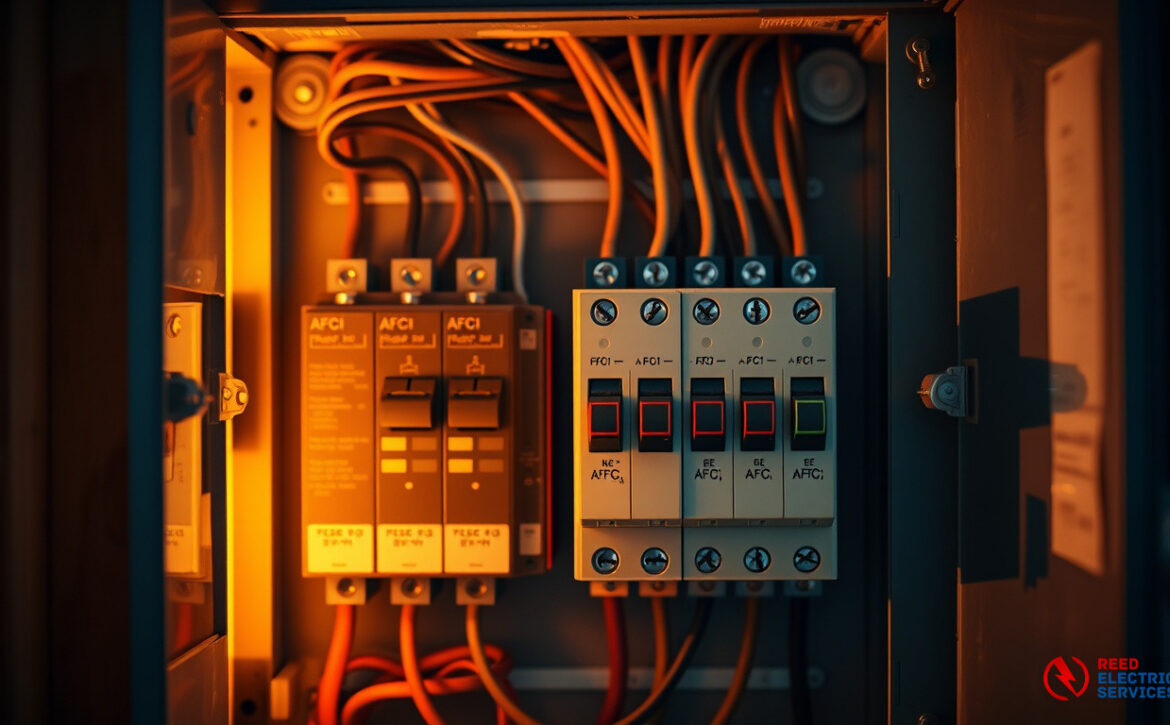
An arc fault happens when electricity jumps across a gap or damaged wire, creating a spark that can ignite surrounding materials. AFCI breakers are designed specifically to detect those erratic electrical signatures and cut power before a fire starts, making them one of the more important safety upgrades in an older home.

A standard breaker only trips when a circuit is overloaded or short-circuited. It has no way of detecting the subtle, high-frequency arcing that causes most residential electrical fires.

Why Arc Faults Are Dangerous in Ways You Wouldn’t Expect

Most homeowners picture an electrical fire starting from something obvious — a sparking outlet or a burning smell. In reality, arc fault fires often start silently inside a wall, in a junction box, or behind a bookcase where a cord has been pinched for years. There’s no visible flame, no immediate warning. By the time smoke is detectable, the fire is already growing inside the wall cavity.

Common Causes of Arc Faults at Home

Loose wire connections at outlets and switches are a frequent culprit, especially in homes where the wiring is 20 or more years old. Damaged insulation from staples, nails, or rodents creates gaps where electricity can arc across. Cords run under rugs, jammed behind furniture, or kinked at the wall are also high-risk spots that a homeowner might never think twice about.

A darkened, loose connection inside an outlet box, a common cause of arc faults

One thing worth understanding: arcing doesn’t always mean something is broken in a dramatic way. A wire terminal that simply wasn’t tightened enough during installation can arc quietly for months before anything goes wrong.

What an AFCI Breaker Actually Does Differently

A standard breaker monitors current flow. If too much current passes through, it trips. That’s it. An AFCI breaker goes a step further by analyzing the pattern of that current many times per second. Arcing produces a distinctive electrical signature — irregular, high-frequency pulses — that the AFCI’s built-in processor recognizes and responds to almost instantly.

Think of it like the difference between a smoke alarm that only goes off when the room is already full of smoke versus one that detects the first trace of combustion gases. The technology isn’t new, but adoption in older homes across the southwest Chicago suburbs has been slow simply because upgrades aren’t required until you pull a permit for new work.

If your home still has an older panel without arc fault protection, it’s worth talking to a licensed electrician about a panel upgrade or targeted AFCI breaker replacements. You can see what a full electrical panel upgrade looks like for nearby Oak Lawn residents to get a sense of what’s involved.

Where AFCI Protection Is Required and Where It Isn’t

Current Code Requirements

The National Electrical Code (NEC) has steadily expanded AFCI requirements over the years. As of the 2020 NEC edition, AFCI breakers are required in virtually all habitable rooms — bedrooms, living rooms, kitchens, hallways, and even garages. Illinois municipalities adopt their own code cycles, so requirements can vary slightly depending on when your local jurisdiction last updated.

Arc-fault breakers with test buttons installed in a residential electrical panel

Palos Hills homes built before 2000 almost certainly don’t have AFCI protection anywhere in the house. That doesn’t make them immediately dangerous, but it does mean they lack a layer of protection that current electrical standards consider standard practice for good reason.

Should You Upgrade Even If It’s Not Required?

If you’re not doing permitted work, nobody is going to force the issue. That said, AFCI breakers typically cost $35 to $55 each at the breaker level, and an electrician can swap them in during a service call. For a home with aging wiring, that’s a relatively low cost compared to the risk. The U.S. Fire Administration estimates that electrical fires cause roughly 51,000 home fires each year in the country, and arc faults account for a significant portion of those.

If you’ve been considering a home electrical inspection in Palos Hills, asking the inspector to evaluate your arc fault protection coverage is a smart addition to that conversation.

Related Questions

How do I know if my breaker is an AFCI breaker?

Look at the breaker itself. AFCI breakers have a small test button on the face of the breaker, usually labeled “TEST,” and they are typically marked “AF,” “AFCI,” or “Arc Fault” on the front. A standard breaker has no test button. If you’re unsure, a licensed electrician can identify the breaker types in your panel during a routine visit.

Can an AFCI breaker trip for reasons other than an arc fault?

Yes. AFCI breakers are more sensitive than standard breakers, and certain appliances with older motors — like some vacuum cleaners, treadmills, or power tools — can produce an electrical pattern that triggers a nuisance trip. If a specific breaker keeps tripping with a particular appliance but not others, the breaker is likely doing its job correctly and the appliance may need a dedicated circuit or to be replaced.

Read More

What’s the Difference Between a 120-Volt and a 240-Volt Outlet in Palos Hills?

The Short Answer

A standard outlet runs on 120 volts and handles everyday loads like lamps, phone chargers, and small appliances. A 240-volt outlet supplies twice the voltage and is built for high-draw equipment such as electric dryers, ranges, and EV chargers. You cannot simply swap one for the other — each requires its own wiring, breaker size, and outlet configuration.

A 240-volt dryer receptacle beside a standard 120-volt outlet on the same wall

What Actually Makes Them Different

Voltage, Amperage, and Plug Shape

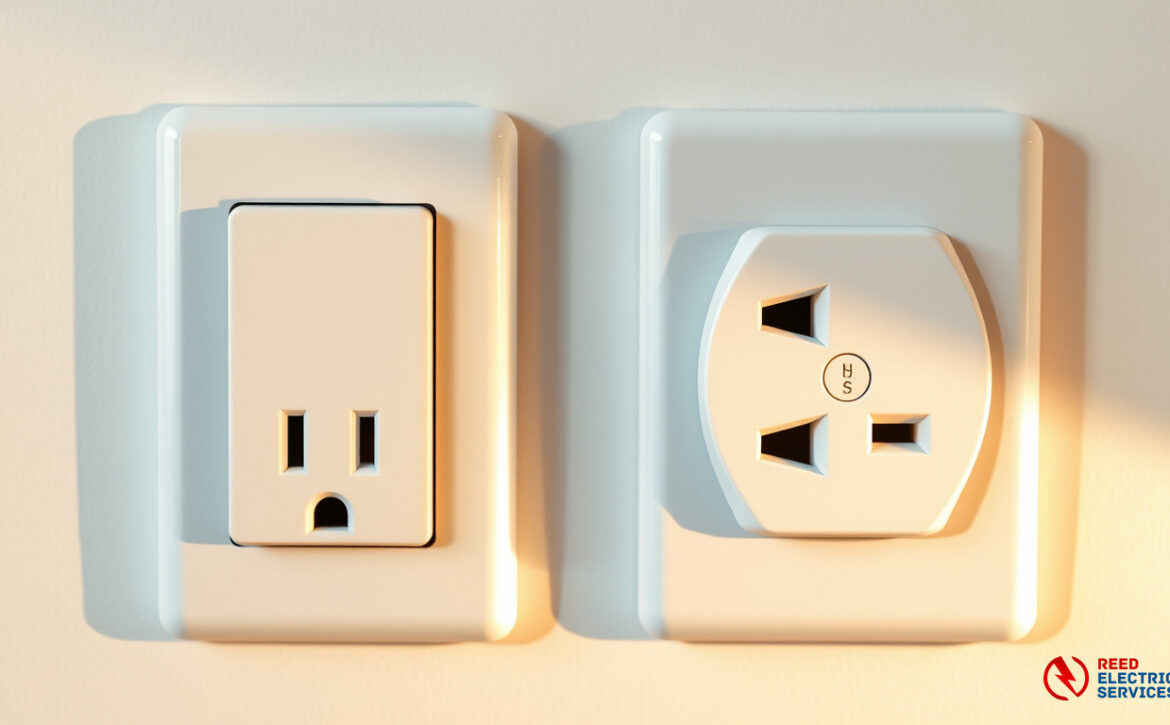
The most obvious difference is the plug shape. A 120-volt outlet has two vertical slots and a round ground hole, which is the three-prong design most people recognize. A 240-volt outlet looks completely different — it might have an L-shaped slot, a large round pin, or a horizontal slot arrangement, depending on what it powers.

Beyond looks, the real gap is in how much power gets delivered. Standard outlets in a home are typically rated at 15 or 20 amps. A 240-volt circuit for a dryer or range is usually 30 to 50 amps. That combination of higher voltage and higher amperage means the circuit can move serious energy — which is exactly what large appliances need.

Each 240-volt circuit also ties up two slots on your electrical panel instead of one, because it draws from two hot legs of incoming power simultaneously. That matters when homeowners start wondering whether their panel has room for a new high-draw appliance.

A double-pole 240-volt breaker taking two slots in a residential panel

What Each Outlet Type Is Used For

Knowing which voltage rating matches which appliance saves a lot of headaches. Here is a quick breakdown:

  • 120-volt outlets — TVs, lamps, desktop computers, microwaves under 1,200 watts, phone and tablet chargers, coffee makers
  • 240-volt outlets — Electric clothes dryers, electric ranges and ovens, central air conditioning units, Level 2 EV chargers, electric water heaters, and hot tubs

Plugging a 120-volt appliance into a 240-volt circuit will almost certainly damage it immediately. Going the other way — trying to run a 240-volt appliance on a standard outlet — simply will not work. The plug will not fit, and the circuit could not handle the load anyway.

When Palos Hills Homeowners Need a 240-Volt Circuit Added

Upgrading Appliances or Adding an EV Charger

The most common reason residents around this area call an electrician is that they bought a new appliance and discovered the right outlet is not there. Switching from a gas dryer to an electric one, installing a new electric range, or adding a home EV charger all require a dedicated 240-volt circuit that runs directly from the panel to the location where the appliance will live.

This is not a DIY project. Running a 240-volt circuit involves pulling wire through walls, sizing the breaker correctly, and making sure the work passes a local inspection. In the southwest Chicago suburbs, that means following Illinois electrical code and any local permit requirements.

Checking If Your Panel Can Handle It

Before any new 240-volt circuit gets installed, an electrician will check whether your electrical panel has available capacity. Older panels in the area — particularly those rated at 100 amps — sometimes struggle to accommodate added high-draw circuits. If space is tight, a panel upgrade may come first. The U.S. Department of Energy notes that Level 2 home chargers alone can draw 7,200 watts or more, which is why proper panel capacity matters before installation begins.

For background on the area, Palos Hills is a southwest suburb of Chicago with a mix of mid-century and newer single-family homes — many of which were built during an era when 240-volt circuits were only planned for a dryer and a range, not for EV chargers or high-efficiency HVAC systems.

Related Questions

Can I convert a 120-volt outlet to a 240-volt outlet myself?

No, and it is not worth the risk. Converting between voltage types means replacing the wiring, the breaker, and the outlet itself — all of which require working inside your electrical panel. That work needs to be done by a licensed electrician and typically requires a permit so the installation gets inspected.

How do I know if an outlet is 120 or 240 volts without touching it?

Look at the plug slots. A standard three-prong outlet with two vertical slots is 120 volts. Any outlet with a different slot arrangement — angled slots, an L-shape, a large round pin, or four slots — is almost certainly 240 volts. When in doubt, an electrician can test it safely with a voltmeter in seconds.

Read More

Does Every Appliance in My House Need Its Own Dedicated Circuit in Palos Hills?

The Short Answer

A dedicated circuit is a circuit that runs from your electrical panel directly to a single appliance or outlet, with no other devices sharing it. Most large household appliances — refrigerators, washing machines, dishwashers, and air conditioners — require one because they draw too much power to share safely with anything else. Without it, you risk constant tripped breakers, overheating wires, and potential fire hazards.

Which Appliances Actually Need Their Own Circuit?

The Short Answer — Electrical Services, Palos Hills

A lot of homeowners assume a dedicated circuit is only for something huge, like a central AC unit. The real list is longer than most people expect.

Kitchen and Laundry Appliances

The National Electrical Code (NEC) requires dedicated circuits for appliances that pull continuous or high loads. In the kitchen, that means your refrigerator, dishwasher, microwave, and garbage disposal each need their own line. Your kitchen countertops also need at least two dedicated 20-amp circuits just for small appliances like toasters and coffee makers — even if no single device is plugged in permanently.

In the laundry room, the washing machine needs a dedicated 20-amp circuit. The dryer needs a 30-amp, 240-volt circuit all to itself. Sharing either of those with anything else is a code violation and a real safety problem.

HVAC, Water Heaters, and EV Chargers

Central air conditioning units, electric furnaces, and electric water heaters all require dedicated circuits, typically at 240 volts. The same goes for EV chargers. A Level 2 home charger pulls anywhere from 30 to 50 amps, and it needs a circuit sized specifically for that load. If you are thinking about installing a home EV charger, you can learn more about what that involves on our EV Charger Installation page for Palos Hills.

Sump pumps also land on this list. If your sump pump shares a circuit and that circuit trips during a heavy rainstorm, you will find out quickly how important that dedicated line was.

Home Office and Entertainment Equipment

This one surprises people. High-end desktop computers, home theater receivers, and gaming setups with multiple components can benefit from a dedicated circuit, even if the NEC does not strictly require it for all of them. When sensitive electronics share a circuit with a hair dryer or vacuum cleaner, the power fluctuations cause performance problems and can shorten equipment life. A dedicated line keeps voltage stable for that gear.

Signs Your Current Setup Is Overloaded

If you are regularly resetting breakers in the same spot, or you notice the lights dim when the refrigerator compressor kicks on, those are clear signals that circuits are being pushed past their designed load. Warm outlets or a faint burning smell near a panel are more serious warning signs that need attention right away.

When to Call an Electrician

Adding a dedicated circuit is not a DIY job. It involves running new wire from the electrical panel, installing the correct breaker size, and making sure everything meets local code. In the Palos Hills area, permitted electrical work also needs to pass inspection. The City of Palos Hills has specific permit requirements for electrical work, and skipping that step can create problems when you sell your home.

If your panel is already near capacity, adding new circuits might also mean a panel upgrade is part of the conversation. Our team can assess your current setup and tell you exactly what is needed before any work starts. You can also check our Switch and Outlet Installation page if you need new outlets added as part of that work.

For detailed technical guidance on circuit load requirements, the National Fire Protection Association’s NEC resources are a solid reference for understanding why these rules exist.

Related Questions

Which Appliances Actually Need Their Own Circuit? — Electrical Services, Palos Hills

Can I add a dedicated circuit to an older home with a small panel?

Yes, but it depends on how much capacity your panel has left. Many older homes in the area have 100-amp panels, which can fill up fast once you account for modern appliance loads. An electrician will check your current breaker slots and total load before recommending whether a simple circuit addition works or whether a panel upgrade makes more sense first.

How much does it cost to have a dedicated circuit installed?

Costs vary based on the distance from your panel, whether the circuit needs to be 120V or 240V, and how accessible the walls are for running new wire. A straightforward single circuit in an accessible area typically runs between $150 and $350 for a local residential job, though more complex runs or higher-amperage circuits for things like EV chargers or electric dryers will cost more. Getting a firm quote before work starts is always the right move.

Read More

Why Do My Outdoor Outlets Stop Working After It Rains in Palos Hills?

Direct Answer

If your outdoor outlets stop working after rain, the most likely cause is a tripped GFCI outlet that needs to be reset, or a GFCI that has failed and needs replacing. Outdoor outlets are required by code to be GFCI-protected because moisture and electricity are a dangerous combination, and that protection trips fast when water gets involved. In some cases, water has actually entered the outlet box itself, which means the fix goes beyond a simple reset.

Why Rain Triggers a GFCI Trip

Direct Answer — Electrical Services, Palos Hills

A ground fault circuit interrupter works by constantly comparing the current flowing out of the hot wire to the current returning through the neutral. The moment those numbers differ by as little as 5 milliamps, it cuts power in a fraction of a second. Rain creates exactly the kind of leakage path that triggers this response.

Common Ways Moisture Gets In

Even a small gap matters. Cracked or missing weatherproof covers let rain splash directly onto the receptacle face. Old outlet gaskets dry out and shrink over time, leaving space around the edges. Conduit fittings that weren’t sealed properly act as a funnel, directing water straight to the wiring. Any of these paths can cause a nuisance trip or, worse, a ground fault that keeps tripping every time power is restored.

It’s also worth checking whether the outlet box has a “while-in-use” cover. Standard flip covers are only rated for protection when nothing is plugged in. If you’re running a power tool or holiday lights outdoors, you need a bubble-style cover that stays closed around the cord. Many older homes in the area were built before this became standard practice.

When the GFCI Has Actually Failed

A GFCI outlet has a lifespan. Most manufacturers rate them for around 10 to 15 years, and exposure to heat, cold, and moisture shortens that. If you press the reset button and it won’t click, or it trips again within seconds, the device itself may have worn out. A failed GFCI that won’t hold a reset is not something to work around with an extension cord from inside. That’s a replacement job. Switch and outlet installation in Palos Hills covers exactly this kind of repair when a receptacle has reached the end of its service life.

What to Check Before Calling an Electrician

You can safely do a few things yourself before picking up the phone.

Locate the Controlling GFCI

Outdoor outlets are often protected by a GFCI that’s actually located indoors. Garages, bathrooms, and utility rooms are common spots. One GFCI can protect multiple downstream outlets on the same circuit, so the dead outdoor receptacle may be controlled by a GFCI you’ve never touched. Walk through those rooms and look for a black “TEST” button and red “RESET” button on any outlet. Press the reset firmly until you hear a click, then check your outdoor outlet again.

If none of the indoor GFCIs seem connected to the outdoor outlet, check your electrical panel for a tripped breaker. A breaker that has moved to the middle position needs to be pushed fully off before it can be reset to on.

Signs You Need a Pro

Call a licensed electrician when the reset doesn’t hold, when you see burn marks or discoloration around the outlet face, when you smell something burning near the box, or when the outlet is completely dead and no GFCI or breaker appears to be tripped. Water intrusion that reaches the wiring behind the box can damage insulation and create a shock risk that isn’t visible from the outside. A proper electrical inspection in Palos Hills can identify hidden water damage before it becomes a bigger problem.

Homes near the city of Palos Hills that were built in the 1970s and 1980s often have older wiring that wasn’t designed with today’s outdoor power demands in mind. Adding a proper weatherproof outlet with updated GFCI protection is a relatively quick job for a licensed electrician. The OSHA guidance on ground fault hazards makes clear why skipping this repair is not a safe option.

Related Questions

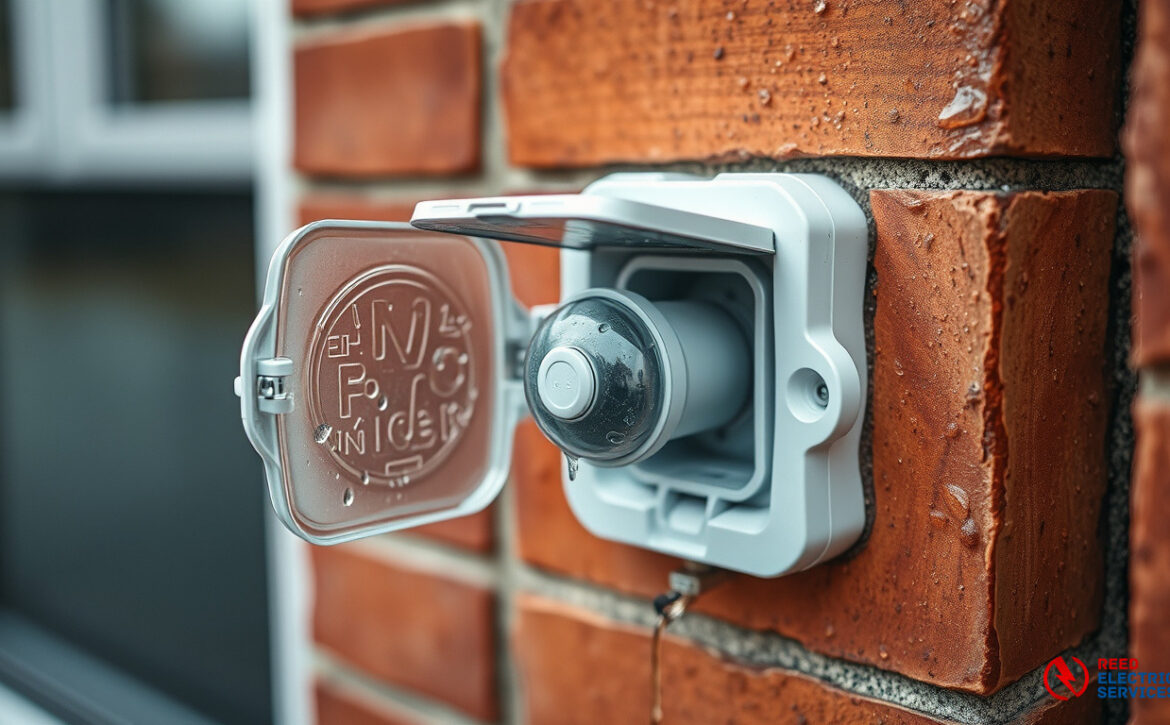
Why Rain Triggers a GFCI Trip — Electrical Services, Palos Hills

Can I replace an outdoor GFCI outlet myself?

Swapping a GFCI receptacle is within the skill range of a careful DIYer who knows how to turn off the breaker and confirm power is off with a voltage tester. That said, if the wiring inside the box looks corroded, melted, or the box itself has standing water damage, stop and call a licensed electrician. Moisture-compromised wiring needs more than a new outlet.

How many outdoor outlets should a house have on one GFCI circuit?

There’s no strict code limit on how many outlets one GFCI can protect downstream, but practical wiring usually puts two to four outdoor outlets on a single 20-amp circuit. The problem comes when high-draw tools trip the GFCI from overload rather than a ground fault. If your outdoor circuit trips frequently under load, a dedicated outdoor circuit is often the right fix rather than simply resetting the same GFCI over and over.

Read More

Can One GFCI Outlet Protect Multiple Outlets on the Same Circuit in Palos Hills?

The Short Answer

Yes, a GFCI outlet can protect other outlets on the same circuit, but only if it’s wired correctly. When an electrician installs a GFCI as the first outlet in a circuit run, every outlet downstream from it gets the same ground-fault protection — without needing individual GFCI devices at each location.

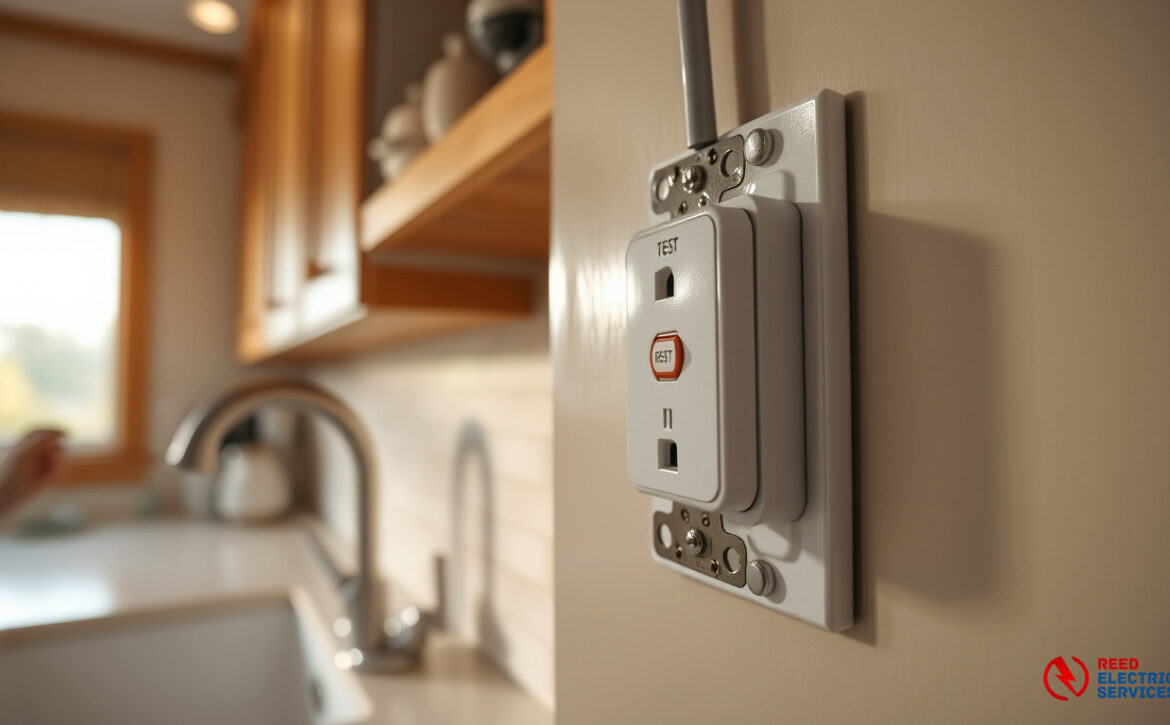
GFCI receptacle with test and reset buttons beside a kitchen sink

How GFCI Protection Actually Travels Through a Circuit

Most people think of a GFCI outlet as a single-point device that only protects whatever you plug directly into it. That’s a reasonable assumption, but it misses half the picture.

A standard GFCI outlet has two sets of terminals: LINE terminals (where power comes in from the panel) and LOAD terminals (where power continues to the next outlet in the chain). When the outlet is connected to the LOAD terminals, the GFCI’s internal sensor monitors current flow for every outlet it feeds. The moment it detects an imbalance of as little as 4–6 milliamps, it trips and cuts power to the entire downstream chain.

Why the Wiring Order Matters

Here’s where things go wrong for DIYers. If someone swaps the LINE and LOAD connections, the downstream outlets lose their protection entirely — and there’s no obvious sign anything is wrong. The outlet still powers devices normally. You’d never know until something goes sideways. This is one of the clearest reasons that outlet wiring work is better left to a licensed electrician who can verify proper installation and test each protected location.

Receptacle pulled from its box showing the line and load terminal screws

Where You’ll Typically Find GFCI Circuits

The National Electrical Code requires GFCI protection in areas where water and electricity could meet. In most homes, that means:

  • Bathrooms
  • Kitchen countertop circuits within 6 feet of a sink
  • Garages and outdoor receptacles
  • Unfinished basements and crawl spaces
  • Near pools, hot tubs, and wet bar sinks

In older homes throughout Palos Hills and the surrounding southwest suburbs, these protections are often missing entirely or were installed incorrectly decades ago. A home electrical inspection can flag every location that’s out of compliance before it becomes a hazard.

Signs Your GFCI Setup Might Not Be Working Right

A GFCI outlet that trips constantly isn’t necessarily broken — it may be doing its job correctly. But there are some patterns worth knowing.

Nuisance Tripping vs. Real Faults

If a GFCI trips every time you run a specific appliance, the appliance itself may be leaking current. That’s a sign to retire the device, not reset the outlet repeatedly. On the other hand, if the outlet trips randomly with no load at all, there could be a wiring fault or moisture intrusion in the wall — both of which need a professional look.

The TEST and RESET Button Test

Press the TEST button. The RESET button should pop out and power to the outlet (and any downstream outlets) should cut off. Press RESET and power returns. If the TEST button doesn’t trip the outlet, or if RESET won’t stay in, the GFCI device has failed and needs replacement. These devices don’t last forever — most manufacturers rate them for 10 to 15 years under normal use.

If you’ve got older receptacles throughout the house and aren’t sure which ones are actually protected, a switch and outlet inspection can map out exactly what you have and what needs updating.

Related Questions

Can I replace a two-prong outlet with a GFCI outlet instead of rewiring for a ground?

Yes, and the National Electrical Code explicitly allows this. A GFCI outlet provides shock protection even without a grounding wire, making it a code-legal upgrade for older two-prong circuits. The outlet must be labeled “No Equipment Ground” when installed this way — something a licensed electrician handles as part of the job.

How do I know which outlets in my home are protected by a single GFCI?

The most reliable method is to plug a simple outlet tester with a GFCI test function into each outlet and press the test button on the GFCI device. Any outlets that lose power are on the protected downstream circuit. Local residents with homes built before 1985 often discover that what looks like a GFCI circuit was never wired through the LOAD terminals at all, leaving multiple outlets unprotected.

Read More