
31 May
What House Wiring Problems Actually Look Like in Older Palos Hills Homes
A lot of homes in Palos Hills were built in the 1960s and 1970s, and the wiring inside those walls reflects that era. Aluminum branch circuit wiring, two-prong ungrounded outlets, and undersized circuits that were never meant to handle a modern kitchen or home office setup are all common finds. Residents along 95th Street, near Wolf Road, and tucked into the neighborhoods off Harlem Avenue often call for inspections and find wiring that hasn’t been touched since the Ford administration.
This isn’t a scare tactic. It’s just how suburban Cook County housing stock works. House wiring that was code-compliant in 1968 may not meet today’s NEC standards, and more practically, it may simply be unable to carry the load you’re asking of it. Tripped breakers, warm outlet covers, and lights that flicker when the dishwasher runs are all signs the wiring is working harder than it should.
If you’re near the Palos Hills area and you’ve been putting off having someone look at your wiring, it’s worth understanding what a proper inspection and upgrade actually involves before picking up the phone.
Aluminum Wiring and Why It Deserves Attention
Homes built between roughly 1965 and 1973 sometimes have aluminum branch circuit wiring running to outlets and switches. Aluminum expands and contracts at a different rate than the copper connections at device terminals, and over decades that creates loose connections. Loose connections create heat. That’s a fire risk, not a theoretical one.
The fix isn’t necessarily rewiring the entire house. In many cases, a licensed electrician can install CO/ALR-rated devices at each outlet and switch location, or use pigtailing methods approved by the CPSC. But both approaches require someone who actually knows what they’re looking at, not just the cheapest quote from a general handyman listing.
Knob-and-Tube Remnants and Hidden Splices
Some homes in the area, especially those built before 1950 that were later updated piecemeal, still have knob-and-tube wiring buried in attic spaces or inside walls. Sometimes it’s been abandoned. Sometimes it’s still live and tied into newer wiring with electrical tape and a prayer. Finding these situations early, before you list the house or start a renovation, saves significant money and stress. An electrical inspection by a qualified contractor is the right first step before any major remodel work begins.
What a Full House Rewire Actually Involves
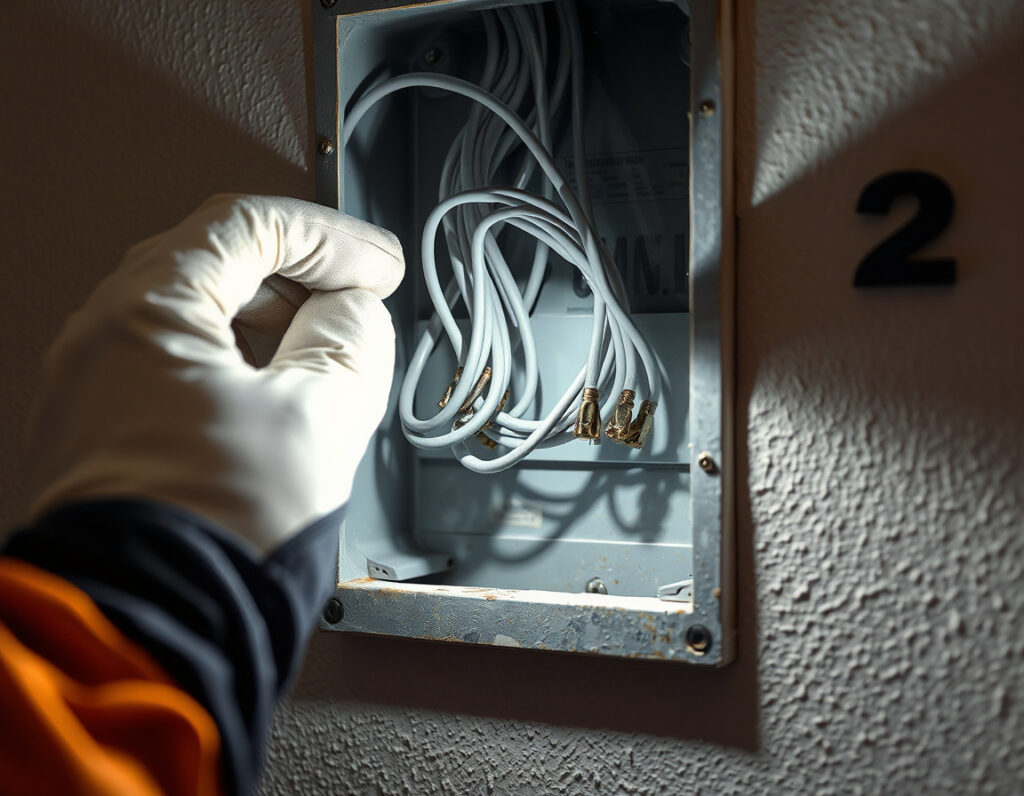
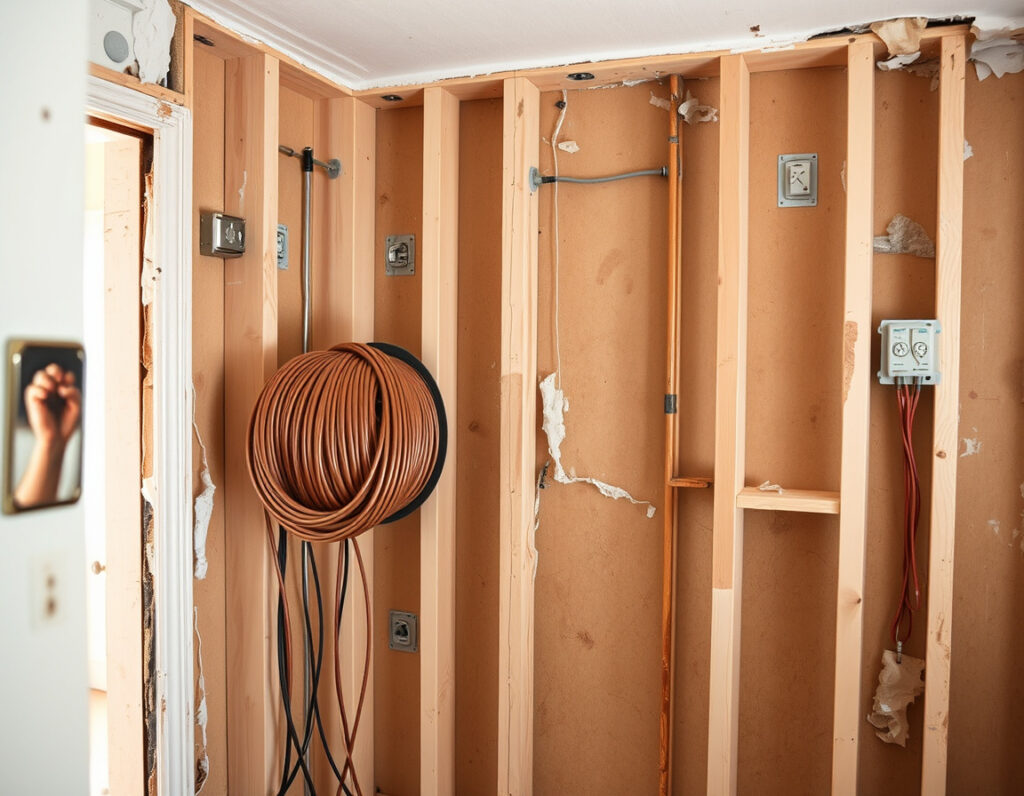
People hear “rewire the house” and picture crews tearing down every wall. That’s rarely how it goes. Modern residential electrical services use low-impact methods that route new wiring through existing cavities, often with minimal drywall repair. The scope depends on what’s already there, the age of the home, and whether the panel can support the updated load.
A typical full rewire for a 1,500 to 2,000 square foot home in this area involves replacing all branch circuit wiring, installing new outlet and switch boxes, upgrading to grounded three-prong receptacles throughout, and coordinating the work with a Cook County permit. Speaking of which, Cook County permit requirements apply to most wiring work beyond simple device replacement. Any electrical contractor working here should be pulling the proper permits and scheduling inspections.
You can find general permit and code guidance through the Cook County Department of Building and Zoning, which outlines what types of work require permits in unincorporated areas and incorporated villages throughout the county.
Dedicated Circuits and Why Modern Homes Need More of Them
One thing that surprises homeowners is how many dedicated circuits a properly wired modern home actually requires. The NEC mandates dedicated circuits for refrigerators, dishwashers, microwaves, washing machines, and HVAC equipment. On top of that, home offices with multiple monitors and workstations, EV chargers in the garage, and large televisions or home theater setups all benefit from their own circuits.
If your home was wired in the 1970s, it almost certainly doesn’t have all of these. You may be running your refrigerator, microwave, and coffee maker on a single 15-amp circuit that also feeds three wall outlets in the kitchen. That’s how you end up with nuisance trips every morning.
Adding dedicated circuits is also a good time to think about lighting upgrades throughout the home. Recessed LED fixtures and under-cabinet lighting in kitchens often require new wiring runs anyway, so bundling the work keeps the cost and disruption manageable.
Panel Capacity and the Rewire Connection
It’s hard to talk about house wiring without also addressing the service panel. An older 100-amp panel is frequently the bottleneck when homeowners try to add circuits. If you’re already considering a full or partial rewire, evaluating panel capacity at the same time just makes sense. A 200-amp service is the baseline for most modern homes with EV charging or electric appliances. Reed Electrical Services, LLC. assesses both during the initial walkthrough so you don’t end up doing the same job twice.
Permits, Inspections, and Getting Work Done the Right Way in Cook County
One thing that separates reliable electrical contractors from fly-by-night operations is their relationship with the permit process. In Palos Hills and the surrounding Cook County municipalities, most wiring work beyond swapping a single device requires a permit. That permit triggers an inspection by a village or county inspector who verifies the work meets code before the walls close up.
This process protects you. If a house fire or insurance claim ever traces back to electrical work, unpermitted jobs can void coverage. Buyers’ home inspectors also flag unpermitted electrical work, and that becomes a negotiating problem at closing. The National Fire Protection Association’s NFPA 70 (National Electrical Code) sets the baseline that local inspectors enforce, and understanding it helps homeowners ask the right questions when evaluating quotes.
Working with a properly licensed and insured electric repair service means the permit gets pulled before work starts, not after. It also means the inspector signs off on the finished work, giving you documentation that actually carries weight.
What to Ask Before Hiring an Electrician for Wiring Work
A few questions worth asking any contractor before you hire them for house wiring work in the area:
- Are you licensed in Illinois and insured for residential work in Cook County?
- Will you pull permits for this job, and who handles scheduling the inspection?
- Do you have experience with aluminum wiring remediation or knob-and-tube situations?
- Can you provide references from similar rewire projects in this zip code or nearby?
These aren’t trick questions. Any contractor worth hiring answers them without hesitation. If someone tells you permits aren’t necessary for the work you’re describing, that’s a red flag worth taking seriously.
It’s also worth knowing that wiring work in one area of the house often reveals related needs elsewhere. Homeowners near 104th Avenue or along the residential streets off 83rd Street sometimes start with a single circuit addition and discover the whole panel needs evaluation once an electrician gets eyes on it. That’s not upselling. That’s just what wiring inspections find in homes of a certain age. If you’d like to see how this kind of work is handled in adjacent communities, the wiring upgrade services in Burbank page gives a good sense of the scope.
Frequently Asked Questions About House Wiring in Palos Hills
How do I know if my home needs a full rewire or just some circuit additions?
The answer depends on what type of wiring is currently in the home, how old it is, and what you’re trying to run on it. If the existing wiring is copper and in good condition, adding circuits is often enough. If the home has aluminum branch circuit wiring, active knob-and-tube sections, or wiring that’s been spliced informally over the years, a more thorough evaluation is needed. A licensed electrician will give you a straight answer after a walkthrough, usually at no charge for the initial assessment.
Does house wiring work require a permit in Palos Hills, IL?
Yes, most wiring work beyond replacing a single device requires a permit through the Village of Palos Hills or Cook County, depending on jurisdiction. This includes adding circuits, replacing service entrance wiring, and full or partial rewires. The permit process requires an inspection before walls are closed, which protects homeowners and keeps the work on record. Any reputable electrical contractor will handle permit filing as part of the job.
How long does a house rewire typically take in a single-family home?
For a typical 1,400 to 2,000 square foot single-family home, a full rewire usually takes two to four days of active work, plus time for the permit inspection. Homes with finished basements, extra floors, or complex layouts take longer. Partial rewires targeting specific areas or circuits can often be completed in a single day. Your contractor should give you a timeline estimate before work begins, not after.
Reed Electrical Services, LLC. works with homeowners throughout the Palos Hills area on wiring projects of every size, from single circuit additions to full residential rewires. If your home is showing signs of overtaxed or aging wiring, or you just want to know what you’re working with before starting a renovation, reach out for an honest assessment. You can also explore the ceiling fan installation services in Orland Park if you’re planning broader home upgrades that involve new wiring runs. Getting the electrical foundation right first makes everything else easier.