
08 May
Why House Wiring in Older Palos Hills Homes Needs a Closer Look
A large share of the homes sitting along West 111th Street, near the Palos Hills Public Library, and throughout the neighborhoods tucked between Roberts Road and 104th Avenue were built in the 1950s through the 1970s. That era of construction was perfectly fine for the electrical loads of the time — a few lamps, a television, maybe a window air conditioner. Today, those same circuits are being asked to power EV chargers, smart home devices, high-draw kitchen appliances, and home offices running multiple monitors. The mismatch matters.
Knob-and-tube wiring, which was standard in homes built before about 1950, and early aluminum branch wiring, which became common in the 1960s and early 1970s, are the two wiring systems that cause the most problems for local residents. Knob-and-tube wiring lacks a ground wire, degrades over decades, and was never designed to be buried under attic insulation — which is exactly where you’ll find it in most of these older properties. Aluminum wiring expands and contracts differently than copper, and the connections it makes at outlets and switches can loosen over time, generating heat that becomes a fire hazard.
If your home sits near Moraine Valley Community College or along the busy stretch of La Grange Road through this part of the southwest suburbs, and it was built before 1980, a professional wiring evaluation is worth scheduling before you add another major appliance or finish a basement.
The Real Difference Between Old Wiring and a Rewire
A partial fix — replacing outlets here and there without addressing the underlying wiring — handles the symptom without touching the cause. A proper house rewire means pulling new copper wire through the walls, updating the circuit layout to match modern loads, and installing grounded receptacles throughout. It also sets you up properly if you’re planning to add a Level 2 EV charger at your Palos Hills home or upgrade your lighting system. Those additions require dedicated, properly sized circuits — not a patchwork of aging wiring with a new device bolted to the end of it.
The cost of rewiring a typical single-family home in this area depends on square footage, the number of circuits needed, and whether the electrical panel needs updating at the same time. Most homeowners in the 1,400 to 2,200 square foot range should expect the project to span several days and involve some drywall patching, though experienced electricians use fish tapes and low-impact access points to keep wall damage to a minimum.
Signs Your Wiring Situation Has Gone Past a Minor Repair
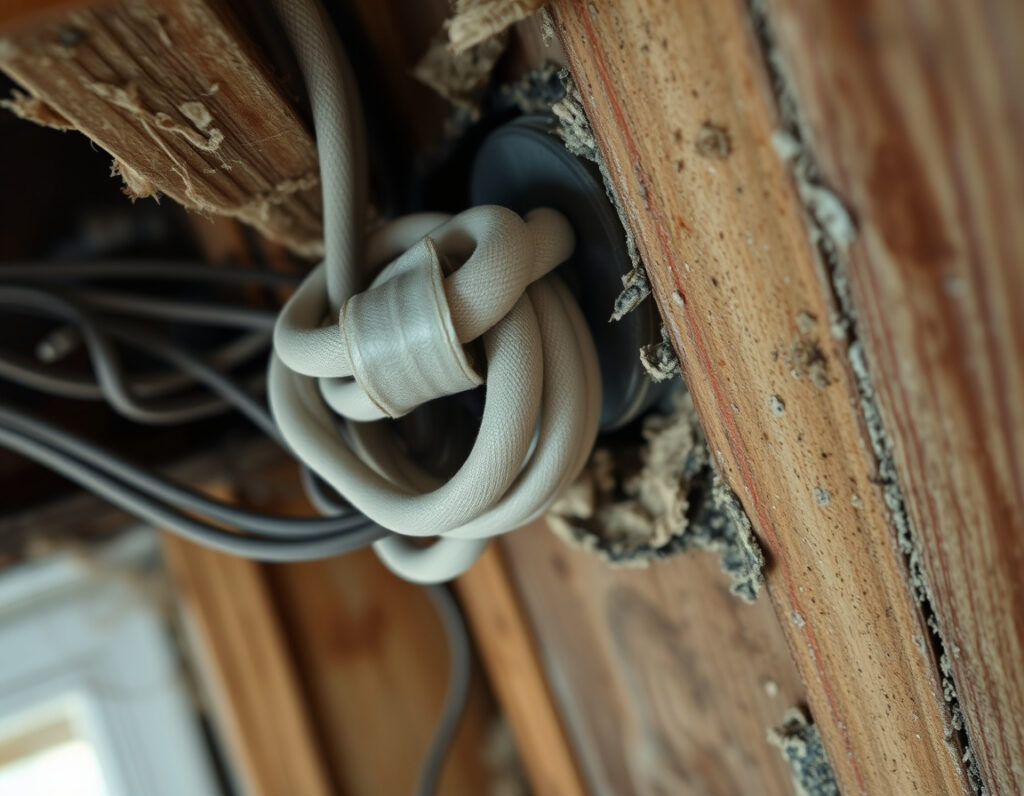
Some issues announce themselves clearly. Breakers that trip repeatedly under normal use, outlets that feel warm to the touch, lights that flicker when someone turns on the microwave, a burning smell with no obvious source — these are not things to ignore or chalk up to quirky old houses. They are warning signs that the house wiring electrical system is struggling to keep up.
Other signs are quieter. If your home has two-prong outlets throughout and no ground fault protection in the bathrooms or kitchen, the wiring has almost certainly never been updated. A professional electrical inspection in Palos Hills will document exactly what you have, identify any code violations, and give you a clear picture of what needs to be addressed now versus what can wait.
What a Licensed Electrician Actually Checks During a Wiring Assessment
A thorough wiring assessment goes well beyond flipping breakers and checking outlets. A licensed electrician will look at the service entrance cable where power enters the house, inspect the main panel for signs of overheating or improper modifications, trace branch circuits for wiring type and condition, check junction boxes for proper covers and connections, and test every receptacle for correct wiring polarity and grounding. In homes near the Palos Hills area that have had additions or basement finishes done over the years, it’s common to find multiple generations of wiring spliced together without proper documentation — which can create dangerous hidden conditions inside walls.
If the assessment reveals aluminum branch wiring, there are two common remediation paths: replacing the wiring entirely with copper, or installing CO/ALR-rated devices and pigtailing connections with approved connectors at every termination point. The right choice depends on the extent of the aluminum wiring, the age and condition of the panel, and your long-term plans for the home. For guidance on how a panel upgrade ties into a wiring project, that context matters too — the two jobs often make the most sense when done together.
Illinois requires electrical work to be done by or under the supervision of a licensed electrical contractor. Permits are pulled, inspections are scheduled, and the work is documented. That paperwork protects you when it comes time to sell the home or file an insurance claim. Unpermitted electrical work is one of the most common issues that surfaces during real estate transactions in the southwest suburbs.
Planning a Rewire Around Your Schedule and Your Home
One concern homeowners consistently raise is the disruption factor. Nobody wants to be without power for days or have walls torn apart across every room. A well-planned rewire minimizes both. The project is typically staged so that only sections of the home are opened at a time, power is maintained to critical areas throughout most of the project, and wall repairs are handled as part of the scope.
Homes near Kean Avenue and the surrounding residential blocks often have attic access that simplifies running new circuits to second-floor rooms significantly. Ranch-style homes, common throughout this area, allow for relatively straightforward wiring runs. Two-story homes with finished basements require a bit more planning, but the process is well-established for experienced crews.
If you’re also thinking about updating switches and outlets throughout the home at the same time, a rewire is the ideal moment to do it. Installing USB outlets, tamper-resistant receptacles, and smart switches is far easier — and less expensive — when the walls are already open and circuits are being run fresh. Bundling the work saves time and avoids having to reopen walls later.
The Illinois Department of Public Health has clear standards around residential electrical safety, and meeting those standards starts with wiring that was properly installed and inspected. Age alone doesn’t disqualify older wiring — but age combined with deterioration, overloading, or improper modifications absolutely does.
Timing the Project Right
Spring and fall tend to be the most practical seasons for rewiring work in this part of the Chicago suburbs. Attic work in peak summer heat is harder on crews and materials alike, and winter access to certain areas can be complicated. That said, electrical repair service needs don’t wait for ideal weather, and most projects can be managed year-round with the right preparation. Scheduling a few weeks out rather than waiting for an emergency also gives time to pull permits properly and coordinate inspections with the local authority.
For homeowners considering selling within the next two to four years, investing in updated wiring now typically shows up favorably in the inspection report and removes a common negotiation lever for buyers. For those staying long-term, it’s simply a matter of having a safe, reliable system that can handle whatever the next decade of technology brings.
According to the National Fire Protection Association, electrical failures and malfunctions are among the leading causes of home fires in the United States — and many of those incidents trace back to aging or improperly modified wiring systems.
Frequently Asked Questions
How do I know if my Palos Hills home needs a full rewire or just spot repairs?
The short answer is that spot repairs make sense when the wiring is generally sound and only a specific area has a problem. A full rewire becomes the better option when the wiring is knob-and-tube throughout, when aluminum branch wiring is present across most of the home, or when the existing system can no longer handle the electrical load you need. A professional inspection will give you a clear answer based on your specific home, not a general guess.
Will I need to move out of my home during a rewire?
Most homeowners do not need to leave during a rewire. Work is staged by area so that power remains available to parts of the home throughout the project. There will be periods when specific circuits are off, and running extension cords from live circuits is common during the process. The crew will walk you through what to expect before work starts so there are no surprises.
Does a house rewire require permits in Illinois?
Yes. Electrical work of this scope requires a permit, and the completed work must be inspected by the local authority having jurisdiction. This is not optional, and a contractor who suggests skipping permits is a red flag. Permitted work protects you legally, satisfies insurance requirements, and gives future buyers confidence that the work was done to code.
Reed Electrical Services, LLC. serves homeowners throughout Palos Hills and the surrounding southwest suburbs with house rewiring, panel work, EV charger installation, and a full range of residential electrical services. If your home has wiring that hasn’t been evaluated in years — or ever — this is a reasonable place to start. Contact Reed Electrical Services, LLC. to schedule a wiring assessment and get a clear picture of what your home’s electrical system actually needs.