
07 Jul
How Do Electricians Find Hidden Wiring Problems Inside Walls?
Electricians use a combination of non-contact voltage testers, thermal imaging cameras, and circuit tracers to locate wiring faults without tearing open every wall. The process starts with reading symptoms, like a tripping breaker or dead outlet, and working backward through the circuit to isolate exactly where the problem lives. In most cases, a skilled electrician can pinpoint the fault with minimal wall damage.
The Tools That Actually Do the Heavy Lifting

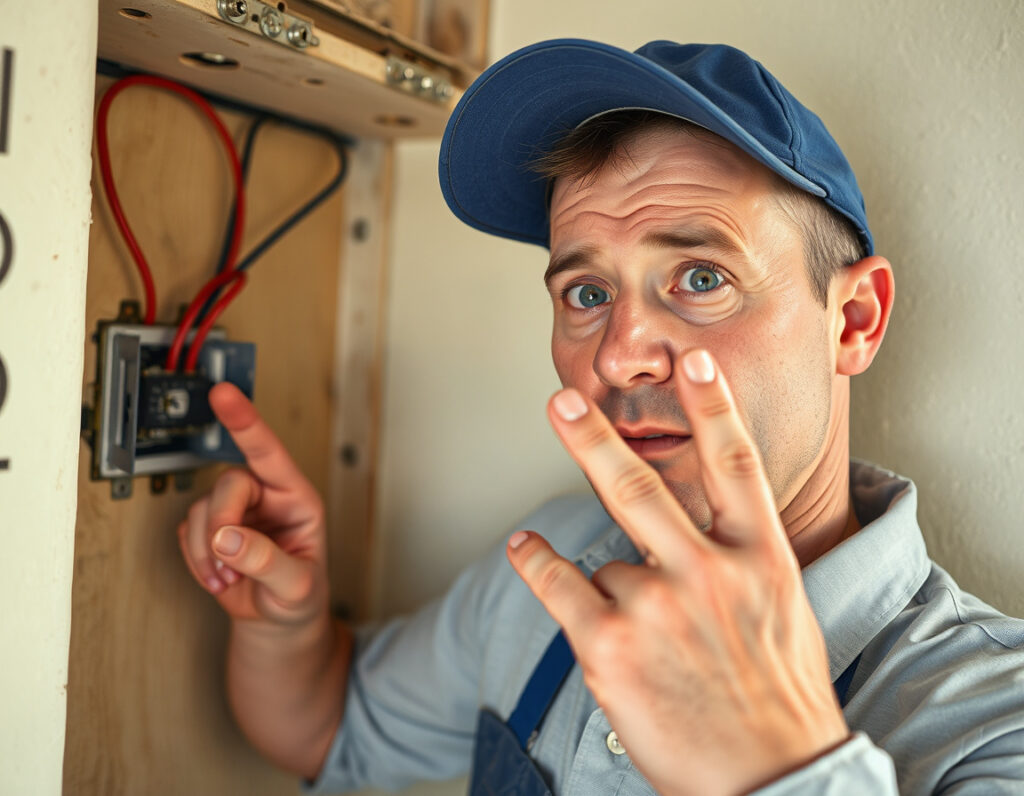
Diagnosing electrical problems you can’t see sounds like guesswork, but the tools available today make it surprisingly precise.
Thermal Imaging Cameras
A thermal imaging camera reads heat signatures through drywall. Loose connections, overloaded wires, and failing breakers all generate heat before they ever cause visible damage. An electrician sweeps the camera across a wall or panel and watches for hot spots that don’t belong. It’s fast, and it’s one of the cleanest ways to catch a problem before it becomes a fire. The National Fire Protection Association consistently points to faulty wiring connections as a leading cause of electrical house fires, which is exactly why catching heat buildup early matters so much.
Circuit Tracers and Tone Generators
When an outlet goes dead and the breaker looks fine, a circuit tracer can follow the wire’s path through the wall without cutting into anything. One end plugs into the outlet, the other is a handheld probe that picks up the signal through the drywall. This tool is especially useful for mapping out circuits in older homes where the original wiring layout was never fully documented, which is common in the southwest suburbs.
Non-Contact Voltage Testers
These are the small pen-shaped tools you’ve probably seen an electrician pull out immediately. They detect voltage through wire insulation without making direct contact. If a wire is live that shouldn’t be, or dead when it should be live, a non-contact tester flags it in seconds. Think of it as the first pass before bringing in the bigger equipment.
What the Diagnostic Process Actually Looks Like
It’s not just about tools. A good electrician reads the whole picture before touching anything.
Starting at the Panel
Almost every diagnostic visit starts at the electrical panel. A breaker that trips repeatedly, one that feels warm, or a panel that hums loudly can tell an electrician a lot before they ever walk into another room. If you’ve been wondering whether your panel itself might be part of the problem, the article on whether you need a panel upgrade covers the signs worth watching for.
Following the Circuit Backward
Once the panel checks out, the electrician traces the affected circuit outlet by outlet or fixture by fixture. A single bad connection inside a junction box, a staple driven too tight over a wire decades ago, or a corroded wire splice inside the wall can disrupt everything downstream. Older homes in the area, especially those built in the 1950s through 1970s, often have junction boxes that were buried in walls during renovations, which makes tracing circuits more involved.
When Walls Do Need to Open
Sometimes there’s no way around it. If a wire failed behind a finished wall, a small access cut is necessary. A good electrician keeps these as small as possible and can often route a repair in a way that requires only one or two openings. It’s a much smaller job than most homeowners expect. The U.S. Consumer Product Safety Commission recommends having any suspected hidden wiring faults inspected by a licensed professional rather than attempting to probe inside walls without proper training.
For anything beyond basic outlet swaps, having a licensed electrician handle the full electrical inspection gives you a documented picture of what’s actually happening inside the walls, not just a guess.
Related Questions
How long does an electrical diagnostic visit usually take?
Most diagnostic visits run between one and three hours, depending on how many circuits are involved and how quickly the fault shows itself. A clear symptom like a single dead outlet usually wraps up faster than an intermittent problem that only appears under load, which may take longer to replicate and trace.
Can a home inspection find the same wiring problems an electrician would?
Home inspectors do a visual scan and can flag obvious issues like exposed wires, double-tapped breakers, or missing cover plates, but they don’t use circuit tracers, thermal cameras, or voltage testing the way a licensed electrician does. If a home inspector flags something electrical, getting a follow-up visit from an electrician gives you a much clearer picture of the actual scope and cost involved.