
06 Jun
What Palos Hills Homeowners Should Know Before Hiring an Electrical Contractor
Hiring someone to work on your home’s wiring is not like hiring a handyman to patch drywall. The stakes are higher, the code requirements are stricter, and the wrong choice can cause problems that don’t show up until an inspector flags your home during a sale or, worse, a fire starts inside a wall. For residents near Wolf Road, along 111th Street, or anywhere in the neighborhoods between Palos Hills and the Cook County forest preserve boundaries, understanding what a licensed electrical contractor actually brings to the table is a practical starting point.
Illinois requires electricians working in incorporated municipalities to hold proper licensing, carry liability insurance, and pull permits for most electrical work. That’s not bureaucratic red tape. It’s the mechanism that ensures someone qualified signs off that your house wiring electrical work meets the National Electrical Code. A licensed contractor carries that legal responsibility. An unlicensed one leaves it entirely with you.
The difference becomes obvious when you’re replacing an aging panel, adding outdoor circuits, or wiring a new addition. A licensed contractor pulls the permit, schedules the inspection, and documents the work. That paper trail protects your home’s resale value and your homeowner’s insurance coverage. If you’ve had work done without permits and you’re now planning to sell near Roberts Road or anywhere along the Palos Hills corridor, getting an inspection done first is worth serious consideration. You can read more about what goes into a proper review by checking out electrical inspections in Orland Park, IL, which covers the same core process used throughout the southwest suburbs.
Red Flags When Vetting Local Electrical Contractors
A few things should make you pause immediately. If a contractor can’t produce a license number on the spot, that’s a problem. If they want to skip the permit because it “takes too long,” that’s a bigger one. Electrical contractors who discourage permits are often trying to avoid scrutiny of their work quality. Also watch out for unusually low bids on electrical panel upgrade jobs. Replacing a panel involves load calculations, proper grounding, bonding, and coordination with ComEd for the service drop. Cutting corners on any of those steps creates a code violation and a safety hazard. The National Fire Protection Association’s NFPA 70 (National Electrical Code) sets the national baseline, and Illinois adopts it with local amendments that a qualified local contractor will already know.
Generator Installation and Transfer Switch Wiring in the Palos Hills Area
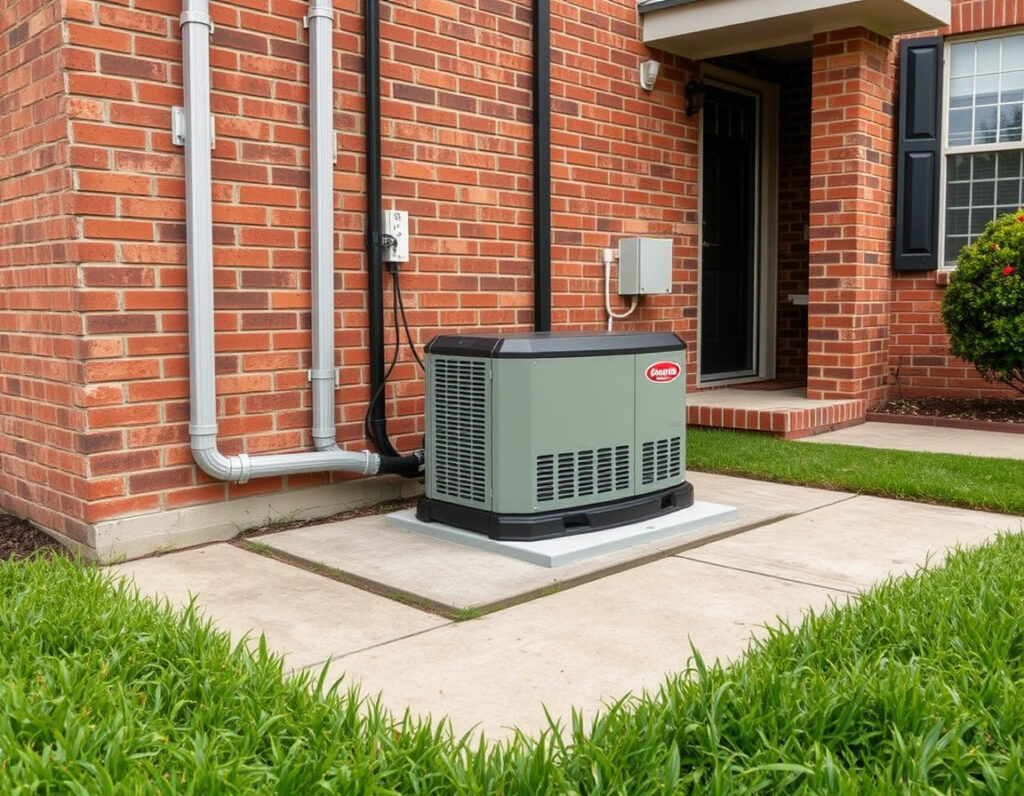
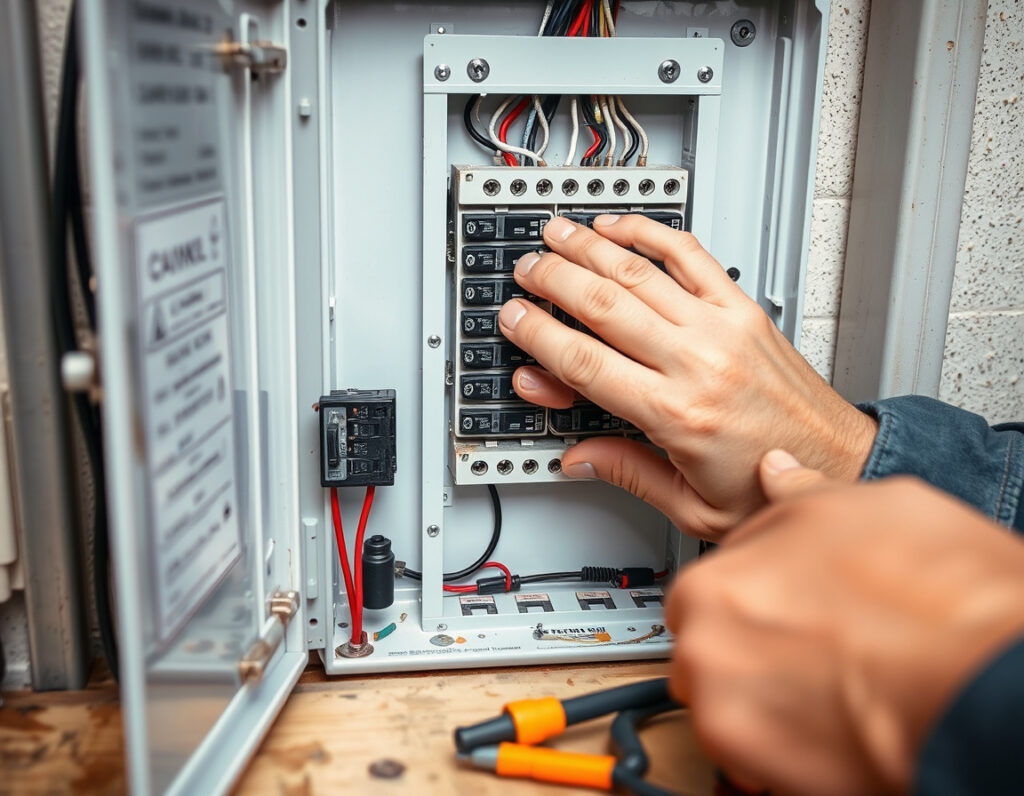
Power outages along the southwest suburbs aren’t rare. Severe storms rolling off Lake Michigan regularly knock out service to neighborhoods near Kean Avenue and the residential streets tucked between Palos Hills and Hickory Hills. When power goes out for 12 or 24 hours in January, a whole-home generator stops being a luxury conversation pretty quickly.
Generator installation is one of the more technically demanding residential electrical jobs a homeowner can request. It’s not just about placing a unit in the yard. The work involves installing a transfer switch or an automatic standby panel, running a dedicated fuel line if it’s a natural gas or propane unit, bonding the generator’s grounding system to the home’s existing ground, and coordinating with the gas utility and local permit office. Every one of those steps requires a licensed electrician near me level of expertise, not a YouTube tutorial.
A manual transfer switch is the more affordable option. You flip it yourself when the power goes out and plug in the generator. An automatic standby system detects an outage and switches over within seconds, without anyone needing to do anything. For households with medical equipment, sump pumps running in a basement, or a home office with critical equipment, the automatic option is usually the smarter spend. Reed Electrical Services, LLC. handles both configurations and can walk you through the load requirements based on your home’s actual usage, not a one-size-fits-all estimate.
Sizing Matters More Than Most Homeowners Realize
Undersizing a generator is one of the most common mistakes. A unit rated too low for your home’s critical load will trip under the demand of your HVAC system alone. A licensed electrical contractor will calculate the total wattage of the circuits you want to protect, account for startup surge loads (which are always higher than running loads), and recommend the right generator capacity. That calculation also determines what size transfer switch is needed and whether your existing panel can accommodate the setup or needs a subpanel added. If your home is older and the existing wiring hasn’t been updated in decades, this is also a good time to look at wiring upgrades that bring the rest of the system up to current standards before you add a major new load to it.
Outdoor and Landscape Lighting Circuits Built to Last
A lot of homeowners near the forest preserve edges in Palos Hills want exterior lighting, whether for security along the driveway, pathway lighting through the yard, or accent fixtures on a detached garage. The demand is real, but outdoor electrical work has specific code requirements that go beyond what most people expect. Circuits serving outdoor outlets and fixtures must be GFCI protected. Any wiring buried in the ground needs to be in conduit or rated for direct burial at the correct depth. Fixtures installed in wet locations need to be rated for that exposure.
Getting this right matters for more than code compliance. Outdoor wiring that wasn’t installed properly tends to fail within a few years, sometimes dramatically. Water intrusion into a junction box, condensation inside a fixture not rated for wet locations, or a direct-burial cable run too shallow and nicked by a landscaping shovel are all common outcomes of rushed or inexperienced installs. Outdoor circuit installation done correctly by a commercial and residential electrician with experience in these systems will last decades with minimal maintenance.
Palos Hills residents who want to explore lighting upgrade options for both interior and exterior applications can get a good sense of scope by looking at lighting upgrades in Orland Park, IL, which covers the same types of fixture and circuit work available in this area. For homes that are also considering ceiling fan additions on a covered porch or pergola, the ceiling fan installation services in Orland Park, IL page covers what’s involved in running a new circuit for that type of fixture.
Security Lighting and Motion Sensor Wiring
Security lighting is one of the most requested outdoor electrical upgrades in this part of Cook County. Motion-activated floods on the back corners of the house, lights triggered at the side gate, or a dusk-to-dawn fixture over the garage door are all straightforward jobs for an experienced electrician but they do require either tapping into an existing circuit with enough capacity or running a dedicated one. Reed Electrical Services, LLC. can assess which approach makes sense based on the existing panel load and the layout of your home, so you’re not left with a flickering light six months later because someone overloaded a circuit that was already near capacity.
Frequently Asked Questions
Do I need a permit for generator installation in Palos Hills, IL?
Yes. Generator installation in Palos Hills requires a permit through the village, and the electrical work associated with the transfer switch must be inspected by a licensed inspector. Skipping the permit creates liability issues for homeowners and can complicate insurance claims if the generator is ever involved in an incident. A licensed electrical contractor handles the permit application as part of the job.
What’s the difference between a transfer switch and an interlock kit for a generator?
A transfer switch is a dedicated panel that isolates your home from the utility grid when the generator is running, preventing dangerous backfeed onto power lines. An interlock kit is a less expensive mechanical device that physically prevents the main breaker and generator breaker from being on at the same time. Both are code-compliant when properly installed, but a full transfer switch offers more flexibility in choosing which circuits the generator powers. A licensed electrician can explain which option fits your panel configuration and your budget.
How do I know if my outdoor lighting circuits are up to code in Cook County?
The most common issues are missing GFCI protection on outdoor outlets and fixtures, wiring buried at insufficient depth without conduit, and fixtures not rated for wet or damp locations. If your outdoor lighting was installed more than 15 years ago or by someone other than a licensed electrician, an electrical inspection is the most reliable way to find out where you stand. Cook County and the Village of Palos Hills follow the National Electrical Code, and a licensed contractor can identify any deviations during a walkthrough. You can learn more about what an inspection covers at the Village of Palos Hills official website.
Whether you’re planning a generator install ahead of storm season, adding outdoor lighting along your property near the Palos Hills forest preserve boundary, or just trying to figure out whether past electrical work was done correctly, the right starting point is a conversation with a qualified contractor who knows this area. Reed Electrical Services, LLC. serves homeowners throughout Palos Hills and the surrounding southwest suburbs, bringing licensed, permitted, inspected work to every job. Call or contact us directly to talk through your project and get a clear picture of what it actually involves before any work begins.