
13 Jun
What Happens to Your Electrical Panel When You Add a Major Appliance?
When you add a large appliance like a dryer, electric range, or EV charger, your electrical panel has to supply a brand-new load it was never originally sized for. If the panel is already close to capacity, that added demand can cause breakers to trip repeatedly, or worse, the panel simply won’t have an open slot to support a new dedicated circuit. An electrician needs to evaluate your current panel before any major appliance goes in.
Why Panel Capacity Actually Matters

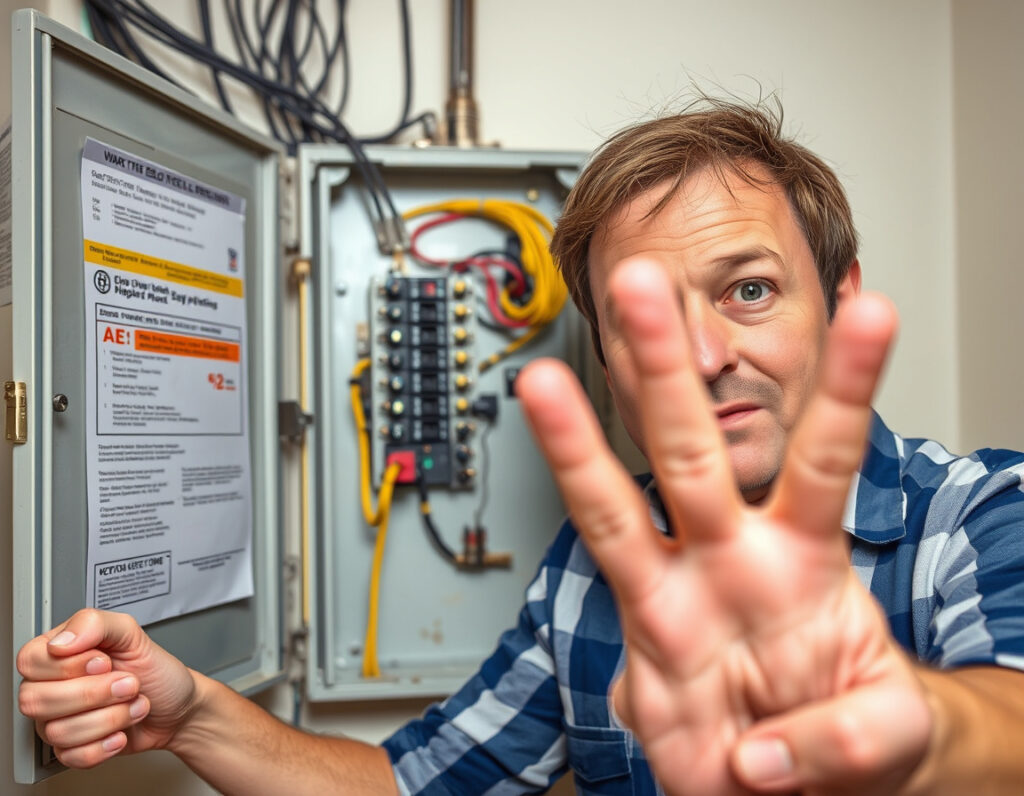
A lot of homeowners assume their panel can handle whatever gets plugged in. That’s rarely how it works. Every panel has a total amperage rating, typically 100 or 200 amps for most residential homes in the southwest Chicago suburbs. Each circuit inside that panel draws from that pool.
The Load Calculation Problem
Electricians use something called a load calculation to figure out how much of your panel’s capacity is already spoken for. It accounts for lighting, outlets, HVAC, water heaters, and everything else running in the background. Adding a 240-volt appliance like an electric dryer pulls anywhere from 20 to 30 amps on its own. If your panel is already at 85% capacity, that new appliance pushes things into uncomfortable territory fast.
Older homes in Palos Hills, especially those built in the 1960s and 70s, often came with 100-amp service. That was reasonable for the time, but modern households run far more equipment. A single electric vehicle charger, a new range, and a heat pump together can completely outpace what a 100-amp panel was designed to handle.
What “Panel Is Full” Actually Means
People sometimes open their breaker box and see empty-looking slots and think they have room. But tandem breakers, which squeeze two circuits into one slot, are sometimes used to fake extra space. Not all panels accept tandems, and even when they do, there are limits on how many are allowed. A panel that looks like it has room might be at its legal and physical limit. If you’re in this situation, a panel upgrade is often the most practical path forward rather than trying to squeeze more in.
Signs Your Panel Is Struggling With Current Demand
You don’t always need to add a new appliance for the symptoms to show up. Sometimes the signs are already there, pointing to a panel that’s been running near its limit for years.
Breakers That Trip Under Normal Use
If a breaker trips when you run the microwave and the dishwasher at the same time, that’s not bad luck. That’s a circuit carrying more than it was rated for. Tripping is the breaker doing its job, but if it happens regularly, the circuit load distribution needs to be looked at. Sometimes the fix is redistributing appliances across circuits. Other times, a panel upgrade is the right call.
Dimming or Surging When Appliances Kick On
Lights that dim when the refrigerator compressor starts, or when the AC kicks on, suggest the panel is struggling to maintain stable voltage under load. This kind of behavior is common in homes where the electrical service hasn’t been updated in decades. Local residents who notice this pattern should get an inspection done sooner rather than later, because the underlying cause doesn’t fix itself.
A professional electrical inspection can identify whether the issue is isolated to one circuit or reflects a broader panel capacity problem.
No Room for New Circuits
Adding a dedicated circuit for a new appliance requires an open slot in the panel. If there isn’t one, the options are limited: remove an existing circuit (rarely practical), install tandem breakers where permitted, or upgrade the panel. For anyone adding an EV charger, a hot tub, or a whole-home generator, a panel upgrade is usually the answer. The National Electrical Code (NEC) sets clear requirements for how these circuits must be installed and sized.
Related Questions
How do I know if my home needs a 200-amp panel upgrade?
If your home still runs on 100-amp service and you’re adding modern appliances, running a home office, or planning to charge an electric vehicle, an upgrade is worth discussing with a licensed electrician. The clearest signs are frequent breaker trips, a panel with no open slots, or an inspection report flagging capacity concerns. The U.S. Department of Energy’s electrical safety guidance is a good reference for understanding what modern homes typically require.
Can adding a new appliance void my homeowner's insurance?
It can create problems if the work wasn’t permitted or done by a licensed electrician. Many insurance companies require that major electrical work meet local code and be inspected. If a fire or damage claim is traced back to unpermitted wiring or an overloaded panel, the insurer has grounds to reduce or deny the claim. Always pull the proper permits and work with a qualified contractor when adding any significant load to your home’s electrical system in the area.