
08 Jun
Why Would a Smoke Detector Keep Chirping Even With New Batteries?
A smoke detector that keeps chirping after a fresh battery swap is usually reacting to one of a few issues: residual charge in the old battery, dust buildup on the sensor, or the detector itself reaching the end of its service life. Most units are rated for 10 years, and after that point, the internal sensor degrades regardless of how many new batteries you put in.
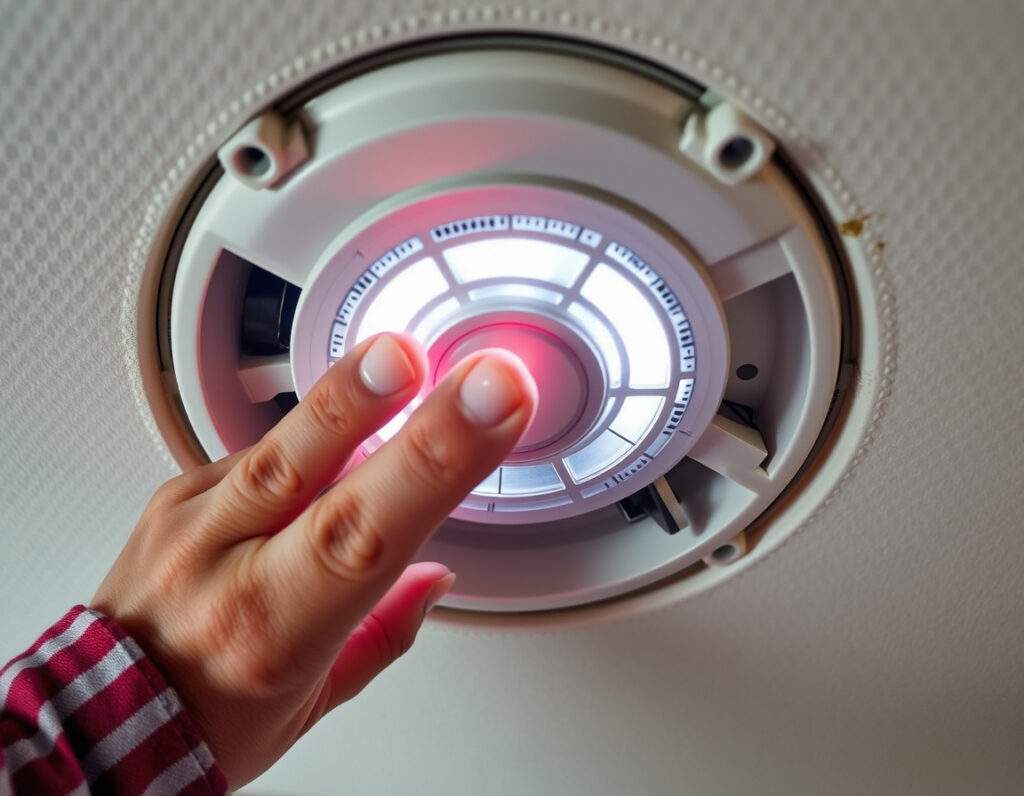
Resetting the unit by holding the test button for 15-20 seconds after swapping batteries clears the low-battery signal in most models. If chirping continues, the detector likely needs replacing entirely.
What’s Actually Going On Inside the Detector
The Battery Isn’t Always the Real Problem
Smoke detectors store a small charge even after you pull the old battery. When you slot in a fresh one without clearing that residual charge first, the unit can still interpret its own memory as a low-power warning. The fix is simple: remove the battery, press and hold the test button for about 15 seconds to drain any stored charge, then install the new battery. That sequence clears the fault in most standard detectors.
Dust and debris are a less obvious culprit. Smoke detectors work by monitoring a sensing chamber for particles. When dust settles inside that chamber over months and years, the unit can misread it as smoke or as a sensor error, triggering the chirp. A quick blast of compressed air into the vents often fixes this, though it’s a short-term patch if the unit is aging.
When the Detector Itself Has Expired
This is the part most homeowners miss. The National Fire Protection Association recommends replacing smoke detectors every 10 years, and for good reason. The photoelectric or ionization sensors inside degrade over time. A 12-year-old detector that chirps through three new batteries isn’t malfunctioning — it’s done. Check the manufacture date printed on the back of the unit. If you can’t find one, that’s a sign it’s overdue for replacement anyway.
In Palos Hills and surrounding communities, older homes often have hardwired smoke detectors that tie into the home’s electrical system with a battery backup. These chirp for the same reasons, but replacement involves working with the wiring. That’s where calling a licensed electrician makes sense rather than guessing.
Hardwired Detectors Add Another Layer
AC Power vs. Battery Backup Faults
Hardwired detectors pull power from your home’s circuits and use a battery only as a backup during outages. If the chirping is coming from a hardwired unit, the issue might not be the battery at all. A loose wire connection at the detector, a tripped breaker feeding that circuit, or a failing power module inside the unit can all trigger the fault chirp.
Swapping the backup battery is still the right first step. But if the detector continues chirping and you’ve confirmed the battery is good, the problem is likely on the power supply side. An electrician can check the wiring connection at the mounting bracket and confirm whether the circuit is delivering consistent voltage. This kind of check is quick and pairs naturally with a broader electrical inspection if you’re already concerned about other systems in the house.
Interconnected Systems and False Triggers
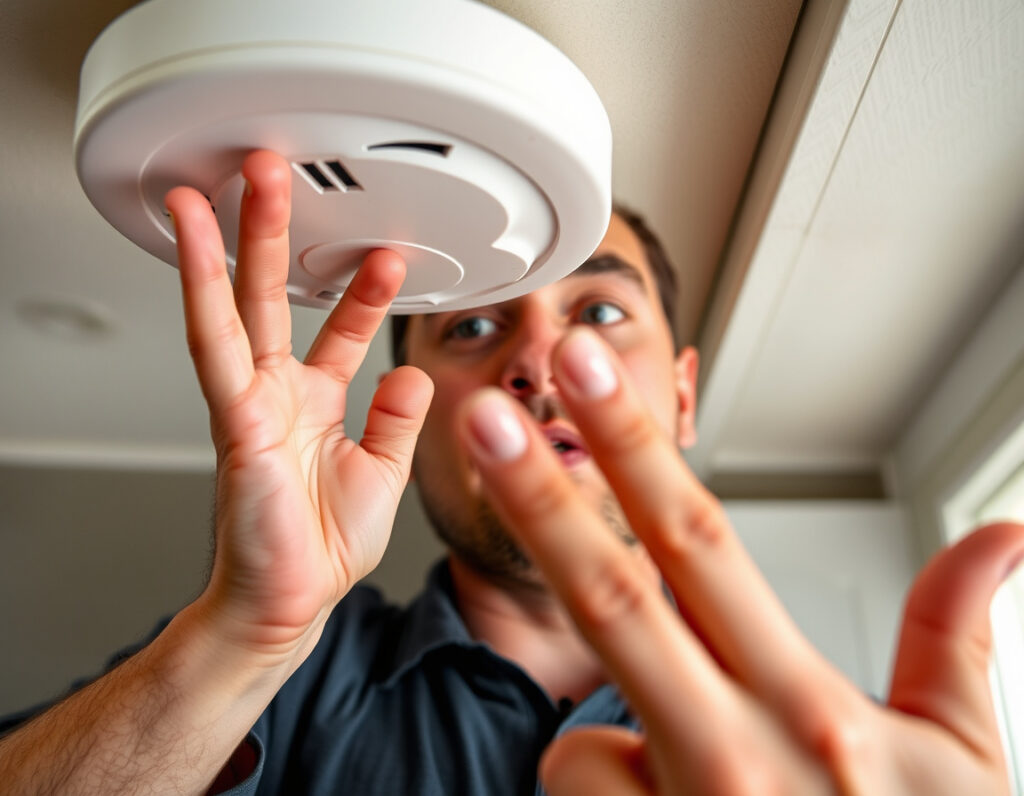
Many homes have interconnected detector networks, meaning when one chirps, it can trigger others on the same circuit. This makes it tricky to track down which unit is actually the source of the problem. The fastest approach is to pull each detector off its mounting base one at a time while listening for the chirp to stop. Once the sound disappears, you’ve found the faulty unit.
If your home is running older wiring and you’re finding multiple detectors acting up at once, that’s worth investigating beyond just the detectors themselves. Issues with aging electrical wiring can cause voltage fluctuations that stress hardwired safety devices over time. Our wiring upgrade services cover situations exactly like this for homeowners in the southwest suburbs.
The City of Palos Hills follows Illinois residential building codes that require working smoke detectors in specific locations throughout the home. If you’re replacing units and unsure whether your placement meets current code, a licensed electrician can confirm placement and handle hardwired installs correctly.
Related Questions
How many smoke detectors does a house actually need?
Current Illinois code and NFPA guidelines call for at least one detector on every level of the home, including the basement, one inside each bedroom, and one outside each sleeping area. A two-story home with three bedrooms typically needs a minimum of six detectors placed correctly to meet those requirements.
Can a smoke detector go off because of high humidity or steam?
Yes. Ionization-type detectors are especially sensitive to steam from showers or cooking. Humidity causes water vapor particles to enter the sensing chamber and mimic the behavior of smoke particles. Relocating the detector further from the bathroom or kitchen, or switching to a photoelectric model in those areas, usually resolves the false alarms without sacrificing protection.