
24 May
What Basement Finishing Actually Requires From an Electrician
Finishing a basement in the southwest suburbs of Chicago is one of the most popular home projects homeowners tackle. Ranch-style and split-level homes throughout Palos Hills sit on full or partial unfinished basements that owners want to turn into livable space, whether that’s a family room, a home office, a gym, or a guest bedroom. The electrical side of that project is where a lot of people underestimate the work involved.
A finished basement isn’t just about running a few outlet boxes and calling it done. Basement electrical work touches on circuit load calculations, proper outlet placement by code, dedicated circuits for appliances or entertainment systems, and often a conversation about whether your existing panel can carry the additional load. In older Palos Hills homes, that last question matters a lot.
The electrical panel upgrade question comes up in nearly every basement finishing project. A home built in the 1960s or 1970s with a 100-amp panel wasn’t designed for a basement rec room with recessed lighting, a mini-split, a home theater, and multiple USB charging stations. If you push that panel beyond its capacity, you’re not just tripping breakers; you’re creating a fire risk.
Outlet Placement Rules You Can’t Skip
The National Electrical Code sets minimum outlet spacing rules for finished living spaces, and basements are no exception once they’re being used as habitable rooms. Along any finished wall, no point should be more than 6 feet from a receptacle. That might sound simple, but in a basement with a wet bar, a bathroom rough-in, and a utility corner, the layout gets complicated fast. A licensed electrician maps out the entire space before pulling wire, not after the drywall goes up.
It’s also worth knowing that GFCI protection is required in basements, especially near any sink or water source. If you’re planning a wet bar or a half-bath down there, every outlet within six feet of water needs that protection built in. This isn’t optional. It’s code.
Lighting Circuits for a Finished Lower Level
Recessed LED lighting has become the go-to choice for basement ceilings, and for good reason. It doesn’t eat headroom, it distributes light evenly, and modern LED fixtures run cool enough that insulation clearance issues are minimal. That said, the circuit feeding those fixtures still needs to be sized correctly. Running too many fixtures on a single 15-amp circuit means the lights dim every time someone runs the microwave upstairs. A properly planned lighting circuit layout separates general illumination from high-draw appliances on their own dedicated runs.
Homeowners near the Palos Hills boundary along 95th Street often ask about recessed lighting in drop-ceiling versus drywall ceiling applications. Both are possible, but the fixture type and wiring method differ. That’s a detail worth discussing with your electrician before you order materials.
Permits, Inspections, and Why They Protect You
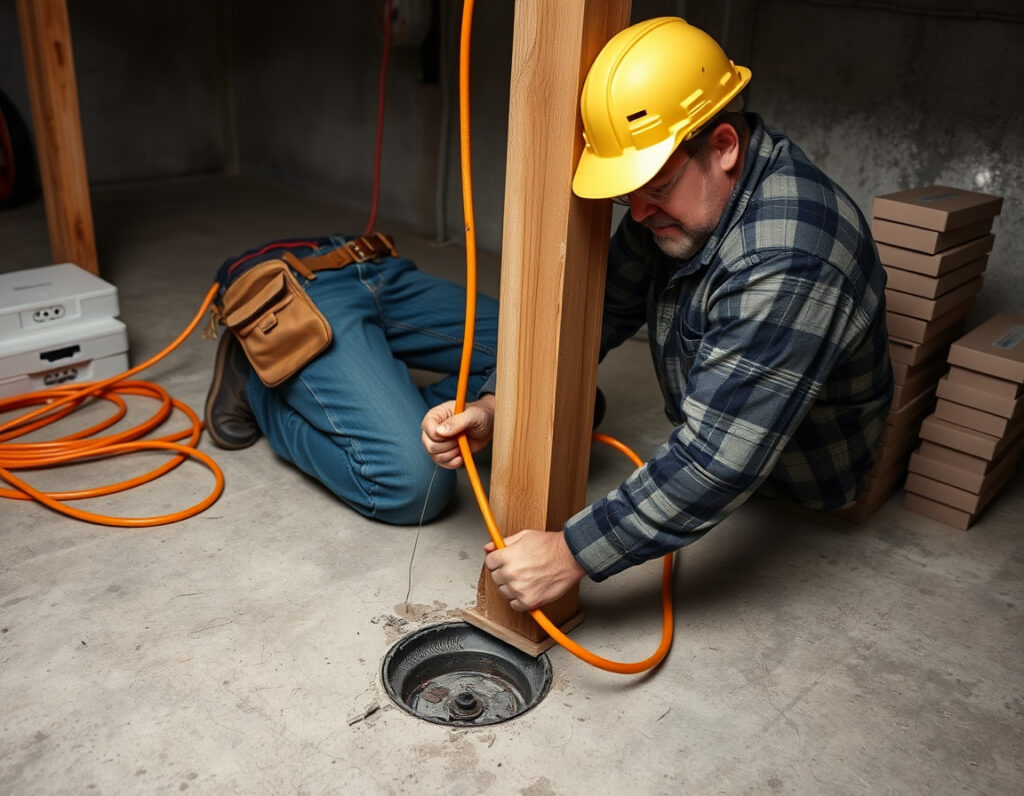
A lot of homeowners ask whether they really need a permit for basement electrical work. The honest answer: yes, if you’re finishing the space. Palos Hills falls under the jurisdiction of Cook County and follows the Illinois adopted version of the NEC. Any new wiring in a finished basement requires a permit and an inspection before the walls close up.
Skipping the permit might feel like it saves time and money in the short run. But when you sell the house, a home inspector or buyer’s attorney who finds a finished basement with no permit history will flag it. That can delay or kill a closing, or require you to tear open walls to prove the work was done correctly. The Illinois Department of Financial and Professional Regulation requires licensed electrical contractors to pull permits on work that qualifies, which protects both the homeowner and the occupants.
When you hire Reed Electrical Services, LLC., the permit process is handled as part of the job. You don’t have to figure out which form goes to which office. The work gets inspected, signed off, and documented so your project record is clean.
What the Electrical Inspection Actually Looks At
Inspectors in Cook County’s southwest suburbs check a specific list of items during a rough-in inspection. They’re looking at wire gauge and breaker sizing, proper stapling and support of cables, junction box fill calculations, smoke detector placement requirements for new habitable space, and whether the panel has the capacity and labeling to support the new circuits. The inspection happens before insulation or drywall goes in, so the inspector can see everything.
Once that rough-in passes, work continues. After drywall, a final inspection confirms device installation, cover plates, GFCI and AFCI protection where required, and that the panel directory accurately labels every breaker. Passing both inspections is what gives you a clean permit record.
For homeowners near Wolf Road or along 111th Street in the area, inspection scheduling through the local building department typically runs a few business days out. Planning the project timeline around that window is something an experienced electrical contractor does automatically.
Subpanels, Dedicated Circuits, and Load Planning
When a basement finishing project is large enough, adding a subpanel down there makes the work cleaner and easier to manage. Instead of running individual circuits all the way back to the main panel upstairs, a subpanel fed by a single large feeder cable gives you a local distribution point. This is especially practical in homes near Palos Hills where the main panel sits at the opposite end of the house from the basement staircase.
Dedicated circuits are another conversation that comes up early in planning. A home theater receiver, a mini-fridge, a chest freezer, and any kind of workshop equipment all benefit from their own circuits. Shared circuits mean shared limitations. A 20-amp dedicated circuit for a chest freezer in the utility area is cheap insurance against nuisance tripping and potential food loss during a summer storm.
If you’re adding EV charging capability to a garage that’s accessible from the basement level, that’s a separate but related project. EV charger installation typically requires its own 50-amp dedicated circuit and its own considerations around conduit routing and weatherproofing. Bundling it with a basement finishing project can reduce overall labor costs since the electrician is already working in the panel.
Smoke and Carbon Monoxide Detectors in New Basement Space
Illinois law and the NEC both require smoke detectors in every habitable room of a finished basement. If the basement includes a bedroom or sleeping area, a hardwired smoke detector with battery backup is required, interconnected with the detectors on the floors above. Carbon monoxide detectors are also required within 15 feet of any sleeping area in Illinois. These aren’t suggestions buried in a code book; they’re inspected items that must be present before a final approval is issued.
Many homeowners aren’t aware that battery-only smoke detectors don’t satisfy code requirements for new construction or new habitable space. The hardwired requirement exists because battery units get forgotten, ignored, or removed when they start chirping. Hardwired interconnected detectors are a line item in the electrical scope, and Reed Electrical Services, LLC. includes them in the planning conversation from the start, not as an afterthought after the rough-in is already done.
Residents finishing basements near Midlothian Turnpike or off Southwest Highway frequently ask about wiring upgrades as part of the overall project. Older homes in this corridor sometimes have aluminum branch circuit wiring that needs to be evaluated before new circuits tie into it. That’s a detail an experienced electrician catches during the initial walkthrough.
Frequently Asked Questions
Do I need a permit to add electrical outlets in my Palos Hills basement?
Yes. Any new wiring added to a basement that is being finished or used as habitable space requires a permit in Cook County. The permit process involves a rough-in inspection before walls close and a final inspection after devices are installed. Working without a permit creates problems when you sell the home and may require costly remediation to bring the work into compliance.
How many circuits does a finished basement typically need?
A standard finished basement with a family room, a bathroom, and a utility area typically needs between four and eight circuits depending on how the space is used. General lighting, general receptacles, a bathroom circuit, and dedicated circuits for large appliances each count separately. A home theater setup or a wet bar with a refrigerator adds more. Your electrician should walk the space and calculate load before quoting a circuit count.
Can my existing panel handle the extra load from a finished basement?
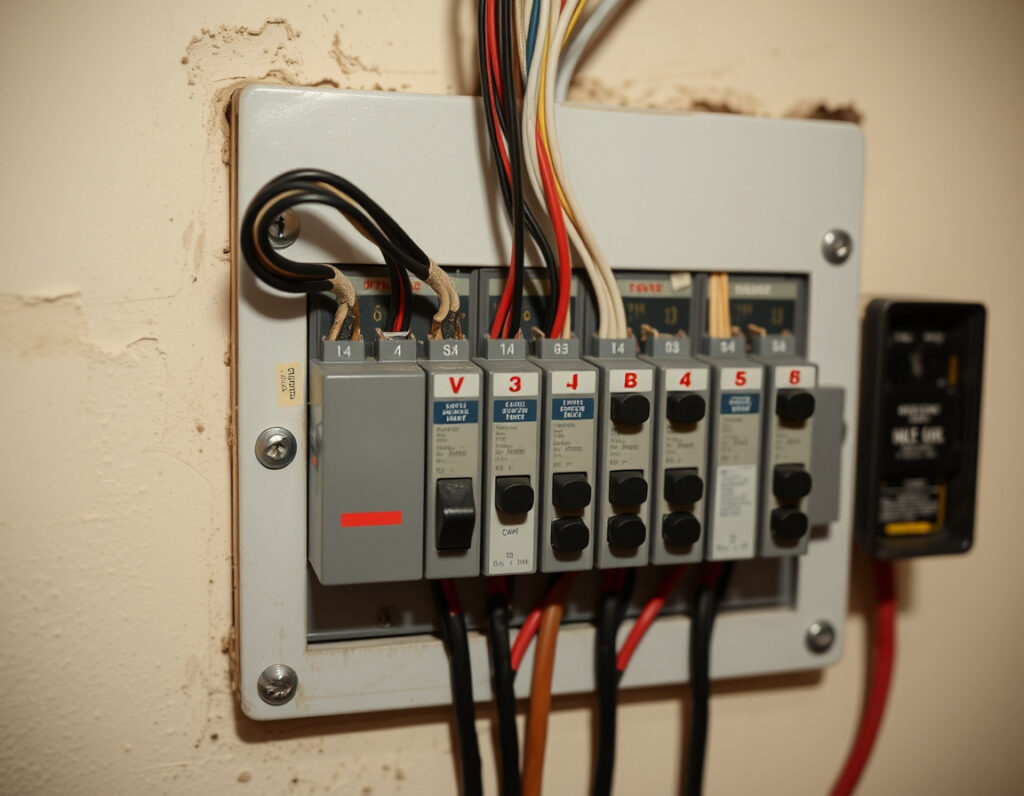
It depends on the panel’s age, capacity, and current load. Homes with 100-amp panels that are already well-loaded often cannot support a full basement finish without a panel upgrade to 150 or 200 amps. A licensed electrician can calculate your existing load against the available capacity and tell you definitively whether an upgrade is needed before the project starts. This is a better approach than discovering the limitation mid-project.
Basement finishing projects in Palos Hills move faster and close out cleaner when the electrical scope is planned correctly from day one. Reed Electrical Services, LLC. works with homeowners throughout the southwest suburbs to handle everything from initial load calculations and permit applications through rough-in inspections and final device installation. If you’re ready to turn that unfinished lower level into actual living space, reach out to get a straight assessment of what the electrical work will involve and what it will cost. No vague estimates, no surprises after the drywall goes up.
For additional reference on electrical safety standards and residential wiring requirements, the NFPA 70 National Electrical Code published by the National Fire Protection Association is the governing document used by inspectors throughout Illinois.