
22 Jun
Why Does My Home Have Outlets That Don’t Work but No Breakers Are Tripped?
This almost always comes down to a tripped GFCI outlet somewhere upstream on the same circuit. GFCI outlets have a built-in protection feature that cuts power to every outlet wired after them, and the one that tripped may be in a completely different room than the dead outlet you found. Less commonly, the problem is a loose or backstabbed wire connection inside one of the outlets or junction boxes on that circuit.
The GFCI Chain Reaction Most Homeowners Miss

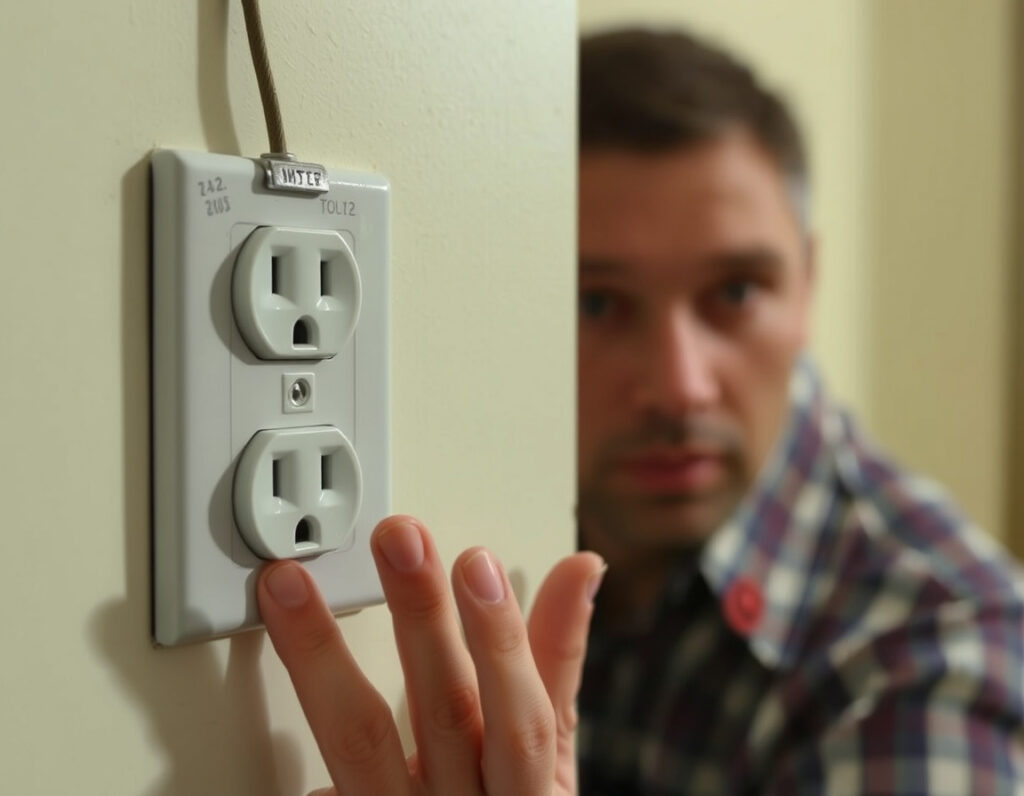
Most homes built after the mid-1970s have GFCI protection in bathrooms, kitchens, garages, and outdoor areas. What surprises a lot of people is that a single GFCI outlet can protect four, six, or even more regular outlets wired after it. Electricians call those the “load side” outlets.
So if the GFCI in your garage trips, outlets in your unfinished basement or on an exterior wall might go dead. The connection isn’t always obvious from the outlet’s location. Check every GFCI outlet in the house, including ones in bathrooms you don’t use often, and press the reset button firmly until it clicks. A soft press won’t do it.
Where to Look for the Hidden GFCI
Start in the most likely spots: bathrooms, the kitchen counter area, the garage, and any outdoor outlets. If your home has an unfinished utility room or a crawl space with an outlet, check there too. Some builders install a single GFCI in a central location and run the load-side wiring through much of the house to save on hardware costs. It’s a code-compliant approach, but it makes troubleshooting confusing without a wiring map.
If you press the reset button on every GFCI in the house and the dead outlets still don’t come back, the problem isn’t a GFCI trip. At that point you’re likely dealing with a wiring issue.
When It’s a Wiring Problem, Not a GFCI Problem
Older wiring practices are a real factor in this area. Many homes in the southwest suburbs of Chicago were built in the 1960s through the 1980s, and backstabbed outlet connections are extremely common in that era. Backstabbing means the wire was pushed into a small hole in the back of the outlet rather than wrapped around a screw terminal. Over time those push-in connections loosen, arc, and fail, leaving one outlet dead without tripping a breaker.
A loose wire inside a junction box can do the same thing. If a wire nut works loose or a wire pulls out slightly, everything downstream on that circuit loses power. The breaker doesn’t trip because no actual short circuit or overload has occurred — the path is simply broken.
Signs the Problem is a Bad Connection
A few things point toward a wiring issue rather than a simple GFCI reset. If the dead outlets are all in one section of a room or along one wall, a bad connection in the nearest outlet or junction box in that run is the likely cause. If you notice slight discoloration around an outlet cover or a faint burning smell near a receptacle, stop using that outlet immediately. That’s a sign of arcing, which is a fire hazard that needs an electrician right away, not a DIY fix.
For homeowners curious about the scope of switch and outlet installation and repair work involved, Reed Electrical Services handles exactly this kind of diagnosis in Palos Hills and the surrounding communities.
What an Electrician Will Actually Do to Find It
A licensed electrician will start with a non-contact voltage tester to confirm which outlets are truly dead and which have power. From there, they’ll trace the circuit backward from the dead outlets to find where the power stops. That usually means pulling each outlet from the box and checking the connections until they find the open point.
If the wiring turns out to be older or in rough shape throughout the circuit, the conversation might shift to a broader wiring upgrade rather than patching one connection. That’s worth knowing upfront so you’re not fixing the same circuit twice in five years.
The National Fire Protection Association reports that home electrical failures cause roughly 46,700 fires annually in the U.S., and faulty outlets and switches are among the top contributors. Getting a dead outlet diagnosed fast isn’t just a convenience issue.
The city of Palos Hills follows the Illinois State Building Code, which requires permitted electrical work to meet current NEC standards, so any repairs done on circuits in older homes need to bring those circuits up to code.
Related Questions
Can a dead outlet be dangerous even if nothing sparks or smells?
Yes. A loose connection inside an outlet can arc intermittently without producing a visible spark or noticeable smell at first. Over time that arcing generates heat inside the wall, which is exactly how electrical fires start. A dead outlet with no obvious cause is always worth having checked by a licensed electrician rather than leaving it unused and forgotten.
How long does it take an electrician to track down a dead outlet?
For a straightforward GFCI issue or a single bad connection, most electricians can diagnose and fix the problem in under an hour. If the circuit has multiple bad connections or the wiring runs through finished walls with no accessible junction boxes, it can take longer. Getting a clear description of which outlets are dead and where they are in the house helps speed things up before the tech even arrives.